




The Role of Early Childhood Educators in Cognitive Development
Creating Stimulating Learning Environments
Early childhood educators design environments that encourage exploration and curiosity.
They use age-appropriate materials to support cognitive growth.
Moreover, these settings promote problem-solving and critical thinking skills.
Through intentional design, educators foster active engagement with learning.
Facilitating Language and Communication Skills
Teachers engage children in conversations to develop their vocabulary.
They read stories aloud, enhancing listening and comprehension abilities.
Furthermore, educators encourage children to express their thoughts clearly.
This communication practice builds a strong foundation for literacy development.
Encouraging Social Interaction and Emotional Intelligence
Educators promote cooperative play to develop social skills.
They guide children in recognizing and managing their emotions effectively.
Additionally, teachers help children understand others’ perspectives.
This emotional awareness supports positive relationships and cognitive growth.
Implementing Hands-On Learning Experiences
Hands-on activities allow children to explore concepts actively.
Educators introduce science, math, and sensory experiences through play.
This approach helps children connect ideas to real-world contexts.
Personalized UK Career Consulting
Receive tailored career guidance designed just for you. Get actionable steps and expert support to boost your career in 1-3 days. Take control of your career now.
Get StartedTherefore, practical learning strengthens memory and understanding.
Observing and Assessing Individual Progress
Teachers carefully observe each child’s cognitive development milestones.
They use assessments to tailor instruction to individual needs.
Furthermore, educators collaborate with families to support learning goals.
Thus, personalized guidance promotes continuous cognitive advancement.
How Early Childhood Education Fosters Social and Emotional Skills
Creating a Safe and Supportive Environment
Early childhood educators establish safe spaces where children feel valued and respected.
Children gain confidence to express their emotions openly in these environments.
Teachers like Samantha Reyes use positive reinforcement to encourage healthy emotional growth.
Consistent routines help children develop a sense of security and predictability.
Encouraging Emotional Recognition and Expression
Educators guide children to recognize their own feelings and those of others.
Through activities, children learn to label emotions like happiness, anger, and sadness.
For example, Maria Thompson incorporates storytelling to highlight emotional experiences.
This method fosters empathy by helping children understand how feelings affect behavior.
Building Social Interaction Skills
Teachers facilitate group activities that promote cooperation and communication.
Children practice sharing, taking turns, and resolving conflicts with educator guidance.
At Bright Horizons Learning Center, staff use role-playing games for peer relationship development.
As a result, children improve their ability to work collaboratively in diverse settings.
Developing Self-Regulation and Problem-Solving Abilities
Early education programs emphasize strategies to manage impulses and emotions effectively.
Educators like Thomas Nguyen teach calming techniques such as deep breathing exercises.
Children are encouraged to think through challenges and find solutions independently.
This practice builds resilience and adaptive skills needed for lifelong social success.
Supporting Positive Identity and Self-Esteem
Teachers celebrate each child’s unique attributes and cultural background.
Children develop pride and confidence by seeing themselves represented in classroom materials.
The Harmony Learning Center integrates family stories to strengthen children’s sense of belonging.
Children grow with a healthy self-image and openness to social connection as a result.
Incorporating Play-Based Learning to Enhance Creativity and Problem-Solving
Fostering Creativity Through Play
Early childhood educators design play experiences that spark children’s imagination.
They encourage exploration by providing diverse materials and open-ended activities.
Consequently, children generate original ideas and express themselves freely.
For example, Maria Lopez from Bright Minds Academy uses art supplies to inspire creativity.
Moreover, this creative freedom builds confidence and curiosity in young learners.
Developing Problem-Solving Skills with Play
Play creates natural opportunities for children to face challenges.
Educators like Samuel Chen integrate puzzles and construction toys into daily routines.
As a result, children practice critical thinking and learn to find solutions independently.
Furthermore, group play encourages collaboration, negotiation, and communication to solve problems.
For instance, cooperative games at Sunnybrook Early Learning Center teach teamwork skills.
Benefits of Linking Creativity and Problem-Solving
Linking creativity with problem-solving nurtures flexible thinking in children.
This approach prepares learners to adapt to new situations and complex tasks.
Additionally, it supports cognitive development and emotional resilience.
Early childhood educator Priya Patel emphasizes how integrated play shapes lifelong skills.
Play-based learning forms the foundation for success in various life domains.
Strategies for Effective Play-Based Learning
Create a safe, stimulating environment that invites exploration and discovery.
Use hands-on materials such as blocks, art supplies, and sensory items.
Encourage open-ended questions to provoke thinking and dialogue.
Allow ample time for uninterrupted play to deepen engagement.
Observe and scaffold children’s ideas without taking over their play.
By using these strategies, educators like Jasmine Thompson of Little Sprouts Academy maximize learning potential.
Explore Further: Exploring Careers in Special Needs Education
Building Language and Communication Skills Through Early Education
Creating a Language-Rich Environment
Early childhood educators design classrooms filled with meaningful language opportunities.
They incorporate books, pictures, and conversations into daily activities.
These elements encourage children to explore new words and ideas.
Educators foster curiosity and verbal expression naturally by doing so.
Interactive storytelling sessions engage children in lively discussions.
Encouraging Active Listening and Speaking
Teachers motivate children to listen carefully during group interactions.
They ask open-ended questions to promote thoughtful responses.
Children gain confidence as they practice sharing their thoughts aloud.
Role-playing activities help develop conversational skills.
These experiences strengthen both listening and speaking abilities simultaneously.
Incorporating Music and Movement
Music sessions introduce rhythm and vocabulary in fun ways.
Songs and rhymes enhance memory and pronunciation skills.
Movement activities involve gestures that accompany spoken words.
Children connect language with physical expression as a result.
This multimodal learning supports deeper understanding of communication.
Partnering with Families to Reinforce Communication
Educators collaborate with parents to extend language learning beyond the classroom.
They provide strategies for reading and talking at home.
Families share cultural stories, enriching children’s vocabulary and perspectives.
Language development becomes a consistent, shared effort therefore.
This partnership enhances children’s ability to express themselves effectively.
Using Technology to Support Language Development
Educators select age-appropriate digital tools that encourage word recognition.
Interactive apps and games promote vocabulary building.
Technology supplements, but does not replace, human conversation.
Educators guide children to use these tools for meaningful language practice.
Technology becomes a valuable resource in communication learning consequently.
See Related Content: Why Education Policy Advisors Shape the Future of Schools
Creating a Supportive and Inclusive Learning Environment
Fostering Emotional Safety
Early childhood educators build trust with each child.
They listen actively to children’s feelings and concerns.
As a result, children feel secure and valued.
Educators address conflicts calmly and constructively.
This approach encourages positive interactions among peers.
Encouraging Diversity and Inclusion
Teachers celebrate children’s unique backgrounds and experiences.
They integrate diverse books, songs, and activities into lessons.
Thus, every child sees their culture represented and respected.
Educators adapt materials to meet different learning needs.
This adaptation guarantees accessibility for all children in the classroom.
Building Collaborative Relationships
Educators maintain open communication with families and caregivers.
They involve families in classroom events and learning projects.
Consequently, children benefit from consistent support at home and school.
Teachers collaborate with support specialists and counselors.
This teamwork enhances the overall development of each child.
Organizing a Nurturing Physical Environment
Classrooms are arranged to encourage exploration and independence.
Teachers provide safe materials that stimulate curiosity and creativity.
They create quiet areas for children to relax and self-regulate.
Clear routines help children feel comfortable and confident.
Visual supports guide children through daily activities efficiently.
Discover More: Becoming a UK Special Needs Educator: Supporting Students with Unique Needs
The Impact of Early Childhood Educators on School Readiness
Building Foundational Cognitive Skills
Early childhood educators stimulate cognitive development through engaging activities.
They introduce numbers, letters, and problem-solving concepts.
Moreover, they create learning environments that encourage curiosity and exploration.
Consequently, children build essential skills needed for academic success.
Maria Gonzalez uses storytelling to strengthen language comprehension effectively.
Supporting Social and Emotional Growth
Educators play a vital role in fostering social skills among young learners.
They teach cooperation, sharing, and empathy during group activities.
Furthermore, they model positive behavior to guide emotional regulation.
Parents notice improvements in children’s confidence and resilience through this support.
Bright Futures Academy uses daily check-ins to support emotional well-being.
Encouraging Physical Development and Health
Teachers promote fine and gross motor skills through hands-on tasks.
They organize play-based exercises to develop coordination and strength.
Also, educators emphasize healthy habits like hygiene and balanced nutrition.
These practices prepare children for the physical demands of school routines.
Pinecrest Early Learning Center holds outdoor play sessions every day for physical activity.
Strengthening Language and Communication Skills
Language development is a primary focus for early educators.
They expose children to diverse vocabulary and encourage expressive speech.
In addition, they foster listening skills through interactive conversations and songs.
As a result, children become confident communicators before entering formal schooling.
Angela Kim, director of Sunrise Preschool, emphasizes bilingual exposure for language fluency.
Promoting Family Engagement and Collaboration
Educators strengthen school readiness by partnering with families actively.
They provide resources and workshops to support learning at home.
Additionally, they maintain regular communication to address children’s needs.
This collaboration creates a consistent support system for each child.
Harmony Early Education Center hosts monthly parent-teacher nights to share progress.
Key Strategies Used by Early Childhood Educators
- Integrating play-based learning to make education enjoyable and effective
- Setting clear and achievable goals for skill development
- Using assessments to tailor teaching methods individually
- Encouraging positive reinforcement to build self-esteem
- Incorporating cultural awareness to respect diverse backgrounds
Gain More Insights: How School Counselors Support Students’ Emotional Growth
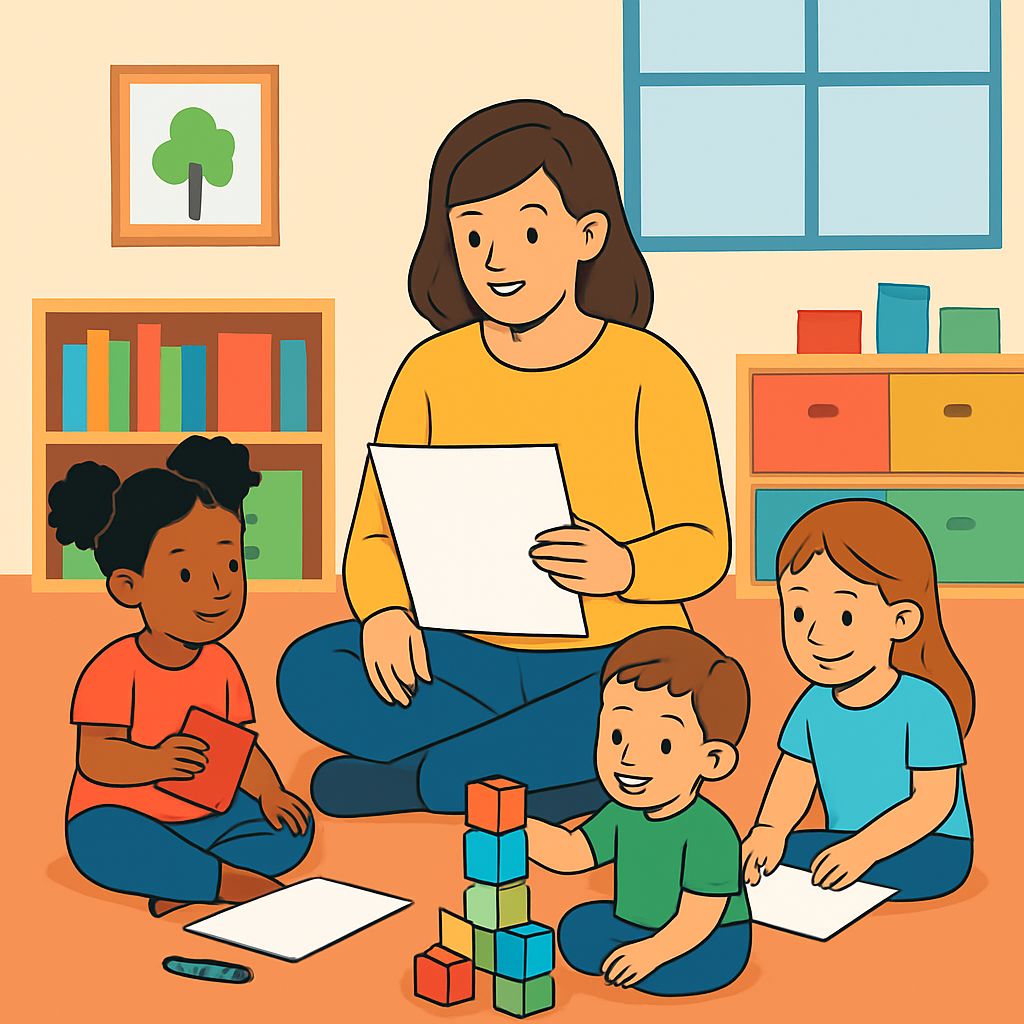
Parental Involvement and Collaboration with Early Childhood Professionals
Importance of Parent-Teacher Partnerships
Strong partnerships between parents and educators improve child development outcomes.
Parents share valuable insights about their child’s interests and behaviors.
Meanwhile, early childhood professionals share educational goals and progress updates.
Therefore, mutual trust and respect support effective collaboration.
Ways to Foster Meaningful Collaboration
Regular communication keeps parents informed and engaged in their child’s learning.
For example, teacher Laura Bennett sends weekly newsletters and emails.
Workshops and family events create shared learning experiences.
Additionally, parent-teacher conferences encourage two-way feedback and goal setting.
Supporting Diverse Family Needs
Educators recognize that each family has unique cultural backgrounds and preferences.
Thus, translators and culturally relevant materials improve communication.
Little Sprouts Academy actively involves families from different communities.
Furthermore, flexible meeting times respect parents’ work schedules and commitments.
Benefits for Children’s Growth
Consistent collaboration creates a stable and supportive learning environment.
Children feel more secure when families and educators work as a team.
Also, this cooperation supports children’s social and emotional development.
In turn, it builds strong foundations for lifelong learning and success.
Practical Tips for Parents and Educators
- Set clear, shared goals for the child’s development and learning progress.
- Communicate openly and honestly about challenges and achievements.
- Join classroom activities and volunteer opportunities when possible.
- Respect each other’s expertise and value different perspectives.
- Use positive reinforcement to encourage children’s efforts at home and school.
Continuous Professional Development for Early Childhood Educators
The Importance of Lifelong Learning
Early childhood educators must pursue lifelong learning to stay effective.
Ongoing development strengthens teaching skills and broadens knowledge.
It also helps educators adapt to changing standards and children’s needs.
Therefore, continuous growth helps educators support children’s development better.
Opportunities for Professional Growth
Many organizations offer workshops and seminars for early childhood educators.
For instance, BrightPath Learning Center hosts monthly training sessions on new teaching methods.
Additionally, online courses from Elmwood Institute offer flexible learning options.
These opportunities let educators deepen their expertise at their convenience.
Collaborative Learning and Peer Support
Collaboration among peers plays a crucial role in professional development.
Educators like Maria Chen form study groups to share experiences and strategies.
Such collaboration encourages practical problem-solving and innovative teaching approaches.
In this way, teamwork enriches educator skills and classroom outcomes.
Mentorship Programs
Mentorship connects less experienced educators with seasoned professionals.
For example, Little Scholars Academy pairs mentors with new teachers for guidance.
This relationship builds reflection, confidence, and stronger instructional techniques.
Consequently, mentorship speeds professional growth and improves career satisfaction.
Staying Current with Research and Best Practices
Educators must follow current research to use evidence-based practices effectively.
Resources like the Early Childhood Education Journal provide regular study updates.
By integrating these findings, educators improve curriculum quality and interactions.
Ultimately, children receive care and education grounded in current knowledge.
Benefits of Continuous Development for Children
Ongoing educator training directly improves children’s learning experiences.
Children benefit from teachers who use diverse, research-backed strategies.
Furthermore, continuous growth helps educators respond more effectively to children’s needs.
Thus, commitment to development creates a strong foundation for children’s lifelong success.
Addressing Diverse Learning Needs
Recognizing Individual Strengths and Challenges
Early childhood educators observe each child’s unique abilities.
They identify strengths and areas needing extra support.
As a result, teachers create tailored learning experiences for every learner.
Moreover, recognizing differences helps educators adapt teaching methods effectively.
Implementing Inclusive Teaching Strategies
Educators use varied instructional approaches to meet diverse needs.
For example, they combine visual, auditory, and kinesthetic learning activities.
This variety helps children engage through their preferred learning styles.
Additionally, teachers use sensory tools and manipulatives when necessary.
Collaboration with specialists supports children with developmental or learning challenges.
Such teamwork strengthens individualized plans and classroom inclusivity.
Supporting Language and Cultural Diversity
Teachers honor the home languages and cultures of their students.
They include multicultural materials and stories in the curriculum.
This practice promotes belonging and respect among students.
Furthermore, educators encourage bilingual development through supportive practices.
Engaging families in cultural exchanges strengthens community connections.
Promoting Equity from the Start
Creating Equitable Learning Environments
Educators design classrooms where all children feel valued and safe.
They ensure materials represent diverse backgrounds and experiences.
Classroom layouts and routines encourage equal participation.
Furthermore, teachers address bias and stereotypes actively and thoughtfully.
Advocating for Resources and Support
Early childhood educators connect families with community resources.
They advocate for funding and programs that support underserved children.
Collaborations with organizations like Little Sprouts Early Learning help bridge gaps.
These efforts promote fairness and equal opportunity for success.
Encouraging Social-Emotional Equity
Teachers foster empathy and kindness among students from the beginning.
They teach conflict resolution and cooperative skills to build inclusiveness.
This foundation helps children develop positive relationships with peers and adults.
Ultimately, nurturing emotional intelligence supports lifelong equity in society.
Long-Term Benefits of Quality Early Childhood Education on Academic Achievement
Building Cognitive Skills Early
Quality early childhood education strengthens children’s cognitive development.
Programs led by Maplewood Learning Center build critical thinking and problem-solving skills.
In addition, early cognitive stimulation supports stronger memory and attention later in life.
As a result, children enter formal schooling better prepared for its demands.
Enhancing Language and Literacy Abilities
Early education programs emphasize language acquisition and literacy development.
For example, Bright Horizons Academy uses storytelling and interactive reading to engage young learners.
Consequently, children build stronger vocabularies and clearer communication skills.
These abilities directly support reading comprehension and writing performance in school.
Promoting Social-Emotional Learning
Social-emotional skills developed in early classrooms support academic achievement.
Educators like Anna Martinez at Little Sprouts Preschool encourage cooperation and emotional regulation.
Moreover, children who manage emotions well often focus better and handle classroom challenges.
Therefore, these young learners gain confidence and motivation for learning.
Fostering Long-Term Academic Success
Research shows positive early education experiences correlate with stronger academic outcomes.
Students in quality programs often earn higher test scores and graduation rates.
Additionally, they need fewer special education services and repeat fewer grades.
Ultimately, early childhood education builds a crucial foundation for lifelong learning and achievement.
Key Elements of Effective Early Education Programs
- Qualified, passionate educators tailor instruction to each child.
- Developmentally appropriate curricula include play and exploration.
- Family engagement reinforces learning beyond the classroom.
- Safe, nurturing environments encourage curiosity and risk-taking.
By combining these elements, Sunrise Academics supports children’s academic journeys effectively.
Additional Resources
The Power of Early Literacy: Building Strong Foundations for …
Early Years Initial Teacher Training PGCert | University of Worcester


