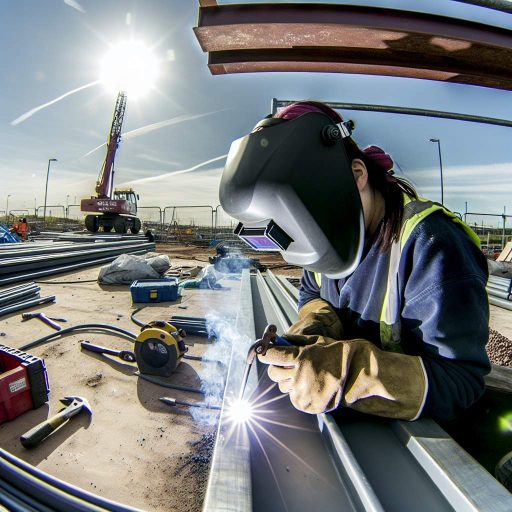




The Role of Machine Operators in Modern Manufacturing

Introduction to the Role of Machine Operators in Modern Manufacturing

Defining the Role of Machine Operators

Machine operators play a critical role in modern manufacturing environments.

They control complex machinery to produce high-quality products.

Operators monitor the machines constantly to avoid errors.

Their expertise ensures manufacturing processes run smoothly and safely.

Companies like Evergreen Precision and Solstice Manufacturing rely heavily on skilled operators.

Operators must adapt quickly to new technologies and equipment advancements.

Importance of Machine Operators in Manufacturing

Machine operators directly influence product consistency and output efficiency.

They identify issues early, preventing costly downtime and defective products.

Operators contribute to workplace safety by following strict operational protocols.

They work closely with engineers and maintenance teams for seamless workflow integration.

Their role supports overall production objectives and company profitability.

Evolution of the Machine Operator Role

The role has evolved due to increasing automation and digital controls.

Operators now require proficiency in computer-aided systems and robotics.

Training programs at companies such as Ridgefield Engineering prepare operators for these challenges.

Continuous learning keeps operators updated on industry best practices.

Personalized UK Career Consulting

Receive tailored career guidance designed just for you. Get actionable steps and expert support to boost your career in 1-3 days. Take control of your career now.

Get Started

This evolution enhances manufacturing flexibility and responsiveness to market demands.

Key Responsibilities and Daily Tasks of Machine Operators

Operating and Monitoring Machinery

Machine operators handle complex equipment in manufacturing plants.

They start machines according to prescribed procedures.

During operation, they continuously monitor machine performance.

If abnormalities arise, operators quickly take corrective action.

Operators ensure machines run efficiently and safely throughout shifts.

Performing Routine Maintenance

Daily maintenance helps prevent unexpected equipment failures.

Operators clean machinery to remove dust and debris regularly.

They lubricate moving parts as recommended by manufacturers.

Furthermore, operators inspect components for signs of wear or damage.

Prompt maintenance supports consistent production quality and uptime.

Ensuring Quality Control

Machine operators verify that outputs meet quality standards.

They measure product dimensions using gauges and other tools.

If defects occur, operators adjust settings to correct errors.

Your Dream Job Starts with a Perfect CV

Get a tailored CV and cover letter that captures your unique strengths and stands out in your industry. Let us help you make an unforgettable first impression.

Get Started

They document inspection results for quality assurance teams.

Thus, operators play a vital role in maintaining product reliability.

Following Safety Procedures

Safety is a top priority in all machine operations.

Operators wear personal protective equipment during their shifts.

They follow established protocols to reduce workplace hazards.

Additionally, operators participate in safety training sessions regularly.

Such practices protect both employees and facility assets effectively.

Collaborating with Team Members

Machine operators coordinate with supervisors and maintenance staff.

They report issues promptly to minimize downtime.

Operators share feedback for process improvements during meetings.

They also assist new operators by sharing best practices.

Effective communication enhances overall manufacturing productivity.

Continuous learning keeps operators updated with evolving technologies.

Soft Skills for Workplace Success

Dependability and punctuality reflect a professional attitude.

Teamwork is vital as operators often collaborate with engineers and supervisors.

Adaptability helps handle changes in production schedules or equipment.

Positive attitude contributes to a safe and productive work environment.

Organizational skills assist in maintaining records and managing tasks efficiently.

Delve into the Subject: The Importance of Bricklayers in Building Strong Foundations

The Impact of Automation and Technology on the Machine Operator Role

Integration of Advanced Technologies

Manufacturing plants increasingly adopt automation technologies to enhance productivity.

Companies like Titan Robotics deploy robotics for precision and speed.

Consequently, machine operators must adapt to operating sophisticated machinery.

Advanced sensors and AI systems monitor production in real time.

Therefore, operators collaborate closely with digital interfaces and control software.

Changing Responsibilities of Machine Operators

Operators today manage automated processes instead of manual machine adjustments.

They perform regular diagnostics to ensure seamless machine operation.

Furthermore, they troubleshoot technical issues using computer-based tools.

Training in software and hardware integration becomes essential for operators.

Manufacturing experts like Carlos Ramirez emphasize communication between operators and engineers.

Skills Development and Training

Continuous learning is vital to keep pace with evolving manufacturing technologies.

Companies invest in workshops to improve operators' digital literacy and technical skills.

Programs often include PLC programming, robotics maintenance, and data analysis.

Additionally, operators develop problem-solving abilities relevant to automated environments.

This transformation increases job satisfaction and career growth opportunities.

Advancements in Safety and Efficiency

Automation reduces human exposure to hazardous tasks and environments.

Operators oversee safety protocols integrated within machine systems.

They use data-driven insights to optimize production efficiency.

For instance, Apex Manufacturing improved output by 20% through operator-led technology use.

Thus, technology empowers operators to balance safety with productivity goals.

Discover More: Why Locksmiths Play a Crucial Role in Security

Health and Safety Considerations in Machine Operation

Importance of Safety Protocols

Machine operators must follow strict safety protocols to prevent workplace injuries.

These protocols help maintain a safe environment for all employees.

Companies like Sterling Manufacturing emphasize regular safety training for their operators.

Adherence to safety guidelines reduces accident risks significantly.

Personal Protective Equipment Usage

Operators need to wear appropriate personal protective equipment at all times.

This equipment includes gloves, safety goggles, ear protection, and steel-toed boots.

Helmets provide crucial head protection in hazardous zones.

The Thompson Steelworks plant enforces mandatory PPE use during all machine operations.

Machine Maintenance and Inspection

Regular machine maintenance ensures equipment functions safely and efficiently.

Operators should conduct pre-shift inspections to identify potential hazards.

Reporting any irregularities to supervisors helps prevent machine failures.

Timely maintenance minimizes downtime and workplace accidents.

Ergonomics and Operator Wellbeing

Proper ergonomic practices reduce strain and injuries among machine operators.

Workstations should be adjusted to fit individual operators' needs successfully.

At Greenfield Auto Parts, ergonomics programs have lowered repetitive strain injuries.

Frequent breaks and stretching exercises help maintain operator health.

Emergency Preparedness

Operators must be familiar with emergency shutdown procedures and exit routes.

Regular drills prepare staff to respond quickly during incidents like fires or malfunctions.

Clear signage and accessible emergency stops improve reaction times.

The Weldon Fabrication Facility conducts quarterly emergency response training sessions.

Training and Continuous Education

Ongoing training updates operators about new safety standards and machinery.

Certified instructor Harold Jensen leads safety workshops at Pacific Precision Ltd.

Refresher courses reinforce safe practices and hazard awareness.

Education empowers operators to act responsibly and prevent accidents.

Delve into the Subject: Why Welders Are the Unsung Heroes of Construction

Training and Career Development Opportunities for Machine Operators

Foundational Training Programs

Many manufacturers provide structured training programs for new machine operators.

These programs introduce essential skills and safety protocols.

For example, Harborview Manufacturing offers a comprehensive onboarding course.

Operators learn basic machine functions and maintenance techniques.

Additionally, these programs include hands-on practice with modern equipment.

Consequently, trainees gain confidence in their daily responsibilities.

Advanced Skill Development

Employers encourage operators to enhance their technical capabilities.

They offer workshops on programming CNC machines and troubleshooting systems.

At Sterling Automation, workers attend monthly advanced training sessions.

These classes focus on robotics integration and process optimization.

Moreover, continuous education helps operators adapt to new technologies.

Therefore, they remain valuable assets within their companies.

Certification and Accreditation

Obtaining certifications boosts machine operators' professional credibility.

Organizations like the National Association of Industrial Technicians provide credentials.

Certificates include machining, quality control, and safety compliance.

Elena Ramirez recently earned a precision machining certification from NAIT.

This achievement improved her promotion prospects significantly.

Likewise, companies support certification fees to motivate employees.

Career Advancement Pathways

Machine operators have varied options to grow their careers within manufacturing.

They can progress to become supervisors, technicians, or process engineers.

At Greenfield Industries, many senior operators moved into leadership roles.

Career coaching sessions help workers plan their professional development.

Additionally, mentorship programs connect juniors with experienced operators.

These initiatives foster knowledge sharing and skill enhancement.

Online Learning and Digital Resources

Online courses offer flexible learning options to machine operators.

Platforms such as TechWorks Academy provide specialized manufacturing classes.

Operators access tutorials on machinery programming and systems maintenance.

James Holloway completed a digital automation course to upgrade his skills.

Furthermore, virtual simulations allow practice without interrupting production.

This integration of digital tools supports continuous operator improvement.

Employer Support and Incentives

Companies recognize the value of investing in their machine operators.

They often provide tuition reimbursement for relevant educational programs.

Eastbrook Manufacturing offers bonuses for employees who complete certifications.

These incentives encourage ongoing skill development and job satisfaction.

Human resources teams regularly review training needs and opportunities.

Consequently, operators receive tailored development plans aligned with business goals.

Find Out More: Exploring Careers in Metal Fabrication: Crafting Precision Tools

The Role of Machine Operators in Modern Manufacturing

Challenges Faced by Machine Operators in a Modern Manufacturing Environment

Adapting to Advanced Technology

Machine operators must quickly learn complex new technologies.

They often face challenges understanding automated systems and robotics.

Furthermore, continuous software updates require constant retraining and adjustment.

Many operators struggle to keep pace with rapid technological advancements.

Companies such as Sterling Manufacturing invest in thorough operator training programs.

Maintaining Precision and Quality Standards

Machine operators play a crucial role in ensuring product quality.

They must maintain precise calibration of machines during production.

Additionally, operators face pressure to minimize defects and rework.

Inaccurate handling can lead to significant financial losses for firms like Helix Components.

Attention to detail and vigilance are essential daily tasks.

Managing Physical and Mental Demands

Operators often perform repetitive tasks that strain the body.

They must stand for extended periods in noisy environments.

Mental fatigue arises from constant monitoring and problem-solving.

Companies such as Nova Steelwork implement ergonomic solutions to support employees.

Still, maintaining focus over long shifts remains a demanding challenge.

Ensuring Workplace Safety

Machine operators face risks related to moving parts and heavy equipment.

Strict adherence to safety protocols is mandatory to prevent accidents.

Operators must wear protective gear at all times on the factory floor.

Manufacturers like Crescent Auto employ safety officers to enforce regulations.

Regular safety drills help operators stay prepared for emergency situations.

Communicating and Collaborating Effectively

Operators need clear communication with engineers and supervisors.

Miscommunication can result in production delays or machine damage.

Teamwork is vital during shift changes and troubleshooting.

Organizations such as Orion Aerospace encourage cross-department collaboration.

Consequently, operators develop interpersonal skills beyond technical expertise.

Balancing Production Targets with Machine Maintenance

Operators must meet strict production quotas without compromising equipment health.

Neglecting routine maintenance leads to costly machine breakdowns.

Effective time management is essential to handle both tasks simultaneously.

At Fusion Plastics, operators receive guidance to balance output and upkeep.

This balance ultimately ensures sustainable manufacturing processes.

The Contribution of Machine Operators to Production Efficiency and Product Quality

Enhancing Production Efficiency

Machine operators play a crucial role in maintaining smooth production workflows.

They monitor equipment to prevent unexpected breakdowns and delays.

Furthermore, skilled operators optimize machine settings for maximum output.

Operators at Stellar Manufacturing, like Carlos Ramirez, regularly adjust parameters to boost efficiency.

By quickly addressing minor issues, they reduce downtime significantly.

Effective communication among operators and supervisors ensures timely maintenance.

This collaboration leads to continuous production without costly interruptions.

Additionally, operators contribute to process improvements by sharing firsthand insights.

Teams at Horizon Fabrication use operator feedback to implement efficiency-enhancing changes.

Ensuring Product Quality

Machine operators directly influence the quality of the finished products.

They perform regular quality checks during operations to detect defects early.

At Quantum Industries, operators like Mei Wong inspect products to meet strict standards.

Consistent monitoring allows immediate adjustments and prevents defective batches.

Operators also maintain equipment cleanliness, which preserves product integrity.

This attention to detail results in higher customer satisfaction and fewer returns.

Moreover, experienced operators possess a deep understanding of material behavior.

Therefore, they anticipate potential quality issues and act proactively.

Manufacturing plants benefit when operators take ownership of product excellence.

Training and Skill Development

Continuous training enhances operators' capabilities and positively impacts production.

For instance, Greystone Components offers advanced workshops focusing on new technologies.

Operators like Amina Hassan leverage training to improve machine handling skills.

Moreover, cross-training ensures operators can manage multiple machines efficiently.

This flexibility increases staffing versatility and reduces production bottlenecks.

Investing in operator skills also fosters a culture of quality and efficiency.

Collaboration with Engineering and Maintenance Teams

Machine operators collaborate closely with engineers and maintenance staff.

Such joint efforts enable swift problem-solving and machine optimization.

At Brookfield Assembly, teams meet regularly to discuss performance data collected by operators.

This cooperation results in faster repairs and refined production processes.

Operators' insights often highlight areas needing mechanical upgrades or recalibration.

Hence, their input is vital for long-term manufacturing success.

Future Trends Affecting the Role of Machine Operators

Integration of Advanced Automation

Manufacturing increasingly adopts robots and automated systems on the production floor.

Machine operators collaborate closely with these technologies to ensure smooth operations.

Consequently, operators evolve from manual control to system oversight roles.

They monitor automated lines and intervene when issues arise.

This shift demands an understanding of both mechanical and software components.

Emphasis on Digital Skills and Training

Operators must acquire new digital skills to manage smart machinery.

Businesses like Westfield Technologies invest heavily in operator training programs.

Through continuous education, operators learn to interpret data and use diagnostic tools.

Therefore, employees such as Lucas Ramirez enhance their careers by embracing lifelong learning.

Training also focuses on cybersecurity given the networked nature of modern machines.

Collaboration with Artificial Intelligence Systems

Artificial intelligence increasingly assists operators in decision-making processes.

For example, AI can predict machine failures before breakdowns occur.

Operators use this insight to schedule maintenance proactively.

As a result, downtime decreases and production efficiency improves markedly.

Operators such as Mei-Ling Chen leverage AI tools for quality control enhancement.

Adoption of Remote Monitoring and Control

Remote operation capabilities allow operators to manage machines offsite.

Andrew Foster at Hamilton Precision expertly uses remote dashboards and controls.

This flexibility supports rapid response to production issues anytime.

Remote access also reduces operator exposure to hazardous environments.

Accordingly, organizations prioritize secure communication protocols for remote systems.

Increased Focus on Sustainability and Environmental Compliance

Operators play key roles in ensuring machines meet eco-friendly standards.

They adjust processes to minimize waste and reduce energy consumption.

Environmental initiatives at GreenTech Industries empower operators to implement green practices.

Furthermore, operators track emissions and maintain compliance with regulations.

These responsibilities highlight the growing importance of sustainability in manufacturing.

Shift Toward Multi-Skilled Operator Roles

Modern operators must handle diverse tasks across various machines and systems.

Job roles evolve to require versatility and adaptability on the shop floor.

Operators like Sofia Petrova manage both mechanical adjustments and data analysis.

Employers reward multi-skilled employees for their problem-solving and efficiency.

Ultimately, this trend fosters a more resilient and flexible workforce.

Case Studies of Machine Operator Roles in Various Manufacturing Sectors

Automotive Manufacturing

In the automotive sector, machine operators manage robotic assembly lines efficiently.

Michael Barnes works at Titan Motors, overseeing robotic welding machines.

He ensures the machines perform precise welds on car frames consistently.

His role includes regular maintenance checks to prevent downtime.

Because of his skills, production speed and quality have significantly improved.

Pharmaceutical Manufacturing

In pharmaceutical production, operators handle delicate filling and packaging equipment.

Susan Lee operates at Verdant Pharmaceuticals, managing automated tablet filling machines.

She monitors the machinery to ensure dose accuracy and hygiene standards.

She documents process data to comply with strict regulatory requirements.

Her attention to detail helps maintain high product safety and efficacy.

Food and Beverage Industry

The food manufacturing sector relies on operators to control processing and packaging systems.

Carlos Mendoza supervises pasteurization and bottling machines daily at Greenfield Foods.

He adjusts machine settings to maintain product quality and consistency.

Carlos implements quick changeovers to meet varying production demands.

This flexibility helps reduce waste and increase overall efficiency.

Electronics Manufacturing

Electronics factories depend on operators skilled in precision machine handling.

Emily Tran at NexTech Electronics manages surface-mount technology (SMT) assembly machines.

She calibrates machines to place tiny components accurately on circuit boards.

Emily troubleshoots machine errors to minimize defective units.

Her expertise contributes to producing reliable and high-performing electronic devices.

Textile Manufacturing

In textiles, machine operators control knitting and dyeing machinery with exact specifications.

Rajiv Patel works at Imperial Textiles, operating computerized knitting machines.

He monitors machine speed and tension to ensure fabric quality.

Rajiv performs routine machine cleaning to prevent fiber contamination.

His efforts support consistent textile production and customer satisfaction.

Additional Resources

Gerdau Careers | Join Our Team. Shape the Future.

Production & Skilled Trades | Teams - Discover your purpose ...

Leave a Reply

Your email address will not be published. Required fields are marked *