






Showing self taught skills on a CV in the UK starts with evidence of a task you can explain. Name what you learned, what you made and how you checked it. Keep course attendance, a practice project, an assessed qualification and paid work clearly distinct.
Fresh survey evidence explains why this matters. Learning and Work Institute reports that 43% of UK adults were learning or had learned in the previous three years. Among current or recent learners, 48% learned online only and 43% learned independently. These figures use different denominators. None measures whether an employer accepts a self-taught skill.
This report turns those distinctions into a practical evidence chain, three fictional CV examples and four downloadable CSV tools. The aim is accurate, assessable wording. We have not tested whether the method improves hiring outcomes. Research checked on 8 November 2026.
What the 2026 learning survey actually establishes
The 2026 Adult Participation in Learning Survey was released on 2 November. Kantar collected the responses online between 9 and 18 June 2026. The unweighted sample contains 5,091 UK adults aged 17 and over; the report applies weighting. November is the release date, not the month when respondents answered.
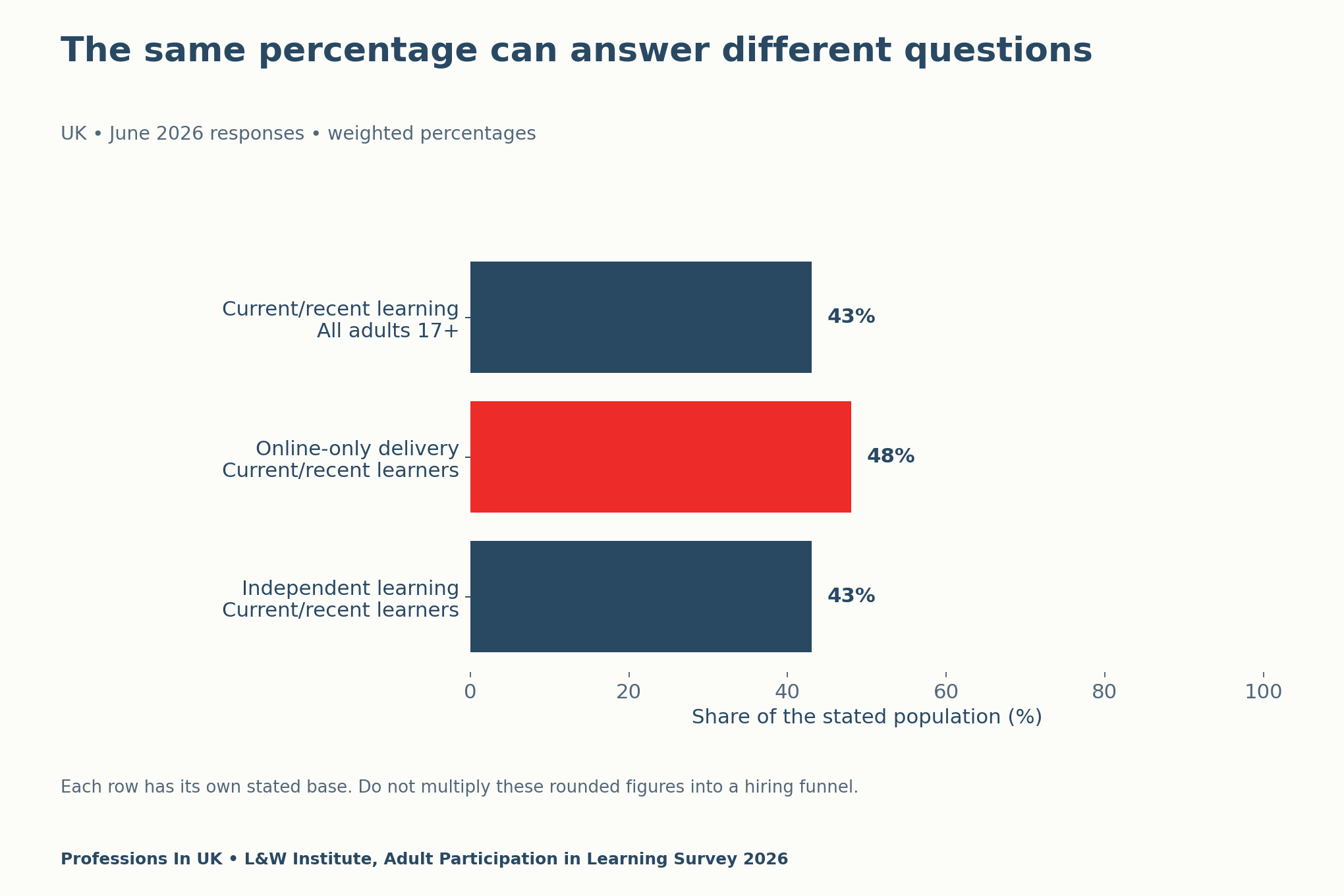
The survey uses a broad definition of learning, including informal activities. Learning need not lead to a qualification or be finished. Therefore, the participation rate cannot establish a population of newly qualified applicants. It provides context for presenting learning honestly, rather than proof that a particular credential is unnecessary.
Online delivery tells you where learning happened
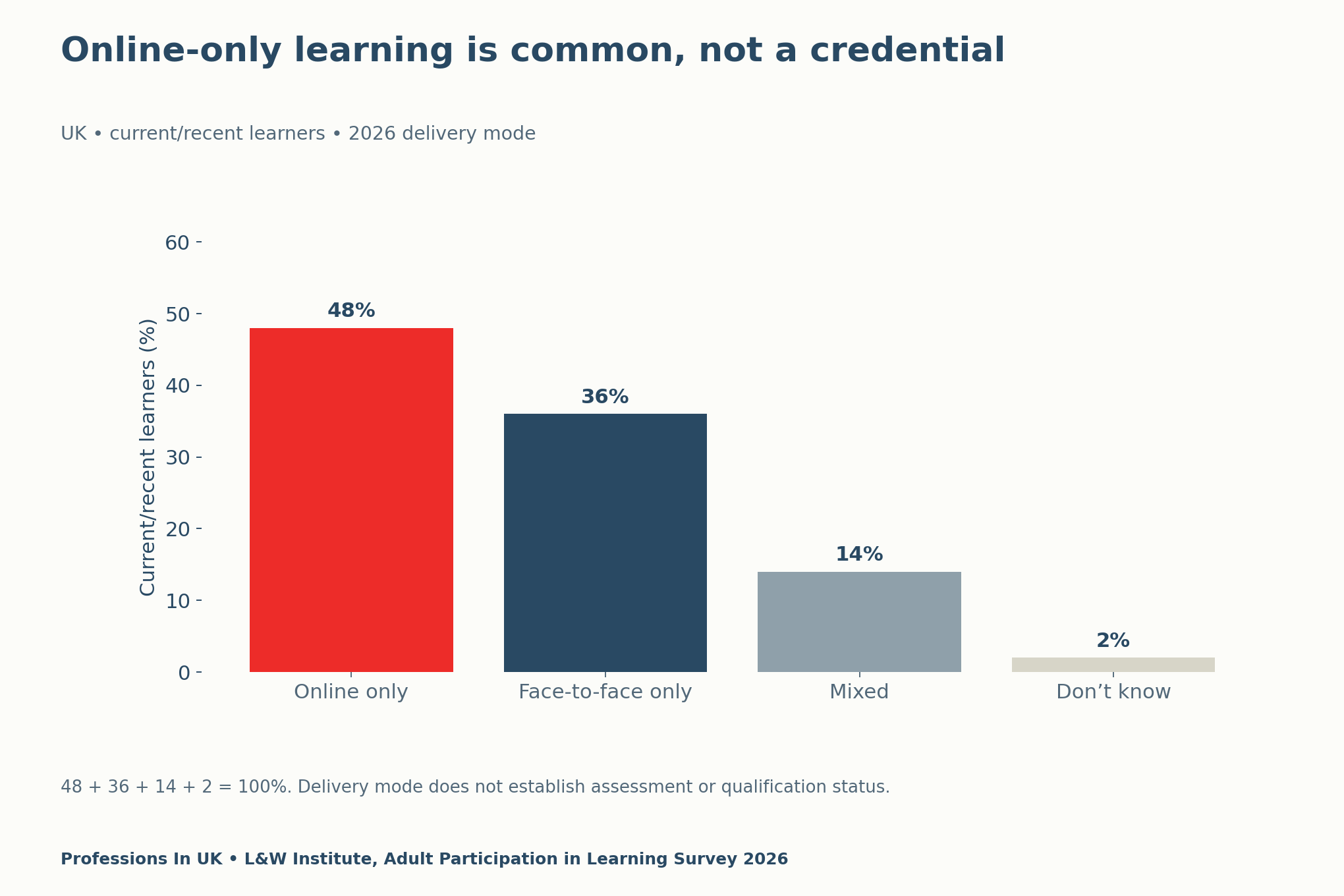
An online course can have a formal assessment, a completion certificate or neither. Similarly, face-to-face attendance does not automatically establish competence. Check the actual award and assessment before deciding where it belongs on your CV. Describe the evidence you hold, rather than inferring status from the delivery channel.
Self taught skills on a CV in the UK: match the task
First, choose one requirement from an actual job description. For example, a role may ask for spreadsheet checking rather than a general claim of “digital confidence”. Then create a modest task you can complete and document. Use synthetic data or information you have permission to share.
Next, retain the output and its checks. A spreadsheet practice task might include category totals, input checks and a short explanation of the formulas. A writing task might include the original brief, a draft and a revision note. Neither needs invented client results to be useful.
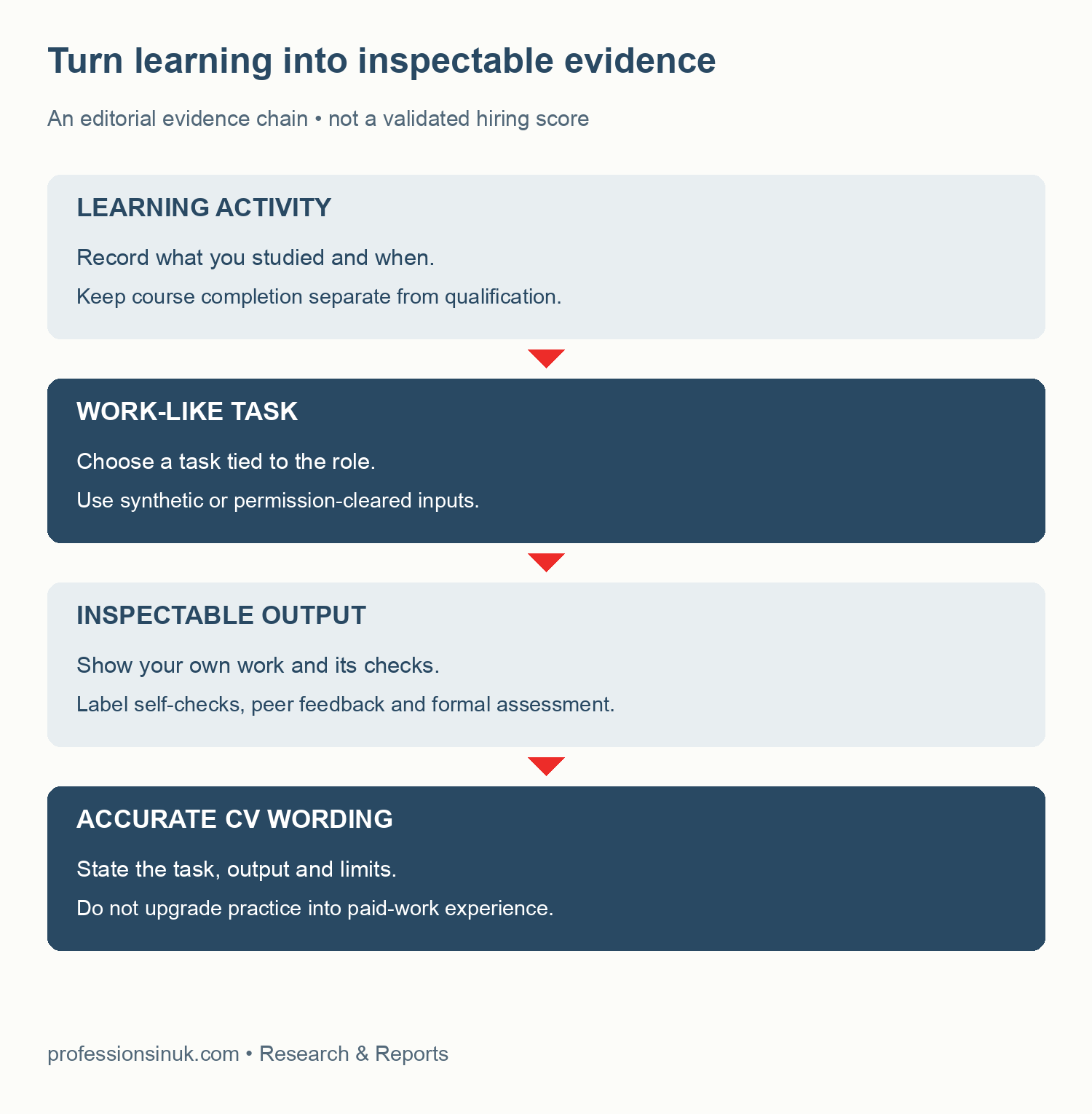
The National Careers Service CV guide supports tailoring your skills and experience to the application. Its STAR guidance also encourages relevant examples from settings such as work, home or volunteering. Our ledger adds a place to retain the underlying output, checks and limitations.
Do not treat every learning activity as career preparation
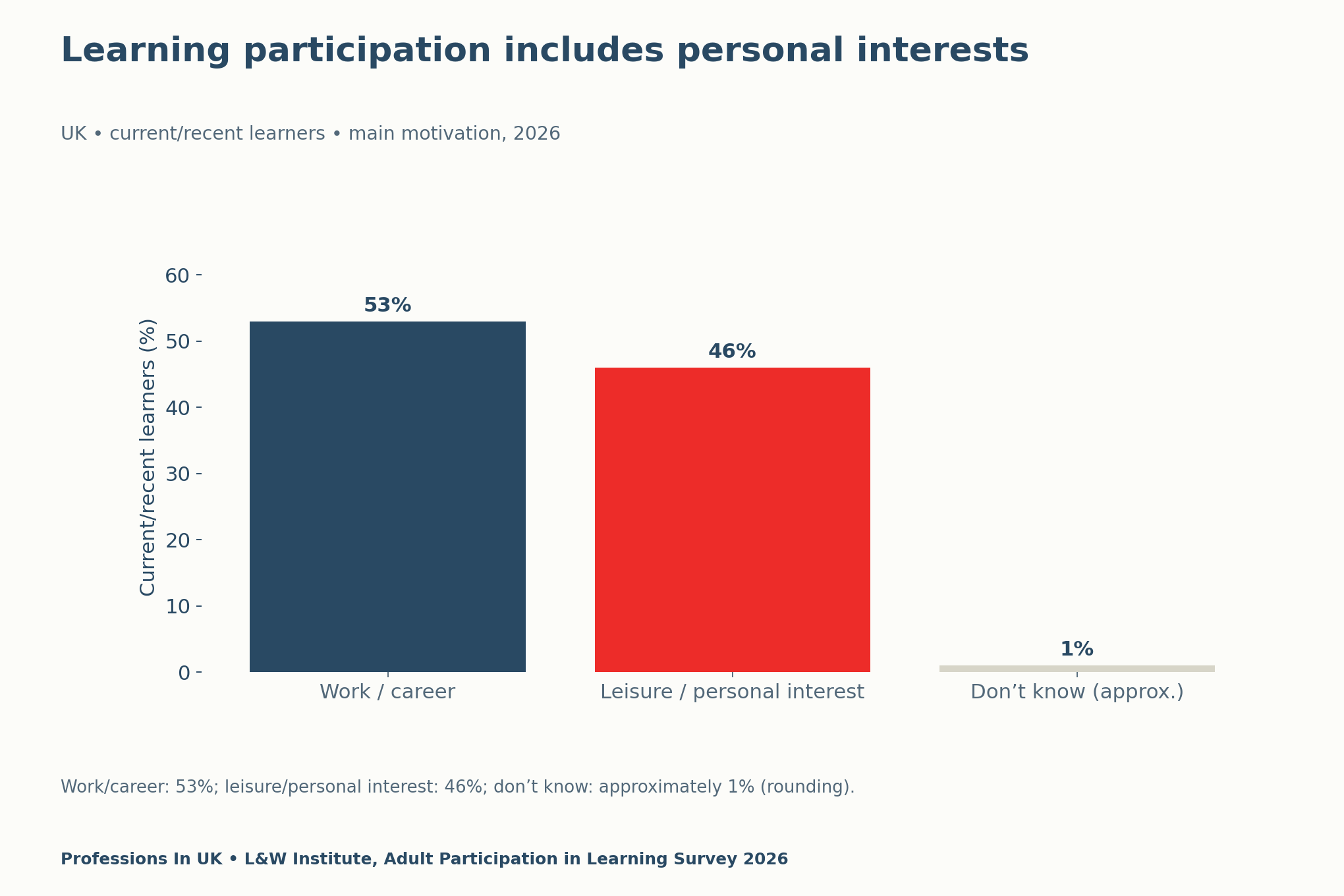
The distinction matters when interpreting a headline about adult learning. Someone learning for enjoyment is part of the survey’s legitimate scope. However, that does not make their activity evidence for a specific application. Select a relevant example and explain its relationship to the task the employer describes.
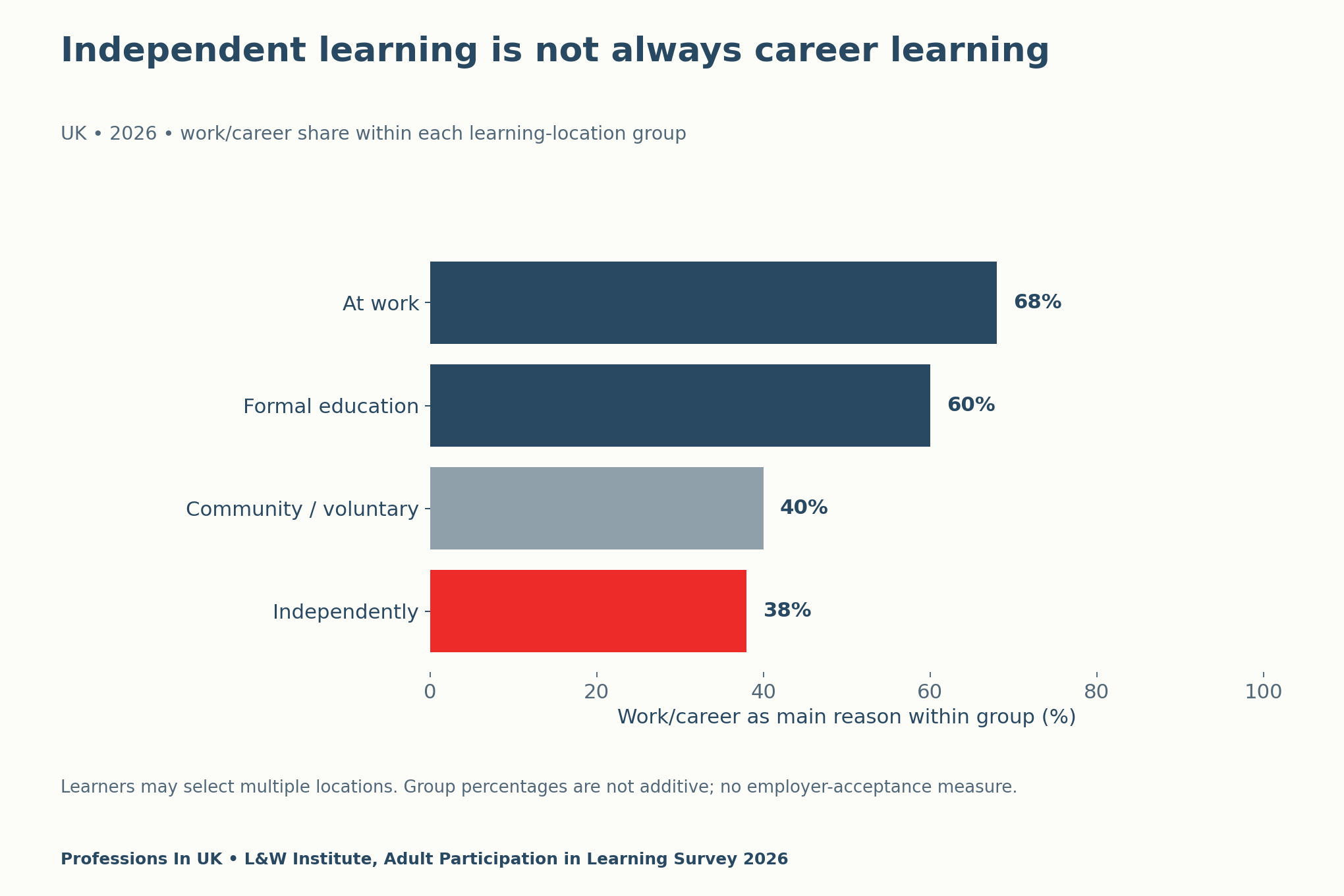
Independent learning is also broader than learning alone: the report includes learning independently with others. Its 43% independent-learning measure should not be silently relabelled “self-taught job applicants”. In addition, the location groups overlap. Adding their percentages would produce an invalid total.
Three fictional before-and-after CV examples
The examples below demonstrate wording only. They are invented practice scenarios, not real applicants, verified achievements or claims about recruiter preferences. Replace them with evidence of your own work. Do not copy a result you have not produced.
| Practice context | Avoid overstating | More accurate wording |
|---|---|---|
| Spreadsheet practice | Advanced analyst with proven client impact | Built a synthetic household-budget workbook; checked category totals and documented three input-validation tests. |
| Introductory coding | Certified software developer | Completed an introductory Python course and built a practice CSV-cleaning script with a README and repeatable checks. |
| Writing practice | Experienced communications professional | Produced three sample service-update emails for fictional scenarios and revised them using documented peer feedback. |
A completion certificate belongs with its exact course title and issuer. A practice project belongs with its actual task and output. A recognised qualification needs its real awarding details. Meanwhile, paid work should describe duties and outcomes you can substantiate. These categories can support one another without becoming interchangeable.
Review the evidence before sharing it
Use five independent checks: is the output viewable, relevant, attributable, assessed and permitted to share? Record the answer and any limitation. For assessment, specify whether you checked the work yourself, received peer feedback or passed an independent assessment. Do not turn these checks into a numerical hiring score.
Confidentiality needs particular care. Rebuild an example using synthetic inputs if the original contains employer or client information. Remove personal details and check permissions for templates, images and datasets. A public portfolio link is optional; follow the employer’s application instructions and provide an appropriate alternative when needed.
Personalized UK Career Consulting
Receive tailored career guidance designed just for you. Get actionable steps and expert support to boost your career in 1-3 days. Take control of your career now.
Get StartedFor a specialist route, our guide to EV training qualification checks shows why a portfolio cannot replace required competence. Our retraining cost guide can help you consider the wider learning budget. Neither means that buying a course is necessary for every skill example.
Download the source data and evidence tools
The survey-data CSV labels each denominator and report page. The blank evidence ledger supports ten prospective examples; it is not a completed study. The fictional wording examples and review checklist are editorial tools. Keep their limitations when adapting them.
- Survey percentages and denominators (CSV)
- Blank skills-evidence ledger (CSV)
- Three fictional CV wording examples (CSV)
- Evidence review checklist (CSV)
Methodology, limits and suggested citation
We transcribed the displayed percentages from the original survey report, including its methodology annex. Charts retain the original population bases and rounded percentages. The main-reason unknown share is an approximate rounded residual; it is not an independently estimated subgroup rate. We did not multiply participation, delivery and location shares.
The online, weighted, self-report survey includes leisure learning and may underrepresent digitally excluded groups. The report cautions about comparisons with the face-to-face method used before 2021. Our charts therefore describe the 2026 results, rather than implying a causal trend. No recruitment experiment or portfolio audit was performed.
Suggested citation: Professions In UK (8 November 2026), “Self-Taught Skills on a UK CV: Turn Learning Into Evidence”, using Learning and Work Institute’s Adult Participation in Learning Survey 2026. Cite the primary report when reusing its statistics, and label our fictional examples as fictional.


