







Legal complaints handling skills in England and Wales improve through specific practice: clear updates, recorded next steps, recognition of dissatisfaction, appropriate escalation and supervised response writing. This CPD plan helps you identify an evidence gap and produce something a supervisor can review. It does not replace your firm’s current procedure or certify compliance.
The immediate research hook is the Office for Legal Complaints’ 4 November 2026 strategy consultation. Its figures separate observed intake from future forecasts. We use that distinction throughout, alongside annual casework insight, to frame practical learning tasks rather than predict legal-sector hiring or rank firms.
Research checked on 8 November 2026. The draft 2027–30 strategy remains a consultation. This is an educational development resource for solicitors, paralegals and client-care colleagues, not advice on litigating an individual complaint.
Separate observed demand from the consultation forecasts
The OLC’s November announcement reports 10,447 new complaints in 2024/25 and 14,259 in 2025/26. It forecasts 17,994 in 2026/27 and 21,210 in 2027/28. The latter two values are expected intake, not completed-year results. A larger ombudsman caseload also does not establish the failure rate across all legal matters.
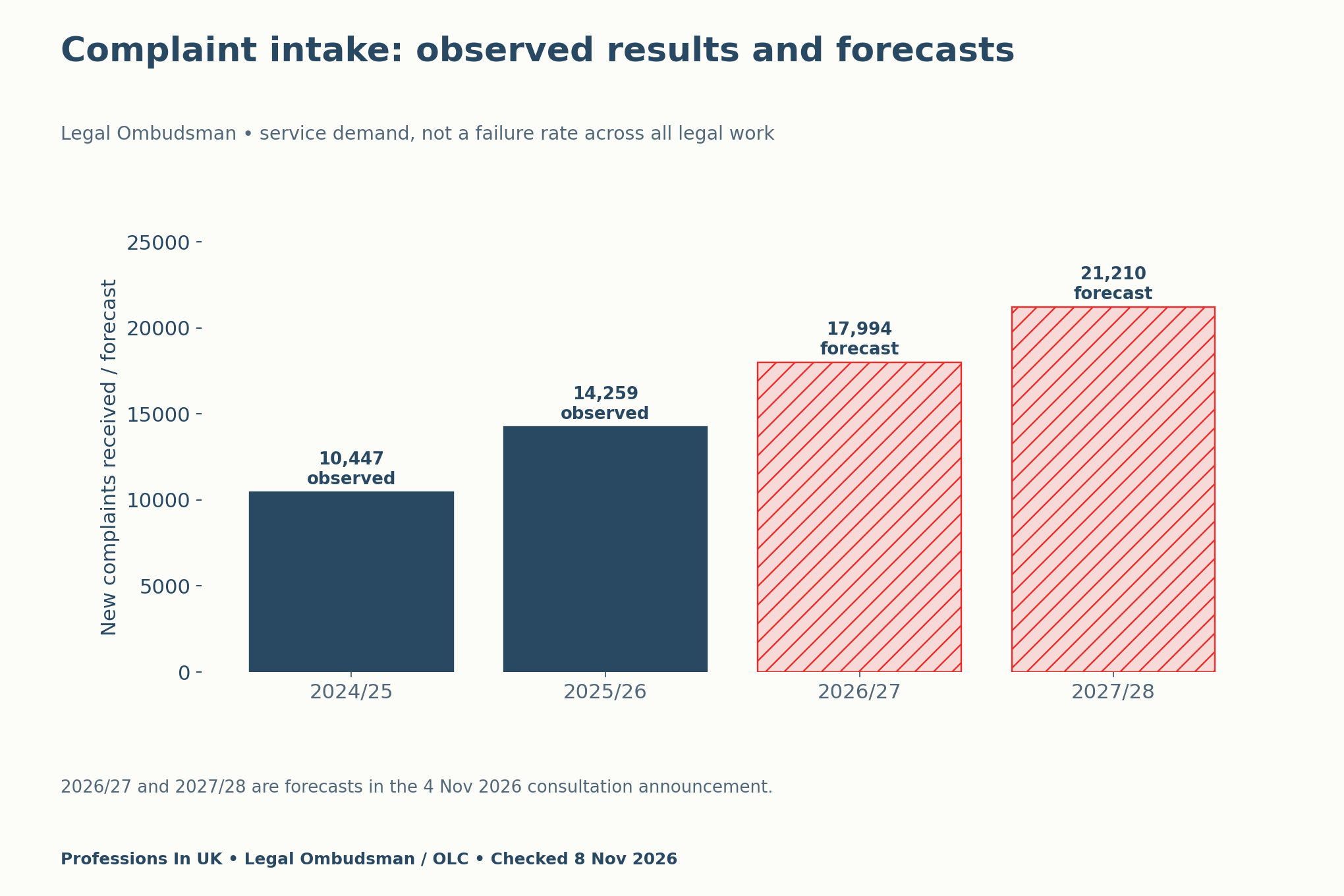
| Year | New complaints | Evidence status | Interpretation |
|---|---|---|---|
| 2024/25 | 10,447 | observed | Service intake |
| 2025/26 | 14,259 | observed | Service intake |
| 2026/27 | 17,994 | forecast | Prospective estimate |
| 2027/28 | 21,210 | forecast | Prospective estimate |
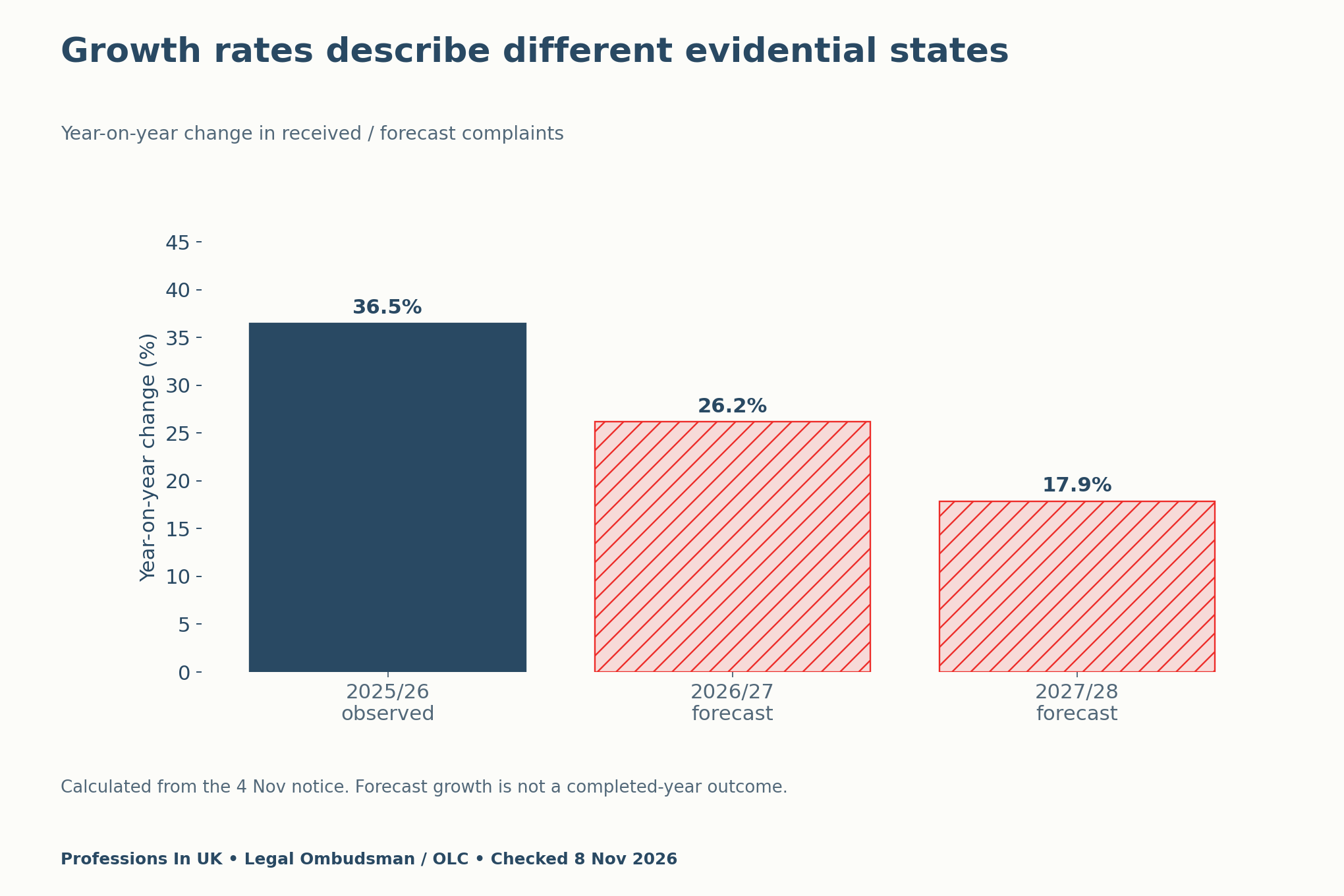
These calculations help readers reproduce the announcement’s scale. They do not explain a cause, predict a particular provider’s performance or determine a person’s entitlement. In addition, the consultation’s future service ambitions are proposals and expectations. They are not existing individual resolution guarantees.
What the annual insight can teach a training team
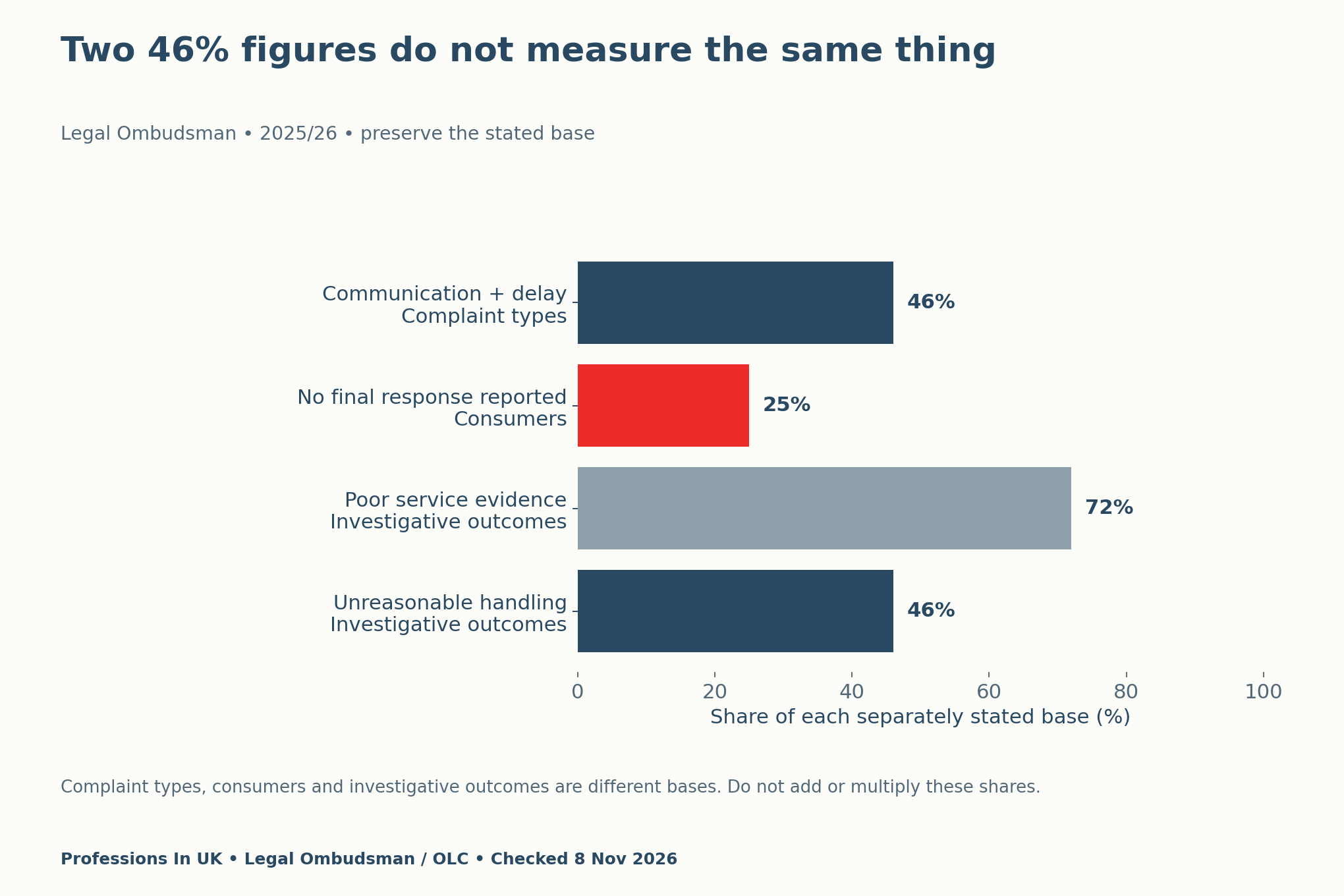
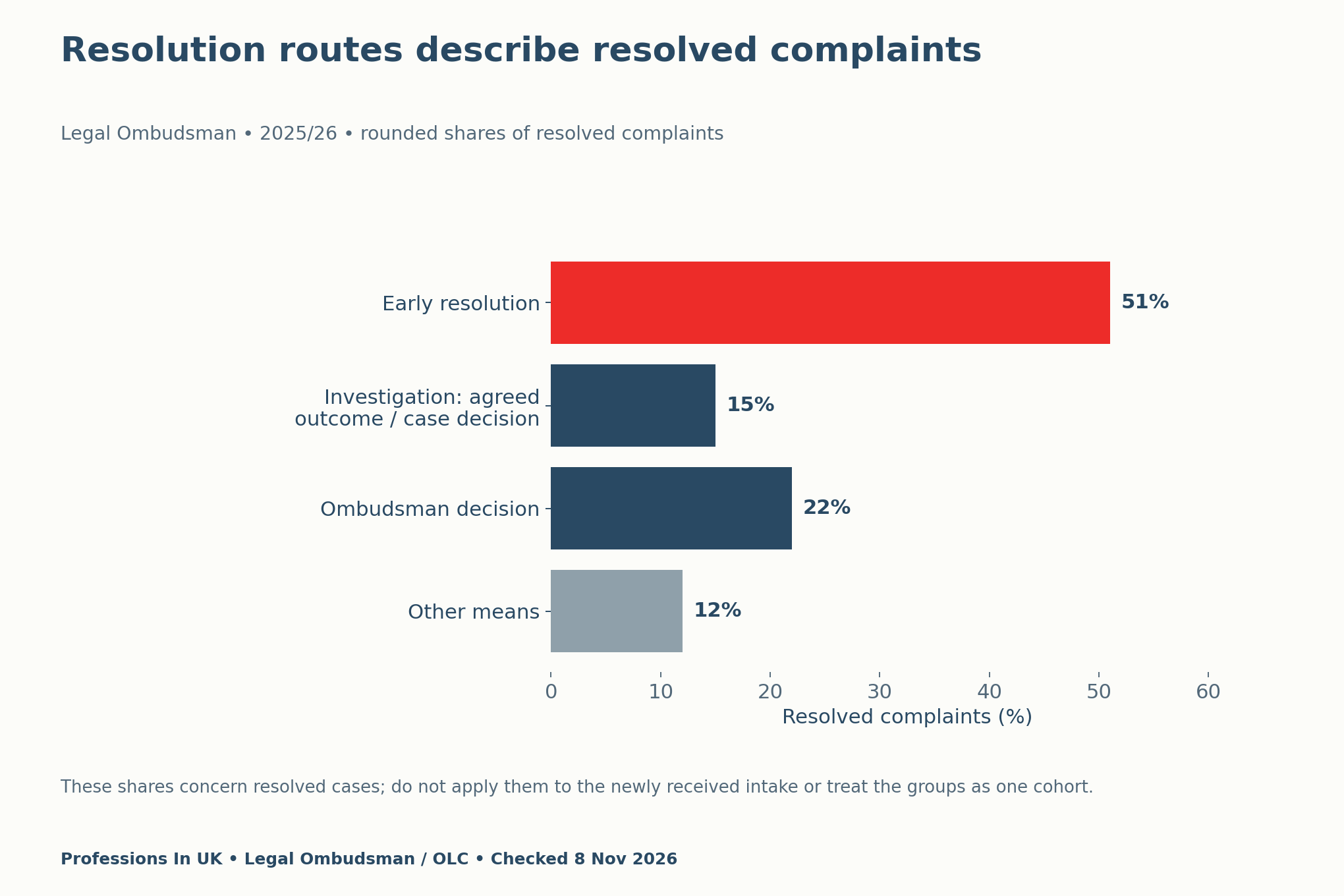
The 2025/26 annual insight covers 1 April 2025 to 31 March 2026. Communication and delay account for 46% of complaint types. Separately, 25% of consumers said they had not received a final response. Those two percentages have different bases. They are supporting annual evidence, not a new November consumer survey.
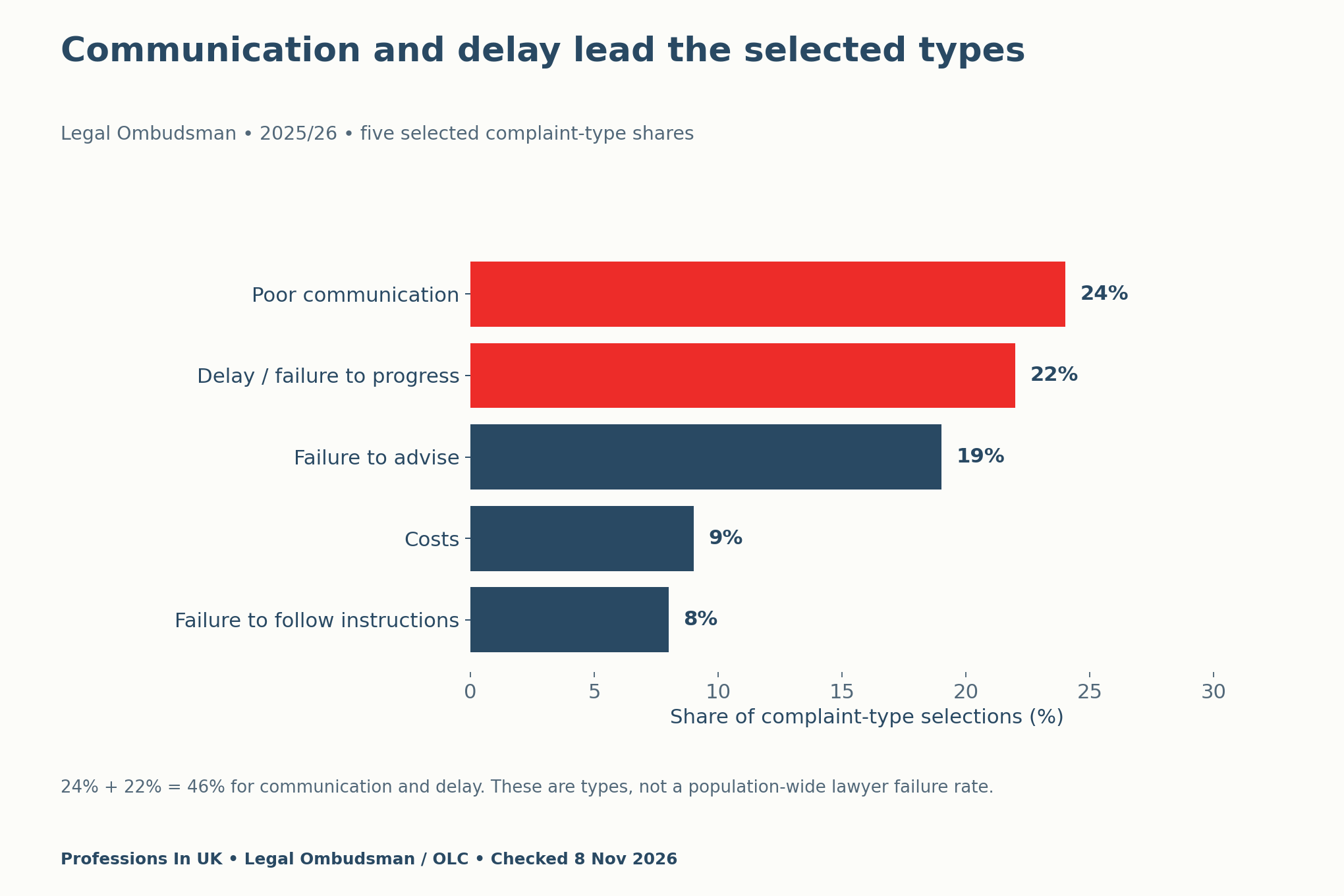
For a CPD plan, the useful question is concrete: what could you practise and document? A broad statistic does not identify the cause of a specific case. Therefore, use a fictional scenario to examine your own writing and handoffs, with appropriate supervision and permission.
Legal complaints handling skills: build a reviewable CPD plan
Begin with one capability and one observable task. Record why you chose it, what you produced and what feedback changed. A supervisor can then discuss the actual output. Keep a training exercise separate from authority to handle a real complaint.
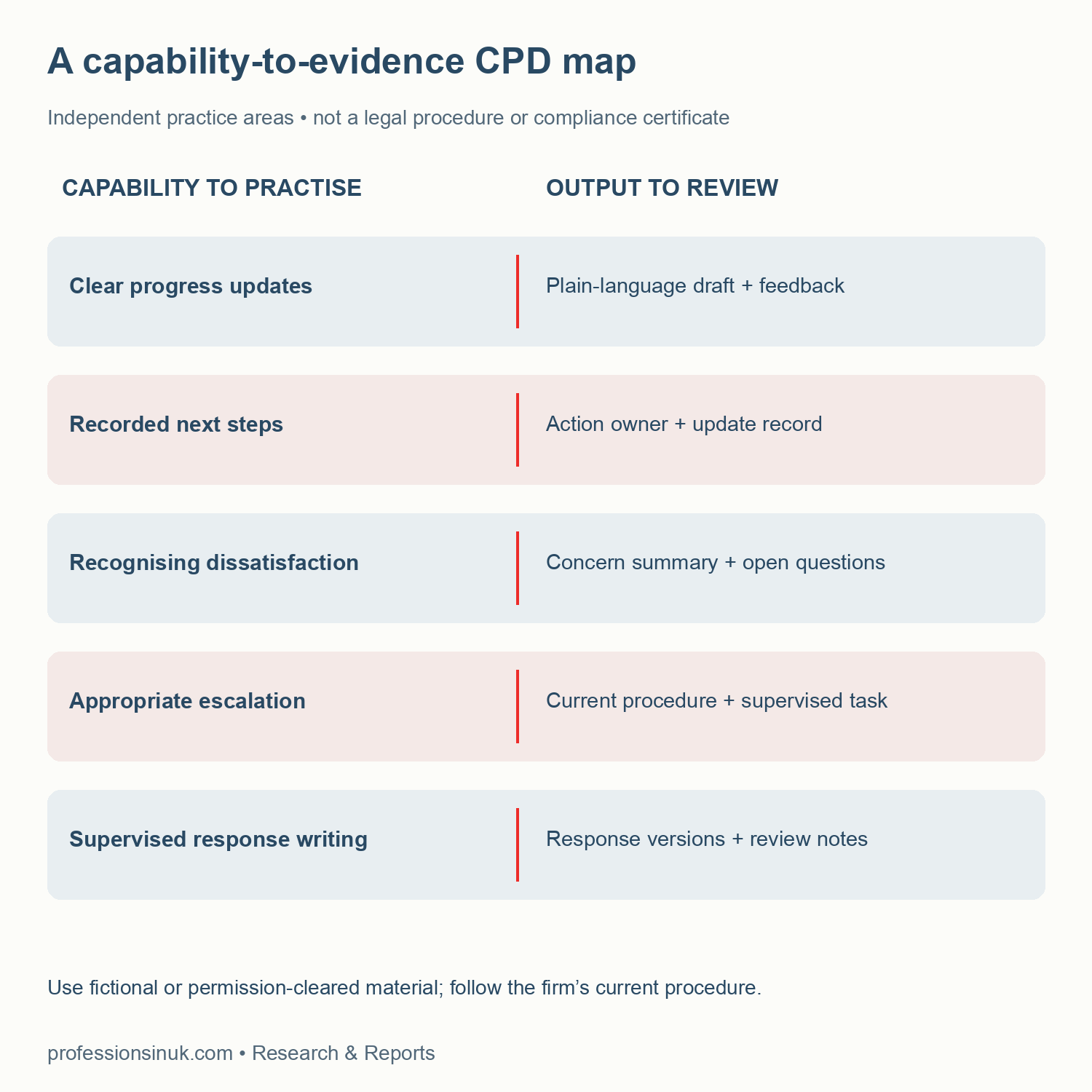
Practise a clear progress update
Use a fictional message that leaves the reader unsure what has happened. Rewrite it with confirmed facts, the next check and a proposed update point. Explain unfamiliar terms in ordinary language. However, do not fill a gap with invented progress, an unsupported explanation or a promise about the result.
Retain the original draft and the revised version. Ask a supervisor what is clearer and what still needs checking. The useful evidence is the change in the writing and its reasoning, rather than an unsupported claim that a communication course reduced complaints.
Record next steps and recognise dissatisfaction
For the next exercise, list each promised action and its owner. Mark facts that remain unverified and distinguish a proposed update date from a completed action. Then read a synthetic client message and identify the concern being raised. Avoid assuming that silence means satisfaction or that a client knows the internal process.
A short issue summary can support a review: what was expected, what is known, what question remains and who needs to consider it? Keep personal details out of training copies. If you adapt real material, obtain appropriate permission and follow confidentiality requirements.
Locate escalation routes before drafting a response
Find the firm’s current procedure and the colleague responsible for supervising this work. Check your own role and the point at which a concern needs escalation. A junior employee should not assume authority from having completed a worksheet. Equally, a handoff needs an identified recipient and a record of what still needs attention.
Next, draft a response to a fictional scenario under supervision. Separate the concern, confirmed facts, unresolved checks and proposed next steps. Ask the reviewer to assess it against current jurisdiction-specific guidance and the firm’s procedure. This article does not decide whether a live response meets every obligation.
Try the fictional case exercise
A fictional client expected an update on Tuesday. By Friday, none has arrived. They ask whether any progress has occurred and whether an additional charge is expected. Your exercise is to identify missing facts, draft a clear holding update and record the appropriate internal handoff. Do not invent case progress or authorise a charge in the exercise.
Personalized UK Career Consulting
Receive tailored career guidance designed just for you. Get actionable steps and expert support to boost your career in 1-3 days. Take control of your career now.
Get StartedKeep three outputs: an issue summary, a revised update and a supervised action record. Note what feedback changed. If a question concerns a real complaint, use the current firm procedure and an appropriately qualified colleague instead of applying this fictional answer mechanically.
Our skills-evidence guide explains how to describe practice without overstating competence. Apply that same care to CPD records: identify your actual contribution, retain the reviewed output and state what remains to learn.
Download the evidence pack
The data CSV labels units, periods, bases and forecast status. The capability worksheet and fictional case support private learning. The blank audit plan is for an authorised firm to define its own sample and review fields; it contains no client records or completed audit results. Publish only permission-cleared aggregates if you later carry out an audit.
- Complaint data, definitions and forecast status (CSV)
- CPD capability-to-evidence worksheet (CSV)
- Fictional client-update practice exercise (CSV)
- Blank authorised internal-audit plan (CSV)
Methodology, limits and citation
We transcribed the OLC’s current November intake figures and the selected annual-insight measures. We calculated percentage changes from the displayed counts and retained one decimal place. Complaint types, consumers, investigative outcomes and resolved cases keep separate denominators. No client files were accessed, no training intervention was tested and no firm was ranked.
The casework is not a random sample of every legal transaction. Forecasts may change, and the strategy is not final. Our fictional exercises and templates are editorial learning aids; they neither determine jurisdiction nor guarantee an outcome or compliance. Review the current professional guidance and your own responsibilities before using the framework in practice.
Suggested citation: Professions In UK (8 November 2026), “Legal Complaints-Handling Skills: A CPD Plan for England and Wales”, using the OLC’s 4 November 2026 consultation announcement and Legal Ombudsman 2025/26 annual insight. Retain observed/forecast labels and population bases when reusing data.


