




Core Responsibilities and Daily Tasks of Housekeeping Staff
Housekeeping staff maintain clean and comfortable guest environments every day.
Additionally, they perform routine tasks that support overall property operations.
Moreover, their daily work helps keep the property functioning smoothly.
Primary Responsibilities
They ensure rooms meet cleanliness standards.
Also, they ensure rooms meet presentation standards.
Furthermore, they prepare rooms for incoming guests and prolonged stays.
Daily Cleaning Tasks
- Clean and sanitize guest rooms and bathrooms thoroughly.
- Dust surfaces, vacuum floors, and wipe high-touch points.
- Change bed linens and replace towels according to standards.
- Empty waste receptacles and handle disposal per procedures.
Laundry and Linens
They collect and process linens as part of the daily workflow.
They return cleaned linens to rooms or storage promptly.
Additionally, they inspect linens for wear and remove damaged items.
Restocking and Supplies
They replenish guest amenities in rooms.
They replace consumable items according to property standards.
They monitor supply levels and report shortages when necessary.
Inspections and Quality Control
Supervisors and staff inspect rooms to verify readiness.
They identify and correct issues found during inspections.
They document findings to support continuous improvement.
Personalized UK Career Consulting
Receive tailored career guidance designed just for you. Get actionable steps and expert support to boost your career in 1-3 days. Take control of your career now.
Get StartedGuest Interaction and Service Requests
Housekeeping responds to guest requests promptly.
They act professionally when interacting with guests.
They communicate special needs to relevant staff members.
Safety Practices and Waste Management
Staff follow safety procedures when using cleaning products.
They also follow safety procedures when operating equipment.
They segregate waste and handle disposal per property protocols.
Coordination and Reporting
Housekeeping coordinates with other departments to address maintenance needs.
They also coordinate with teams to resolve guest needs.
They update logs and report recurring issues to supervisors.
How Housekeeping Directly Influences Guest Satisfaction, Reviews, and Repeat Business
This section explains how housekeeping affects guest perceptions and behavior.
It covers cleanliness, readiness, communication, and feedback integration.
The following headings present specific impacts and direct ways.
First Impressions and Room Readiness
First impressions shape guest expectations.
Visible cleanliness affects immediate guest trust.
Your Dream Job Starts with a Perfect CV
Get a tailored CV and cover letter that captures your unique strengths and stands out in your industry. Let us help you make an unforgettable first impression.
Get StartedTidy presentation signals professional care.
Perceived Cleanliness and Guest Trust
Perceived cleanliness builds guest confidence in the establishment.
Guests then feel comfortable using facilities and amenities.
Consistent cleanliness reduces guest complaints.
Influence on Reviews and Online Ratings
Cleanliness often features prominently in guest reviews.
Housekeeping quality therefore influences overall rating averages.
Positive comments attract future bookings.
Role in Guest Loyalty and Repeat Business
Guests who experience consistent cleanliness return more often.
Reliable room standards encourage repeat stays.
Positive housekeeping impressions support long term revenue.
Communication and Responsiveness
Clear communication between staff and guests enhances satisfaction.
Prompt responses resolve concerns before they escalate.
Visible responsiveness improves guest confidence in service.
Measuring Impact and Feedback Integration
Managers can gather guest feedback to assess cleaning perception.
Optimize Your LinkedIn for Success
Boost your LinkedIn profile with a professional bio, keyword-rich headline, and strategic recommendations that attract recruiters. Stand out from the crowd and get noticed.
Optimize NowTeams can adapt practices based on guest input.
Iterative improvements reinforce positive guest experiences.
Direct Ways Housekeeping Affects Guest Outcomes
Housekeeping affects outcomes through perception, readiness, and interactions.
These influences shape booking decisions and guest sentiment.
The list below highlights direct ways housekeeping affects guests.
- Cleanliness perception influences guest satisfaction and trust.
- Timely room readiness affects arrival experiences.
- Attention to detail shapes perceptions of overall quality.
- Consistent standards encourage repeat bookings and recommendations.
- Positive interactions build loyalty and word of mouth referrals.
Health, Hygiene and Safety Standards for Guests and Staff
Housekeeping maintains protocols that protect guest and staff health.
Additionally, teams reduce cross-contamination by separating cleaning supplies and linen streams.
Furthermore, staff prioritize sanitation of high-touch surfaces at regular intervals.
Moreover, laundry handling follows procedures that minimize microbial transfer.
Consequently, these measures support a safer environment for everyone on site.
Essential Hygiene Measures
- Hand hygiene protocols require consistent staff compliance and monitoring.
- Safe linen handling minimizes contact between clean and soiled textiles.
- Targeted cleaning addresses high-use areas and frequently touched surfaces.
- Proper ventilation and air circulation support overall hygiene efforts.
- Preventive pest control reduces health risks related to infestations.
Safe Chemical and Waste Handling
Housekeeping ensures safe storage and clear labeling of cleaning agents.
Staff use containment methods to prevent accidental exposure and spills.
Teams separate waste streams to reduce contamination risks.
Procedures guide the safe transport and disposal of hazardous materials.
Personal Protective Equipment and Staff Safety
Staff wear appropriate protective equipment during cleaning and maintenance tasks.
Supervisors verify correct fit and condition of protective gear.
Protocols require removal and replacement of soiled protective items.
These practices reduce occupational health risks for housekeeping staff.
Training, Auditing and Compliance
Housekeeping participates in ongoing training on hygiene and safety topics.
Teams follow documented procedures and checklists to ensure consistency.
Regular audits identify gaps and guide corrective action planning.
Documentation and records support accountability and continuous improvement.
Emergency Preparedness and Incident Response
Housekeeping prepares response steps for spills, contamination, and health incidents.
Staff follow reporting processes to notify management promptly.
Teams isolate affected areas to limit further exposure.
Post-incident reviews inform updates to protocols and training.
Collaboration and Communication
Housekeeping coordinates with other departments to maintain safety standards.
Clear signage and communication inform guests and staff about risks.
Feedback loops help refine procedures and improve workplace safety.
Transparent communication fosters shared responsibility for health and hygiene.
You Might Also Like: How Hotel Managers Ensure Memorable Guest Experiences
Operational Effects
Efficient cleaning reduces the time rooms remain vacant.
Staff prepare rooms faster for arriving guests due to that efficiency.
Predictable turnover supports reliable room availability planning.
Room Turnover and Availability
Clear departure schedules help prioritize cleaning assignments.
Staged supplies at carts reduce movement and cleaning time.
Inspection checkpoints ensure readiness before releasing rooms.
- Clear departure schedules help prioritize cleaning assignments.
- Staged supplies at carts reduce movement and cleaning time.
- Inspection checkpoints ensure readiness before releasing rooms.
Coordination With Front Desk and Maintenance
Housekeeping communicates room statuses to front desk staff.
This allows the front desk to manage guest check-ins smoothly.
Staff report maintenance issues when they find them.
- Prioritizing rooms based on front desk requests.
- Flagging urgent maintenance needs during inspections.
- Sharing expected readiness times for incoming guests.
Workflow Efficiency and Resource Use
Organized workflows maximize staff productivity during shifts.
Clear task sequences reduce redundant movements.
Staff assign roles to balance workload across teams.
- Standardized cleaning steps for consistency and speed.
- Logical room routing to minimize travel time.
- Balanced staffing to match occupancy patterns.
Regular reviews of operations identify improvement opportunities.
Consequently, teams refine schedules and procedures over time.
Explore Further: Why Tour Guides Bring History and Culture to Life
Economic Significance and Financial Impact
Housekeeping influences property financial outcomes.
Teams control costs through disciplined resource management.
They also reduce asset wear and limit avoidable capital expense.
Cost Control
Housekeeping teams manage operational expenses through disciplined resource use.
They control supply consumption and reduce unnecessary replacements.
Efficient scheduling contains labor costs without compromising service standards.
- Inventory management minimizes waste and prevents overordering.
- Procurement coordination secures appropriate items at controlled costs.
- Waste reduction practices lower variable expenses over time.
Asset Protection
Housekeeping preserves furniture, fixtures, and linens through routine care.
Preventive attention reduces the need for early replacements.
Careful handling limits accidental damage and costly repairs.
- Tracking asset condition supports timely maintenance decisions.
- Secured storage reduces loss and shrinkage risks.
Contribution to Hotel Profitability
Housekeeping contributes directly through cost avoidance and operational continuity.
The hotel sustains financial performance with lower expense pressure.
Reliable asset care preserves capital investments over time.
Performance Measurement and Financial Oversight
Managers monitor key indicators to align housekeeping with financial goals.
For example, teams track supply usage rates, loss incidents, and maintenance costs.
Regular audits support transparency and informed budgeting decisions.
- Linen and amenity consumption per occupied room.
- Inventory shrinkage and replacement frequency.
- Maintenance incident counts and repair costs.
Operational Priorities That Affect Costs
Preventive maintenance scheduling reduces emergency repair expenses.
Training on efficient workflows minimizes time-related costs.
Clear inventory controls help forecast budget needs accurately.
See Related Content: Exploring Careers in Culinary Arts: From Kitchens to Fame
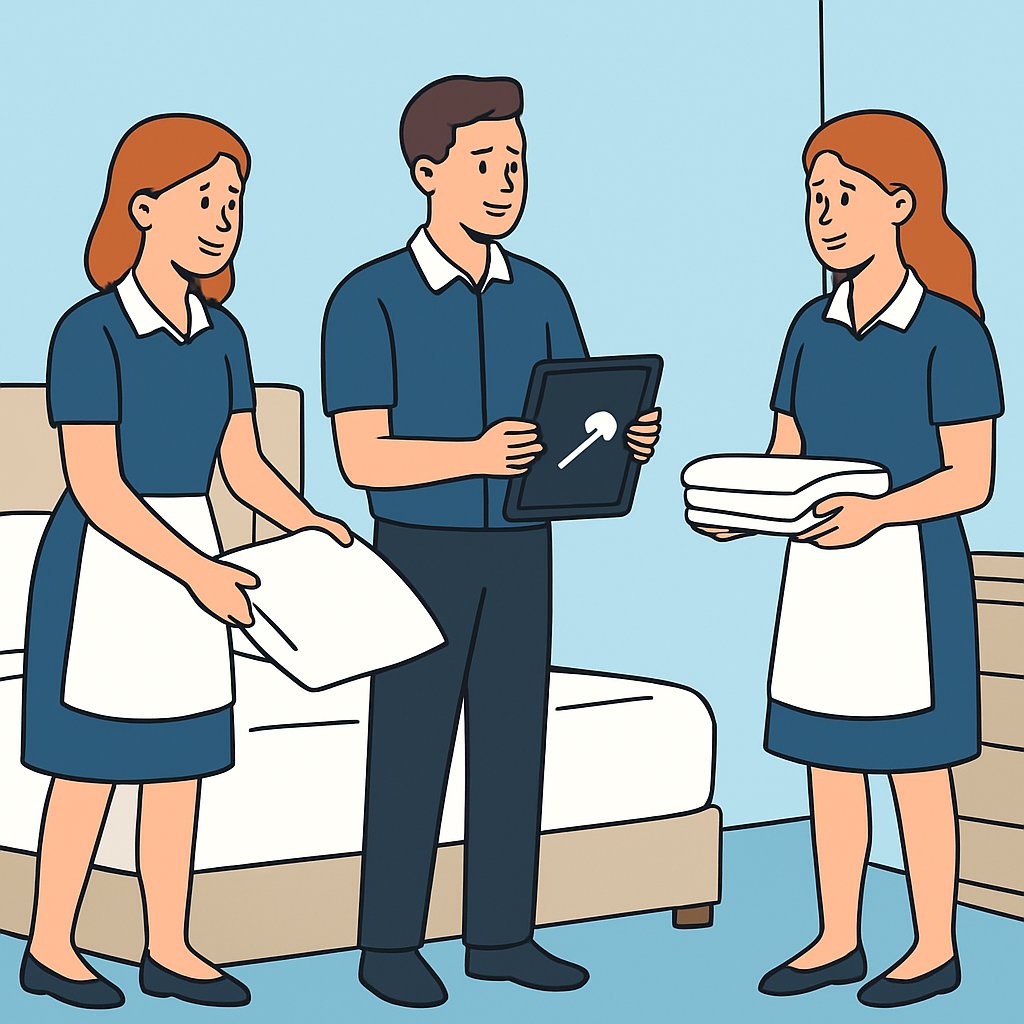
Workforce Challenges and Labour Dynamics in the UK Hospitality Housekeeping Sector
This section covers workforce challenges and labour dynamics in the UK hospitality housekeeping sector.
It examines recruitment, retention, working conditions, skills, terms, seasonality, and planning.
The content draws only on details provided in the snippet.
Labour Supply and Recruitment
The sector competes for workers across multiple service industries.
Therefore employers must present attractive job propositions to candidates.
Recruitment often involves high turnover and frequent vacancies.
Retention and Career Development
Retention depends on clear career pathways and recognition.
Moreover, staff seek opportunities for progression and skill development.
Consequently, training and promotion help reduce attrition.
Working Conditions and Staff Wellbeing
Shift patterns and workload influence staff wellbeing and satisfaction.
Additionally, ergonomic considerations affect physical demands at work.
Employers should monitor wellbeing and adjust schedules when possible.
Skills, Training and Progression
Housekeeping roles require a mix of practical and soft skills.
Therefore targeted training supports consistent performance and confidence.
Furthermore, cross-training can increase flexibility and career mobility.
Employment Terms and Regulation
Employment contracts and pay structures shape labour relations.
Moreover, compliance with employment rules affects rostering and pay practices.
Employers must balance operational needs with fair employment terms.
Seasonality and Demand Fluctuations
Demand varies across seasons and event cycles.
Consequently, staffing needs often require flexible resourcing strategies.
Temporary staffing and flexible contracts can manage short-term demand peaks.
Workforce Planning and Management Responses
Data-driven workforce planning can improve staffing alignments.
Moreover, managers can use flexible rostering to match busy periods.
Finally, ongoing dialogue between management and staff enhances workforce resilience.
Find Out More: How Front Desk Managers Keep Hotels Running Smoothly
Training and Skills Development
This section describes training programs and skill development for housekeeping staff.
Additionally, it explains foundational and specialized learning approaches.
Staff receive structured onboarding and ongoing refresher learning.
Foundational Training
Facilities provide structured onboarding to introduce procedures and expectations.
Trainers demonstrate proper techniques and ergonomic equipment handling.
Staff practice time management and task prioritization during sessions.
Training covers inventory handling and standard reporting protocols.
Specialized Skills and Continuous Learning
Specialized training develops skills beyond basic cleanliness tasks.
Programs teach fabric care techniques and stain removal approaches.
Staff access refresher modules to maintain competence over time.
Peer coaching and mentoring reinforce learned skills on the job.
- On-the-job training allows practical skill application under supervision.
- E-learning modules offer flexible knowledge updates and theory reinforcement.
- Workshops provide hands-on practice and scenario-based problem solving.
- Mentorship pairs new staff with experienced colleagues for guided development.
Career Progression Pathways
This section outlines progression pathways and career development options.
It highlights role definitions, mobility routes, and organizational support.
Employees learn how to pursue supervisory or specialist roles.
Mapping Career Ladders
Organizations define clear ladders to map progression opportunities.
Competency frameworks list the skills required for each role.
Staff use these frameworks to set goals and monitor progress.
Supervisory and Management Routes
Supervisory training prepares staff to lead teams and manage workflows.
Leadership development emphasizes communication and practical problem solving.
Management pathways increase responsibility and expand decision making authority.
Lateral Moves and Specialist Opportunities
Staff may move laterally into related operational areas for broader exposure.
Specialist roles enable deeper expertise in specific operational functions.
These moves broaden skill sets and expand future role options.
Organizational Support for Advancement
Organizations foster growth through mentorship and regular performance reviews.
They enable internal recruitment and succession planning practices.
Some organizations provide training allowances or scheduled learning time.
Modernisation and Sustainability
Modernisation and sustainability guide housekeeping strategy.
Teams adopt technology and green practices to improve outcomes.
Sustainable inventory supports resource efficiency across operations.
Technology and Digital Tools
Housekeeping teams adopt digital tools to streamline routine tasks.
They also use digital tools for documentation and records.
Additionally, mobile apps enable real time communication and task assignments.
- Automated scheduling reduces manual coordination and improves visibility.
- Inventory tracking systems monitor supplies and flag replenishment needs.
Green Cleaning Practices
Green cleaning reduces environmental impact and keeps standards.
Teams select cleaning methods that minimize water and chemical use.
- Concentrated solutions and measured dosing lower product waste.
- Reusable textiles and efficient laundering reduce resource consumption over time.
Operational Adjustments for Environmental Performance
Teams adjust procedures to reduce single use items and packaging waste.
Consequently, staff receive guidance on material handling.
They also follow guidance for proper waste segregation.
Sustainable Inventory Management
Sustainable inventory practices balance supply availability with waste reduction goals.
Centralized tracking helps avoid overordering and prevents stockouts.
- Regular audits identify excess items and inform stock level adjustments.
- Rotation systems maintain product freshness and reduce expired stock.
Procurement and Supplier Engagement
Procurement choices influence the sustainability of housekeeping operations.
Teams consider material longevity and packaging when sourcing supplies.
Collaboration with suppliers supports consistent sustainable options.
Implementation Considerations
Change requires clear policies.
Staff involvement should start from the outset.
Monitoring helps refine practices and maintain sustainability goals.
Additional Resources
Bing search results for The Importance of Housekeeping Staff in Hospitality Hospitality and Tourism


