




Historical Evolution of Blacksmithing in the UK and Its Cultural Significance
Origins and Early Development
Blacksmithing in the UK dates back to the Iron Age.
It shaped early society profoundly.
Initially, blacksmiths crafted essential tools.
These tools supported agriculture and survival.
As communities grew, blacksmiths gained importance.
They provided weaponry and household items.
Consequently, their skills became vital for everyday life.
They also boosted local economies significantly.
Medieval Period and Expansion of Craft
During the medieval era, blacksmithing blossomed alongside towns.
Trade during this time grew rapidly.
Guilds such as the Worshipful Company of Blacksmiths regulated training.
They also maintained quality standards for the craft.
Furthermore, blacksmiths contributed to construction projects.
They created nails, hinges, and gates for buildings.
This period cemented blacksmithing as a cornerstone of craftsmanship.
Personalized UK Career Consulting
Receive tailored career guidance designed just for you. Get actionable steps and expert support to boost your career in 1-3 days. Take control of your career now.
Get StartedThe craft spread across the UK during this time.
Industrial Revolution and Transformation
The Industrial Revolution introduced new machinery to metalworking.
This development changed traditional blacksmithing practices.
Many blacksmiths adapted by integrating steam-powered hammers.
They also adopted new metalworking techniques.
However, mass production reduced demand for handcrafted goods.
Some smiths preserved artisanal methods.
They highlighted the cultural and artistic value of their work.
Blacksmithing as a Cultural Symbol
Blacksmiths symbolize strength, skill, and resilience in British folklore.
Many rural communities identified smiths as central local figures.
They played important roles in community life and events.
Stories of legendary smiths inspired literature over centuries.
These tales captured the public imagination widely.
Today, this heritage remains a proud aspect of UK cultural identity.
Your Dream Job Starts with a Perfect CV
Get a tailored CV and cover letter that captures your unique strengths and stands out in your industry. Let us help you make an unforgettable first impression.
Get StartedEfforts to Preserve Blacksmithing Tradition in Modern Times
Various organizations promote blacksmithing education nationwide.
They focus on heritage preservation and craft skills.
Craftsmen like Thomas O’Connor of Derbyshire teach traditional forging techniques.
Festivals and exhibitions celebrate blacksmithing’s historical significance.
Thus, the craft sustains cultural relevance while evolving with modern influences.
Traditional Blacksmithing Techniques Versus Modern Methods
Essence of Traditional Blacksmithing
Traditional blacksmithing relies on centuries-old skills and hands-on craftsmanship.
Blacksmiths like Arthur Pembroke in Devon continue to use the forge and anvil daily.
They shape metal by heating and hammering it into desired forms manually.
Consequently, each piece carries a unique character and artisanal value.
Moreover, traditional methods involve working with coal or charcoal forges.
This process requires mastery of fire control and metal properties.
Experienced smiths understand subtle changes in metal temperature by sight and touch.
Thus, precision comes from intuition developed over years of practice.
Adoption of Modern Blacksmithing Techniques
Meanwhile, some UK blacksmiths integrate modern tools and technology.
Optimize Your LinkedIn for Success
Boost your LinkedIn profile with a professional bio, keyword-rich headline, and strategic recommendations that attract recruiters. Stand out from the crowd and get noticed.
Optimize NowContemporary workshops, like Sheffield’s Iron Haven Forge, use power hammers and hydraulic presses.
These machines speed up shaping and reduce physical strain on smiths.
In addition, digital design software such as CAD aids in precise project planning.
Smiths create virtual models to test forms and fit before forging metal.
Additionally, computer-controlled plasma cutters and CNC machines assist with intricate cuts.
They enhance accuracy while maintaining handcrafted elements.
Balancing Tradition and Innovation
Skilled blacksmiths often combine older and newer techniques effectively.
For example, Joanna Winsley at Blackwood Forge uses digital sketches but hammers by hand.
This hybrid approach respects tradition yet embraces efficiency and innovation.
As a result, craftsmen meet modern demands without losing the soul of blacksmithing.
Furthermore, this blend allows custom orders to be executed faster and with consistent quality.
Therefore, blacksmiths continue to evolve while safeguarding their rich heritage.
Material and Process Adaptations
Traditional iron has given way in part to different metals like stainless steel and bronze.
Modern methods accommodate these materials more easily than purely manual techniques.
Heat treatment techniques also now include controlled furnaces for consistent results.
In contrast, traditional smithing depends on less predictable open fires.
This shift improves durability and expands design possibilities.
Consequently, customers receive products that are both beautiful and resilient.
Training and Skill Development
Apprenticeships remain vital for learning traditional skills from master smiths.
Yet, courses at institutions like Hereford College of Arts include digital metalworking modules.
This education prepares newcomers for the demands of contemporary blacksmithing.
Blending old and new techniques fosters creativity and technical expertise.
Thus, the modern blacksmith in the UK thrives by respecting the past and embracing the future.
Integration of Digital Technology and Tools in Contemporary Blacksmithing
Modern Tools Enhancing Traditional Craftsmanship
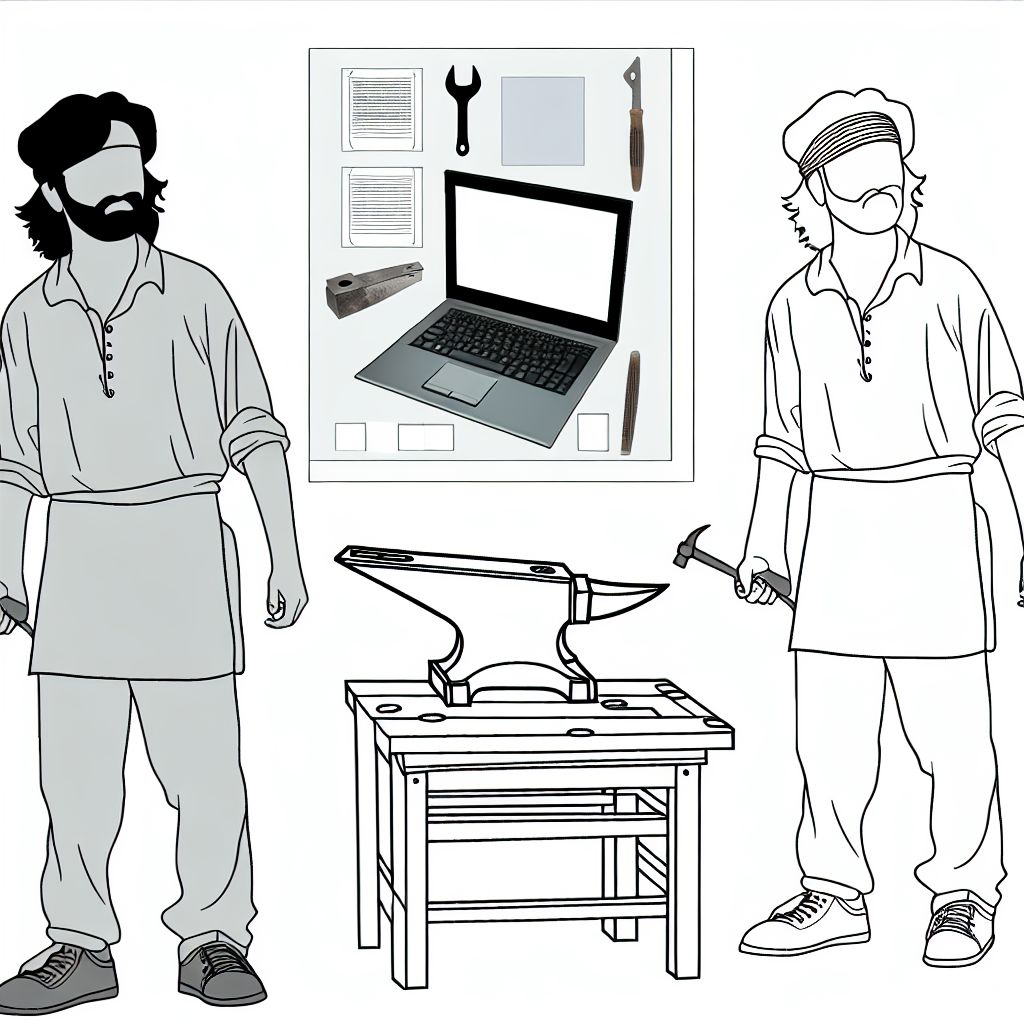
Contemporary blacksmiths in the UK increasingly embrace digital tools to refine their work.
For example, artisan blacksmith Liam Hargreaves uses CAD software to design intricate metalworks.
This technology allows creators to visualize projects before forging metal physically.
Moreover, CNC plasma cutters aid in achieving precise cuts on metal sheets.
These tools reduce material waste and increase production efficiency.
Furthermore, digital thermometers help monitor furnace temperatures with accuracy.
Consequently, smiths maintain optimal forging conditions, improving final product quality.
Blending Traditional Techniques with Digital Fabrication
Many blacksmiths merge handcraft skills with digital fabrication methods seamlessly.
Claire Dunlop’s studio exemplifies this hybrid approach through 3D-printed design prototypes.
She then hand-forges these pieces to add unique textures and personal touches.
This blend enhances creativity without sacrificing craftsmanship authenticity.
Additionally, laser engraving machines personalize metal creations with fine details.
These machines complement hand engraving, offering diverse artistic options.
Therefore, traditional smithing evolves alongside technological advancement effectively.
Digital Marketing and Online Platforms Supporting Craftsmanship
Smiths leverage digital platforms to showcase their artistry beyond physical workshops.
For instance, Felix Marlow promotes his handcrafted gates through social media channels.
Online marketplaces also connect buyers directly with skilled blacksmiths.
This digital presence increases customer reach and fosters community engagement.
Workshops and tutorials often utilize video streaming to teach blacksmithing skills remotely.
Thus, digital technology supports both craft promotion and skill sharing conveniences.
Emerging Technologies Influencing Blacksmithing Practices
Emerging technologies like augmented reality offer new possibilities for blacksmith training.
Trainers such as Emma Kelton integrate AR to provide immersive forging simulations.
This approach reduces initial material costs and accelerates learning curves.
Furthermore, collaborative online platforms enable idea exchange among smiths worldwide.
Companies like IronRoot Collective innovate by combining software with traditional metallurgy.
Digital tools progressively transform blacksmithing into a modern craft.
Explore Further: Exploring Careers in Plumbing: Ensuring Clean Water for All
The Role of Blacksmiths in Bespoke Craftsmanship and Custom Metalwork
The Revival of Traditional Skills
Blacksmiths in the UK play a vital role in preserving traditional metalworking skills.
They combine age-old techniques with modern creativity to produce unique pieces.
Furthermore, these artisans contribute to cultural heritage through their craftsmanship.
For example, Alexander Thornton’s forge in Devon blends classic forging with contemporary designs.
This revival encourages appreciation for handmade, bespoke metalwork in a mass-produced world.
Creating Bespoke Metalwork for Individual Needs
Blacksmiths excel at crafting bespoke metalwork tailored to client specifications.
They listen closely to customer ideas, ensuring personalized and meaningful results.
Additionally, the process involves close collaboration from concept to completion.
Blacksmiths like Fiona Gilligan create custom gates and railings that reflect client identity.
Such bespoke craftsmanship adds value and distinctiveness to homes and gardens.
Combining Artistry with Practical Functionality
Blacksmiths fuse artistic vision with functional requirements in their work.
They balance aesthetic appeal with durability and usability in every piece.
Moreover, objects like bespoke door handles or fireplace tools must endure daily use.
Richard Lawson’s workshop illustrates this blend through hand-forged furniture fittings.
This ensures each creation is both beautiful and built to last.
Supporting Local Communities and Businesses
Many blacksmiths collaborate with local builders, designers, and architects.
This partnership strengthens community connections and supports the local economy.
Moreover, bespoke metal pieces often complement architectural projects uniquely.
Cambridge-based forge Iron & Seed works closely with heritage restorers in the region.
Such cooperation promotes sustainable craftsmanship and local employment.
Adapting to Modern Technologies
Blacksmiths embrace digital tools to enhance design accuracy and customer engagement.
They use CAD software to visualize projects before forging begins.
This integration reduces errors and streamlines the fabrication process.
For instance, Marley Hughes’ forge uses 3D modeling to craft complex ornamental signs.
Consequently, modern technology complements traditional skills rather than replacing them.
Delve into the Subject: The Role of Machine Operators in Modern Manufacturing
Training Pathways for Modern Blacksmiths
Formal Education and Courses
Many aspiring blacksmiths begin their journey through formal training programs in the UK.
Institutions like the National School of Blacksmithing offer comprehensive courses.
These courses cover foundational skills such as metalworking, design, and safety procedures.
Moreover, students gain experience using modern tools alongside traditional techniques.
In addition, short workshops enable learners to sharpen specific skills quickly.
Ultimately, formal education provides a solid foundation to enter the craft professionally.
Apprenticeships and Mentorships
Apprenticeships remain vital for skill development in blacksmithing.
Experienced smiths such as Adrian Whitmore offer hands-on training.
This direct mentorship allows apprentices to learn practical skills on the forge.
In many workshops, apprentices rotate through different specializations to gain breadth.
Furthermore, apprenticeships build real-world experience and industry connections.
Therefore, many successful blacksmiths credit mentorship for honing their expertise.
Developing Skills in a Changing Industry
Combining Tradition with Technology
Modern blacksmiths embrace both traditional craft and innovative technologies.
For example, laser cutters and computer-aided design assist in creating detailed patterns.
Nonetheless, the core manual forging techniques remain essential for craftsmanship.
Blacksmiths like Freya Langdon showcase impressive work blending old and new.
Consequently, skill development involves learning new tools without abandoning time-honored methods.
Continuous Learning and Professional Growth
Blacksmiths must regularly update their skills to stay competitive.
Joining organizations such as the Artist Blacksmiths Association UK helps maintain connections.
Workshops, conferences, and online tutorials provide opportunities for ongoing education.
Additionally, many smiths explore specializations like architectural ironwork or bespoke jewelry.
Thus, career development relies on adapting to new trends and mastering diverse techniques.
Support Networks and Community Resources
Industry Networks and Associations
Blacksmiths benefit from active communities that share knowledge and opportunities.
Networks promote collaboration and showcase members’ work at exhibitions.
They also offer guidance for newcomers navigating the craft’s challenges.
Local groups in regions such as Yorkshire and Cornwall foster regional craftsmanship traditions.
Participation in these networks often leads to apprenticeships and commissions.
Online Platforms and Digital Learning
Digital platforms broaden access to blacksmithing education and interaction.
YouTube channels and webinars by smiths like Peter Ashbourne provide free tutorials.
Online forums enable discussion on techniques, tools, and project ideas.
Moreover, virtual workshops allow smiths from remote areas to train without travel.
These digital resources play a crucial role in sustaining the craft in a modern world.
Learn More: The Importance of Bricklayers in Building Strong Foundations
Challenges Faced by Blacksmiths in Maintaining Relevance in a Digital Age
Adapting Traditional Skills to Modern Expectations
Blacksmiths like Robert Henshaw confront the challenge of blending craft with technology.
They strive to preserve hand-forged quality while meeting contemporary market demands.
Moreover, many customers expect quicker production times and lower costs.
This creates pressure to increase efficiency without sacrificing craftsmanship.
Therefore, blacksmiths experiment with digital design tools alongside traditional forging.
For example, artisans use CAD software to prototype designs before forging metal.
However, not all blacksmiths have access to or training in these digital tools.
Consequently, skill gaps pose barriers to adopting new technologies effectively.
Navigating Market Visibility and Digital Marketing
Marketing specialist Emma Radcliffe highlights that blacksmiths struggle with online exposure.
Their traditional marketing methods do not translate well in digital spaces.
Social media and e-commerce platforms dominate consumer attention today.
In addition, blacksmiths find it difficult to create digital content that captures their craft.
They need to communicate the value of bespoke metalwork through engaging online presence.
Therefore, many blacksmiths seek help from digital marketers to build websites and manage social media.
Still, limited budgets and technological know-how restrict these efforts.
Ultimately, this limits blacksmiths’ ability to attract new, digitally savvy clients.
Competition from Mass Production and Alternative Materials
The rise of mass-produced metal goods challenges the blacksmith trade significantly.
Large manufacturers offer cheaper products in bulk at faster rates.
Consequently, handmade forge work may seem less accessible or affordable to buyers.
Furthermore, alternative materials like plastics and composites replace metal in many applications.
This shift reduces demand for some traditional blacksmith products like tools and fittings.
Nevertheless, artisans like Sarah Wilkinson focus on custom designs to differentiate their work.
They emphasize sustainability, durability, and unique craftsmanship to appeal to niche markets.
Hence, blacksmiths carve out relevance by offering what mass production cannot replicate.
Preserving Heritage While Evolving with Industry Trends
The blacksmith community values maintaining heritage and historical techniques.
Institutions such as the British Artists Blacksmiths Association promote traditional skills.
Yet, they also encourage members to innovate and integrate modern trends.
Workshops and apprenticeships merge hands-on practice with digital knowledge.
Blacksmiths learn to use laser cutting and CNC tools alongside the forge.
This hybrid approach helps sustain interest in the craft among younger generations.
Moreover, showcasing this balance attracts wider audiences to their work.
Thus, blacksmiths ensure their trade evolves without losing its authentic identity.
Learn More: Why Locksmiths Play a Crucial Role in Security
The Impact of Online Platforms and Social Media on the Blacksmithing Profession
Expanding Reach Through Digital Channels
Blacksmiths in the UK increasingly use online platforms to showcase their work.
Platforms like Instagram and Facebook allow artisans like Oliver Bennett to reach new clients.
Consequently, blacksmiths can display video tutorials and time-lapse forging sessions.
These engaging posts attract a wider audience interested in traditional craftsmanship.
Moreover, online galleries enable artists such as Emily Carter to sell their pieces globally.
Therefore, geographical barriers no longer limit potential customers or collaborators.
Community Building and Knowledge Sharing
Social media fosters a vibrant community among UK blacksmiths and enthusiasts.
Groups on Facebook and forums hosted by Blacksmiths Guild UK facilitate advice exchange.
New apprentices receive mentorship from experts like Thomas Greene through live streams.
Additionally, sharing success stories encourages emerging smiths to develop their skills.
These digital spaces also promote collaboration on projects and events across regions.
Marketing and Business Growth Opportunities
Digital marketing empowers blacksmiths to create strong brand identities online.
Craftsmen like Harriet Lawson use Instagram Shops to sell custom gates and railings.
Furthermore, targeted ads help attract customers seeking unique handmade metalwork.
Many smithies, including Forge & Feather in Yorkshire, report increased inquiries via social media.
Reliable customer feedback and ratings also enhance trust and reputation on these platforms.
Adaptations to Challenges in the Digital Landscape
Despite benefits, some artisans struggle to maintain consistent online engagement.
Learning digital tools can be challenging for smiths focused on hands-on craftsmanship.
However, workshops like those offered by Black Forge Collective help bridge this gap.
Embracing social media requires ongoing effort to create fresh, authentic content.
Ultimately, those who adapt balance traditional skills with modern marketing excel in today’s market.
Sustainability and Material Sourcing in Modern Blacksmithing Practices
Commitment to Sustainable Materials
Modern blacksmiths in the UK prioritize using materials with minimal environmental impact.
They source metals that have high recyclability and reduced carbon footprints.
For instance, artisans like Marcus Ellwood prefer reclaimed steel for their projects.
Moreover, sustainable sourcing reduces the demand for virgin metal extraction.
Therefore, this practice helps conserve natural resources and protects ecosystems.
Local suppliers such as Brambleton Metals support blacksmiths by providing responsibly sourced metals.
This partnership strengthens regional economies and lowers transportation emissions.
Innovative Techniques to Enhance Sustainability
Blacksmiths increasingly adopt energy-efficient forges and tools in their workshops.
For example, Naomi Fletcher uses electric induction forges, significantly cutting fossil fuel use.
Additionally, recycling scrap metal within the workshop reduces waste and material costs.
Consequently, craftsmen minimize leftover materials by precise measuring and cutting.
They also repurpose offcuts creatively in smaller decorative items or jewelry.
These methods demonstrate a commitment to waste reduction and resourcefulness.
Ethical Supplier Relationships
Building long-term connections with ethical suppliers ensures transparency in material origins.
Blacksmith David Larkin works closely with Foundry Forge Metals, known for sustainable practices.
Regular audits of supplier processes verify adherence to environmental and social standards.
Furthermore, these relationships encourage continuous improvement in the supply chain.
Transparency allows customers to trust the sustainability claims behind crafted pieces.
Ultimately, this fosters accountability throughout the blacksmithing community and beyond.
Profiles of Prominent UK Blacksmiths Embracing Digital Innovation
Emily Cartwright: Blending Tradition with Technology
Emily Cartwright combines classic blacksmith skills with modern digital tools.
She uses 3D modeling software to design intricate metalwork before forging.
This approach enhances precision and allows custom alterations easily.
Moreover, Emily shares her creative process through online tutorials and social media.
Her digital presence inspires a new generation of craftsmen and enthusiasts.
Oliver Bennett: Innovating with CNC Plasma Cutting
Oliver Bennett integrates CNC plasma cutting technology into his workshop.
This innovation complements his handcrafted touches and speeds up production.
He designs complex patterns digitally, then executes cuts with high accuracy.
Additionally, Oliver offers bespoke commissions that benefit from this hybrid method.
His work demonstrates how traditional blacksmithing benefits from advanced machinery.
Sophia Davies: Virtual Reality for Blacksmith Training
Sophia Davies pioneers virtual reality to teach blacksmithing skills remotely.
This technology allows students to practice techniques safely and repeatedly.
Her interactive VR modules simulate furnace heating and hammer strikes realistically.
Furthermore, Sophia collaborates with institutions to expand access to blacksmith education.
Her efforts contribute to preserving the craft through innovative learning methods.
Maxwell Rowe: E-commerce and Digital Marketing Success
Maxwell Rowe uses e-commerce platforms to showcase and sell his metal creations.
He applies digital marketing strategies to reach customers worldwide effectively.
Social media campaigns and online galleries highlight his craftsmanship skillfully.
In addition, Maxwell invites feedback to tailor his work to client preferences.
His digital-first approach boosts both visibility and sales in a competitive market.
Digital Tools Supporting Blacksmith Creativity
Many UK blacksmiths use digital software for design and project management.
The following tools frequently aid creativity and workflow efficiency:
- Computer-aided design (CAD) programs
- Laser and plasma cutting machines
- Virtual and augmented reality training environments
- Online platforms for marketing and sales
Together, these technologies enhance both craftsmanship quality and business reach.
Future Trends and the Evolving Market for Blacksmith Craftsmanship in the UK
Integration of Technology and Tradition
Blacksmiths increasingly adopt digital tools alongside traditional techniques.
For instance, CAD software helps designers like Oliver McLean create precise metalwork plans.
Additionally, 3D printing assists in crafting complex patterns before forging begins.
Such integration enhances creativity without sacrificing craftsmanship quality.
Consequently, workshops like Hartwell Forge blend hand forging with digital modeling smoothly.
Growing Demand for Custom and Sustainable Products
Consumers seek bespoke metalwork that reflects personal style and values.
Moreover, sustainability drives demand for ethically sourced materials and eco-friendly practices.
Artisans such as Isabel Greaves source recycled steel to appeal to environmentally conscious customers.
Furthermore, handcrafted gates and fixtures have become popular for heritage property restorations.
Therefore, blacksmiths cultivate niche markets focused on quality and environmental responsibility.
Expanding Educational Opportunities and Community Engagement
More blacksmiths offer workshops to share skills and attract new enthusiasts.
For example, the Sheffield Metal Arts Centre runs classes led by experienced smiths like Marcus Finley.
These sessions create vibrant communities that value craftsmanship and tradition.
Besides public courses, online tutorials from experts like Fiona Carter help worldwide learners.
As a result, the trade evolves with fresh talent and strengthened public interest.
Market Diversification and Collaboration
Blacksmiths diversify by collaborating with designers, architects, and artists.
Recently, FoundryWorks partnered with architect Emily Stokes to create bespoke urban furniture.
Such collaborations open doors to new commissions and broader audiences.
Likewise, participating in art festivals helps smiths like Darren Boyd showcase innovative metal sculptures.
This approach increases visibility and secures varied income streams.
Embracing Digital Marketing and E-Commerce
Smithies use social media platforms to promote their work and connect with clients.
For instance, Bryony Clarke shares progress videos that engage thousands of followers.
Online shops allow blacksmiths to sell products nationwide and internationally.
Sites like ForgeCraft UK help artisans expand their customer bases efficiently.
Thus, embracing digital marketing proves vital for growth in the modern marketplace.


