




Introduction to the Role of Sound Engineers in Movies and Music Production
Crafting Immersive Audio Experiences
Sound engineers play a crucial role in creating captivating audio for movies and music.
They blend technical skills with creative instincts to enhance the final product.
Moreover, their work shapes how audiences perceive sounds and storylines.
In film, sound engineers synchronize dialogue, effects, and music seamlessly.
Meanwhile, in music production, they ensure every note sounds clear and dynamic.
Collaborating with Creative Professionals
Sound engineers work closely with directors, producers, and artists.
Such collaboration ensures that audio supports the creative vision fully.
They interpret artistic requests while suggesting technical improvements.
Additionally, they manage recording sessions and mixing processes efficiently.
Utilizing Advanced Technology
Sound engineers leverage specialized equipment to capture and manipulate sound.
This technology includes microphones, mixing consoles, and digital audio workstations.
Furthermore, they stay updated with emerging tools to enhance audio quality.
Their expertise guarantees sound clarity and balance across various playback systems.
Enhancing Emotional Impact
Effective sound design elevates storytelling in both movies and music.
Sound engineers use audio cues to evoke emotions in audiences.
Personalized UK Career Consulting
Receive tailored career guidance designed just for you. Get actionable steps and expert support to boost your career in 1-3 days. Take control of your career now.
Get StartedFor example, subtle background sounds increase tension and immersion.
Therefore, their work enriches the overall entertainment experience significantly.
Overview of Audio Recording Techniques Used by Sound Engineers
Capturing Clear and Authentic Sound
Sound engineers prioritize capturing the purest sound during recording sessions.
They select high-quality microphones tailored for the specific source.
Positioning microphones strategically enhances the clarity and fullness of audio.
Additionally, soundproof studios provide an optimal environment free from unwanted noise.
Using pop filters and shock mounts reduces distortions and mechanical vibrations.
Multi-Track Recording for Flexibility
Engineers often use multi-track recording to isolate each instrument or voice.
This technique enables detailed editing and mixing after the recording process.
Moreover, multi-track setups allow artists to re-record parts without affecting others.
It provides flexibility in adjusting volume, effects, and spatial placement individually.
Employing Analog and Digital Technologies
Sound engineers balance analog warmth with digital precision when choosing equipment.
Analog gear like compressors and equalizers add character and depth to recordings.
Digital audio workstations offer powerful tools for editing and enhancing sound.
They use software plugins to simulate effects or correct pitch and timing issues.
Utilizing Room Acoustics and Ambience
Sound professionals understand how room characteristics influence recorded sound.
They adjust microphone placement to capture desired natural reverb and ambience.
Sometimes, engineers add electronic reverberation to create specific spatial effects.
This blend of real and artificial acoustics shapes the audio’s emotional impact.
Ensuring Signal Integrity and Noise Reduction
Maintaining clean signal flow prevents unwanted hums and interference.
Engineers use balanced cables and quality preamps to preserve audio fidelity.
Noise gates and filters help minimize background sounds in recordings.
Consistent monitoring during sessions catches potential problems early.
Collaboration Between Sound Engineers and Artists
Effective communication ensures the captured sound matches the artist’s vision.
Engineers provide feedback to improve performance and technical quality.
They adapt recording techniques according to musical style and genre demands.
This collaboration results in a polished and engaging final audio production.
Importance of Sound Mixing and Balancing Different Audio Elements
Enhancing the Listening Experience
Sound mixing ensures every audio component complements the overall soundscape.
Sound engineers skillfully blend vocals, instruments, and effects to create clarity.
Consequently, listeners enjoy a more immersive and emotionally engaging experience.
Balancing audio elements prevents any one sound from overpowering others.
As a result, the mix sounds professional and pleasing to the ear.
Maintaining Audio Consistency Across Platforms
Sound mixing guarantees consistency in audio playback across different devices.
Engineers tailor mixes to sound great on headphones, speakers, and theaters alike.
Therefore, listeners receive a reliable sound quality no matter the environment.
Balancing frequencies also avoids distortion or muddiness in the final output.
This precision is essential for both music albums and movie soundtracks.
Balancing Audio Elements Effectively
Sound engineers analyze each audio track thoroughly during the mixing process.
They adjust levels, panning, and equalization to achieve optimal balance.
Additionally, they use compression and reverb to enhance audio depth and texture.
Collaboration between mixers and producers ensures the artist’s vision comes through clearly.
Moreover, mixing technicians like Amelia Hart and Lucas Bennett are known for their meticulous attention to detail.
Tools and Techniques Used in Sound Mixing
Engineers rely on digital audio workstations such as Pro Tools and Ableton Live.
High-quality plugins help shape sound characteristics and dynamics precisely.
They also use reference monitors to hear every nuance in the audio mix.
By applying automation, engineers can dynamically adjust audio elements over time.
Sound studios like Meridian Audio Labs utilize cutting-edge equipment to perfect mixes.
Role of Sound Mixing in Storytelling for Movies and Music
Sound mixing plays a crucial role in enhancing narrative and emotional impact.
Balanced audio cues guide the audience’s focus during key moments.
For example, subtle sound effects enrich movie scenes and heighten tension.
Likewise, balanced instrumentals spotlight vocals and melodic themes in songs.
Thus, expert mixing significantly elevates the audience’s overall experience.
Discover More: Exploring Careers in Live Event Production
Use of Digital Audio Workstations and Sound Editing Software
Role of Digital Audio Workstations in Audio Production
Digital Audio Workstations, commonly known as DAWs, serve as the backbone of modern audio production.
Sound engineers rely on DAWs to record, edit, and mix audio tracks efficiently.
They offer a visual interface that simplifies complex audio manipulation tasks.
For instance, producers at BlueTone Studios use Pro Tools to shape movie soundtracks.
Moreover, DAWs enable users to layer multiple audio elements seamlessly.
As a result, filmmakers and musicians get precise control over every sound detail.
In addition, they support various plugins that enhance audio quality and effects.
Therefore, DAWs help professionals transform raw recordings into polished final products.
Key Features of Sound Editing Software
Sound editing software includes tools designed to improve and customize audio recordings.
Noise reduction, equalization, and compression are common features found in these programs.
Audio engineers like Olivia Marcus at SoundForge Audio use these tools daily.
They rely heavily on features that remove unwanted background noise to produce clear sound.
Furthermore, editors apply equalization to balance frequencies across the audio spectrum.
Compression techniques regulate dynamic range to ensure consistent volume levels.
Additionally, sound editing software allows time-stretching and pitch correction.
This flexibility lets engineers fix timing issues or tune musical performances flawlessly.
Popular Digital Audio Workstations and Their Applications
Several DAWs dominate the industry due to their robust features and reliability.
Pro Tools remains a top choice in professional studios for film and music production.
Logic Pro X attracts many songwriters and composers for its intuitive interface.
Ableton Live is favored by electronic music producers and live performance artists.
Celemony Melodyne excels in pitch correction and vocal editing tasks.
Each software suits different workflow preferences and project requirements.
Sound engineers carefully select tools that best match their creative goals.
For example, Marcus Whitley uses Ableton Live for scoring independent films with electronic music.
Integration of Software Tools in Collaborative Projects
Collaboration is essential in large-scale audio productions like blockbuster movies.
DAWs and editing software support file sharing and version control among teams.
Studios such as Horizon Sound Labs utilize cloud platforms linked with DAWs to sync work.
This connectivity boosts efficiency, allowing engineers to work simultaneously on a project.
Thus, changes made by one team member instantly update across the production network.
Furthermore, communication tools integrate with DAWs to facilitate real-time feedback.
Consequently, clients and producers can review mixes and suggest revisions remotely.
This smooth workflow shortens project timelines and enhances overall audio quality.
Learn More: How Photographers Capture Moments That Tell Stories
Techniques for Noise Reduction and Audio Enhancement
Advanced Noise Reduction Methods
Sound engineers apply various noise reduction techniques to create clean audio tracks.
They first identify unwanted sounds such as hiss.
They also detect hum or background chatter in recordings.
Then, they use spectral editing tools to isolate and remove these noises precisely.
For example, engineers at Crestline Audio employ iZotope RX software for this task.
Moreover, adaptive noise gates help cut ambient noise during quiet audio segments.
This approach significantly improves clarity without harming the original sound.
Additionally, multiband noise reduction processes help retain the tonal balance effectively.
Sound engineer Clara Jensen often customizes these settings for film projects.
Audio Enhancement Techniques
Audio enhancement brings depth and richness to recordings through various effects.
Equalization adjusts frequency balances to highlight important sound elements.
For instance, brightening vocals or emphasizing bass lines enhances listener engagement.
Compression controls dynamic range, ensuring consistent volume levels throughout.
Boosting subtle details requires skillful use of harmonic exciters or saturation plugins.
These techniques add warmth and character without distortion.
Reverb and delay effects create spatial dimensions, simulating real-world acoustics.
Mixing engineer Marcus Lin integrates these tools at Blue Harbor Studios frequently.
Workflow Integration and Collaborative Practices
Sound engineers collaborate closely with directors and musicians for optimal results.
They review raw audio and propose corrective measures early in production.
During post-production, engineers iteratively refine tracks to meet artistic vision.
They often combine manual editing with automatic processes for efficiency.
Utilizing high-quality reference monitors ensures accurate audio evaluations.
Furthermore, they document preset settings to maintain consistency across sessions.
Thus, careful integration of noise reduction and enhancement guarantees polished soundtracks.
You Might Also Like: The Role of Art Directors in Shaping Visual Narratives
Collaboration between Sound Engineers, Directors, and Music Producers
The Role of Communication in Audio Production
Sound engineers maintain constant communication with directors during post-production.
They clarify the director’s vision for the film’s audio landscape.
Music producers provide input on how songs blend with dialogue and sound effects.
Consequently, this collaboration ensures all audio elements align seamlessly.
Sound engineers also host regular meetings to discuss project goals and possible challenges.
Integrating Creative Visions for Movies and Music
Directors focus on storytelling and emotional impact in each scene.
Meanwhile, music producers craft the soundtrack to support that narrative.
Sound engineers balance these creative directions while preserving technical quality.
Together, they create a unique audio experience that enhances viewers’ engagement.
Coordinating Technical and Artistic Expertise
Sound engineers bring deep knowledge of recording, mixing, and mastering tools.
Directors understand how sound influences mood and pacing in film scenes.
Producers specialize in arranging and producing music that complements the story.
Therefore, teamwork maximizes both technical precision and artistic expression.
Essential Collaborative Practices
They exchange feedback frequently throughout the production process.
They use demo tracks and rough mixes to test different audio approaches.
Meetings often involve brainstorming sessions to solve audio challenges creatively.
By sharing responsibilities, the team ensures timely project delivery.
Effects of Collaborative Sound Production on the Final Product
Their collaboration results in immersive soundscapes that captivate audiences.
It enhances storytelling by matching sound to the director’s visual intentions.
Music producers ensure that songs elevate key emotional moments.
Ultimately, this teamwork helps deliver polished and memorable audio experiences.
Delve into the Subject: How Screenwriters Create Stories That Captivate Audiences
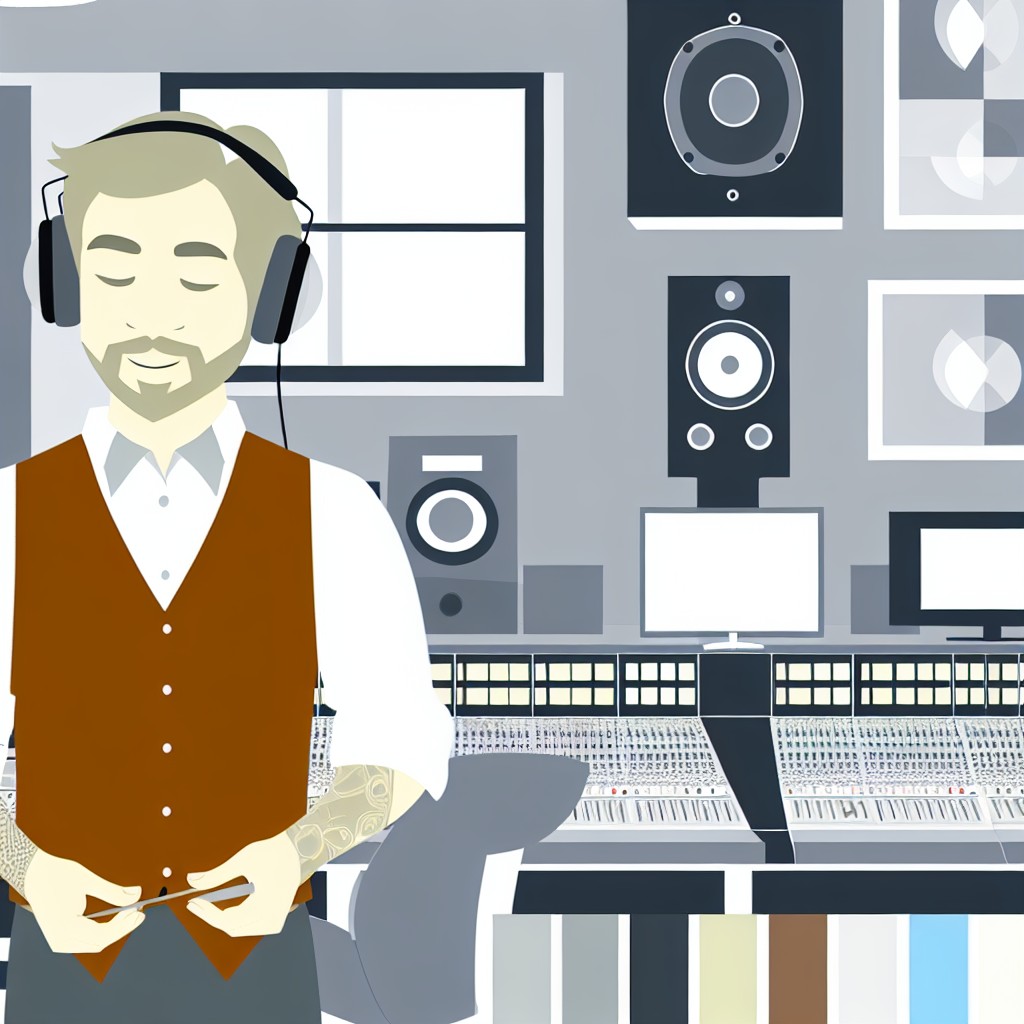
Challenges Faced in Synchronizing Sound with Visual Media
Timing Accuracy and Lip-Sync Precision
Sound engineers must ensure audio matches the timing of on-screen actions precisely.
They pay close attention to dialogue to maintain perfect lip-sync with actors’ performances.
Even minor delays can distract viewers and break immersion in movies or music videos.
Therefore, engineers use advanced software tools to adjust audio frames accurately.
Additionally, they collaborate closely with editors to align sound cues with visual events.
Handling Ambient and Environmental Sounds
In film, capturing the right ambient sounds enhances the realism of each scene.
Sound engineers must differentiate background noise from important audio elements.
They create balanced mixes so ambient sounds do not overpower dialogue or music.
Furthermore, engineers often layer multiple tracks to build a convincing soundscape.
This process requires keen listening and attention to detail throughout post-production.
Managing Audio Delays from Various Playback Systems
Different devices and theaters may introduce sound delay or echo issues.
Sound engineers test audio on various playback systems to detect timing discrepancies.
They then adjust soundtracks to ensure synchronization across platforms and formats.
Moreover, engineers optimize audio signals to reduce latency without sacrificing quality.
This challenge grows as streaming services and diverse devices become standard distribution channels.
Integrating Foley and Sound Effects in Post-Production
Adding Foley effects requires precise coordination with on-screen movements and actions.
Sound artists record footsteps, cloth rustling, and object handling synchronously with visuals.
Sound engineers layer these effects carefully without conflicting with dialogue or music.
They continuously review edits to maintain flawless audiovisual harmony throughout a scene.
Thus, this process demands patience as well as a deep understanding of timing nuances.
Synchronizing Music with Narrative Pacing
Music must complement and enhance the emotional rhythm of the visual story.
Sound engineers align musical cues with scene transitions and dramatic beats.
They adjust tempo and volume changes to support storytelling effectively.
Collaboration with composers and directors helps achieve the desired impact of each sequence.
Consequently, synchronization extends beyond timing into conveying the filmmaker’s vision.
Final Mastering Process to Ensure Audio Quality Across Various Platforms
Preparing Audio for Diverse Playback Environments
The mastering engineer adjusts the final mix to suit multiple playback systems.
Martin Reynolds, a mastering specialist at SoundCraft Studios, emphasizes this crucial step.
He explains that audio sounds different on headphones, speakers, and streaming platforms.
Consequently, engineers use reference monitors and various playback devices during mastering.
This approach guarantees consistent audio quality wherever listeners enjoy the content.
Balancing Loudness and Dynamic Range
Mastering balances loudness without sacrificing the music or movie’s dynamics.
For instance, Sophia Lee from ClearWave Audio uses compression and limiting carefully.
She ensures the audio remains punchy yet does not cause listener fatigue.
Moreover, loudness normalization standards for platforms like Spotify or Netflix must be met.
Thus, engineers optimize loudness to comply with these platform-specific requirements.
Audio Format Conversion and Metadata Embedding
Next, mastering involves converting audio into formats suitable for delivery.
Luke Harrison at Meridian Audio converts files into formats such as WAV, FLAC, or AAC.
Embedding metadata like track titles, artist names, and ISRC codes also occurs here.
This metadata ensures proper identification and royalty tracking across platforms.
Hence, precise formatting and tagging represent essential mastering tasks.
Quality Control and Final Checks
Before release, engineers perform rigorous quality control checks on the master.
They listen attentively to detect any anomalies, clicks, or distortion.
Additionally, tests on various devices verify the audio’s translation accuracy.
Brian Edwards of Horizon Mastering stresses the importance of this final review.
This process ensures the final product meets high standards and listener expectations.
Delivery and Archiving of the Final Master
Once approved, the finalized master is delivered to record labels or film studios.
Audio files are securely archived for future use and potential remastering.
Companies like EchoSound deliver masters promptly for digital distribution and manufacturing.
Mastering completes the audio production chain with precision and care.
Innovations and Emerging Technologies in Sound Engineering for Entertainment
Advancements in Audio Recording Techniques
Sound engineers continually adopt cutting-edge recording methods to enhance audio quality.
Spatial audio recording captures sound from multiple directions for immersive experiences.
Binaural microphones replicate human ear hearing, improving realism in music and film.
Professionals like Lucas Patterson at EchoWave Studios utilize these techniques effectively.
Integration of Artificial Intelligence
Artificial intelligence plays an increasingly vital role in sound mixing and mastering.
AI algorithms analyze audio tracks to balance levels and reduce noise automatically.
Companies like SonicMind develop AI tools that accelerate post-production tasks with precision.
Sound engineers can focus more on creative aspects while AI handles repetitive adjustments.
Immersive Audio Formats and 3D Sound
Immersive audio formats such as Dolby Atmos transform conventional listening environments.
This technology creates multi-dimensional soundscapes for movies and music festivals.
Sound expert Rachel Mendez emphasizes how 3D sound enhances audience engagement.
By placing sounds in three-dimensional space, it evokes deeper emotional responses.
Virtual Reality and Augmented Reality Applications
Virtual and augmented reality require specialized sound engineering for realistic interaction.
Engineers design adaptive audio that changes with user movement and environment.
Innovative firms like WaveForm Audio lead in developing VR-compatible sound systems.
Therefore, entertainment experiences become more dynamic and immersive through responsive audio.
Advances in Wireless and Microphone Technologies
New wireless technologies provide reliable, high-fidelity sound capture without cables.
For example, ShureTech Corp’s latest wireless microphones support ultra-low latency transmission.
Additionally, miniature microphones enable discrete placement in complex scenes.
These innovations offer greater flexibility during live concerts and film shoots.
Collaboration Tools and Cloud-Based Platforms
Cloud-based audio platforms facilitate real-time collaboration among dispersed sound teams.
Software like StreamSync allows engineers to mix tracks simultaneously from multiple locations.
Such tools streamline workflows and reduce production time efficiently.
Sound mixer David Kim praises how remote collaboration enhances project creativity.
Emerging Technologies Shaping the Future of Sound Engineering
Emerging technologies like neural audio synthesis promise new creative possibilities.
Researchers explore AI-generated soundscapes that adapt instantly to user preferences.
Advances in haptic feedback will integrate tactile sensations with audio experiences.
Innovation continues to push boundaries in movie and music sound production.
Additional Resources
Jonathan Camp – Audio Post Production, Audio Engineering | LinkedIn


