




Introduction to UK Environmental Law and its Importance
UK environmental law serves as a critical framework for protecting the natural environment.
This body of law governs the relationship between businesses and nature.
It aims to balance industrial development with ecological preservation.
Moreover, it establishes rules that prevent harmful practices affecting ecosystems.
Legal protections ensure companies adhere to sustainable practices.
Consequently, these laws safeguard air, water, and soil quality.
Furthermore, they help preserve biodiversity and natural habitats.
Environmental lawyers play a key role in enforcing these laws.
They advocate for the environment against corporate interests.
In addition, they represent communities impacted by industrial activities.
This legal guidance empowers individuals and organizations to seek justice.
Understanding these laws is vital for all stakeholders involved.
Ultimately, UK environmental law fosters a healthier planet for everyone.
Historical Development of Environmental Legislation in the UK
Early Environmental Awareness
The awakening to environmental concerns began in the 20th century.
Public health crises highlighted the need for regulatory measures.
Personalized UK Career Consulting
Receive tailored career guidance designed just for you. Get actionable steps and expert support to boost your career in 1-3 days. Take control of your career now.
Get StartedThe Industrial Revolution significantly impacted air and water quality.
Consequently, communities began advocating for cleaner environments.
Key Legislation Milestones
In 1956, the Clean Air Act emerged in response to smog problems.
This law aimed to control smoke and noxious fumes from industries.
Following this, the Water Resources Act of 1963 addressed water quality.
It established frameworks for water pollution control in England and Wales.
Expansion Into Biodiversity and Land Use
The 1981 Wildlife and Countryside Act marked a significant shift.
This Act aimed to protect habitats and conserve wildlife species.
Additionally, it promoted sustainable land management practices.
Such measures laid the groundwork for future environmental legislation.
European Union Influence
The UK adhered to numerous EU directives post-1973.
These directives enhanced air and water quality standards.
They also introduced regulations for hazardous waste management.
Consequently, these laws shaped the UK’s environmental framework significantly.
Your Dream Job Starts with a Perfect CV
Get a tailored CV and cover letter that captures your unique strengths and stands out in your industry. Let us help you make an unforgettable first impression.
Get StartedRecent Developments
Since Brexit, the UK has faced challenges in environmental law alignment.
The Environment Act 2021 represents a pivotal change in legislation.
This act focuses on biodiversity, air quality, and waste management.
Furthermore, it establishes mechanisms for long-term environmental governance.
Role of Environmental Lawyers
Environmental lawyers play a crucial role in enforcing laws.
They advocate for compliance and represent affected communities.
Additionally, these legal professionals influence policy changes.
Through litigation, they help hold industries accountable for environmental harm.
Key Roles and Responsibilities of Environmental Lawyers
Advising Clients
Environmental lawyers provide crucial advice to clients on regulations and laws.
They help clients understand their legal obligations and rights.
Furthermore, they assess potential legal risks for businesses.
Representing Clients in Court
These lawyers represent clients in lawsuits regarding environmental issues.
They advocate for their clients’ interests before judges and juries.
This representation often involves complex legal arguments and strategies.
Optimize Your LinkedIn for Success
Boost your LinkedIn profile with a professional bio, keyword-rich headline, and strategic recommendations that attract recruiters. Stand out from the crowd and get noticed.
Optimize NowConducting Research
Environmental lawyers conduct thorough research on relevant laws and cases.
They gather data to build strong legal arguments for their clients.
This research may include reviewing scientific studies and industry reports.
Negotiating Settlements
These professionals often engage in negotiations to resolve disputes.
They aim to reach amicable settlements that benefit all parties involved.
Negotiation skills are essential in achieving favorable outcomes.
Advocating for Policy Changes
Many environmental lawyers work on influencing public policy.
They collaborate with non-governmental organizations and community groups.
This advocacy seeks to improve environmental regulations and protections.
Educating the Public
Environmental lawyers play a key role in public education efforts.
They raise awareness about environmental laws and issues.
Workshops and seminars are common methods for disseminating information.
Monitoring Environmental Compliance
These professionals help businesses ensure compliance with environmental regulations.
They conduct audits to assess adherence to legal standards.
This monitoring is vital in preventing legal disputes and penalties.
Discover More: How Employment Lawyers Advocate for Workplace Rights
Major Environmental Laws and Regulations in the UK
Introduction to Environmental Legislation
The UK has established a wide range of laws to protect the environment.
These laws regulate various industries and their impacts on nature.
Environmental lawyers play a crucial role in enforcing these regulations.
Environmental Protection Act 1990
The Environmental Protection Act provides a framework for waste management.
It sets standards for pollution control and waste disposal methods.
Local authorities are responsible for enforcing these regulations.
Firms must comply with strict licensing requirements when handling waste.
Wildlife and Countryside Act 1981
This legislation aims to conserve wildlife and natural habitats.
It protects various species from hunting and habitat destruction.
Additionally, it outlines duties for landowners and public bodies.
Environmental lawyers can challenge unauthorized developments affecting wildlife.
Climate Change Act 2008
The UK was the first country to implement a legally binding climate law.
This Act sets ambitious targets for reducing greenhouse gas emissions.
It mandates regular reviews to assess progress against these targets.
Environmental lawyers advocate for compliance and transparency in these processes.
Water Resources Act 1991
This act focuses on managing water resources effectively.
It regulates pollution levels in rivers, lakes, and groundwater.
Additionally, it addresses licensing for water abstraction and usage.
Legal challenges may arise when corporations breach water quality standards.
Environmental Impact Assessment Regulations
These regulations require assessments for major projects affecting the environment.
Proponents must evaluate potential environmental impacts before proceeding.
This ensures that decision-makers consider ecological consequences.
Lawyers often guide clients through the EIA process.
Habitat Regulations
The Habitat Regulations protect designated conservation zones in the UK.
They aim to preserve important habitats and species across the nation.
Environmental lawyers frequently engage in litigation regarding habitat protection.
They ensure compliance with both UK and EU environmental obligations.
Role of Environmental Lawyers
Environmental lawyers represent clients in disputes regarding environmental laws.
They advocate for sustainable practices and corporate responsibility.
Additionally, they help communities fight against harmful developments.
Their expertise is vital in navigating complex regulatory frameworks.
Legal Framework Ensuring Ecosystem Protection
The UK’s environmental legislation provides robust protection for ecosystems.
However, continuous legal advocacy is necessary to enforce these laws.
Ultimately, this ensures a healthier planet for future generations.
Learn More: Why Environmental Lawyers Are Vital in Climate Advocacy
Case Studies: Landmark Environmental Legal Cases in the UK
Introduction to Landmark Cases
Landmark cases define the principles of environmental law in the UK.
These legal battles set important precedents for future environmental protection.
They illustrate the role of lawyers in defending nature against industrial impacts.
Case Study: The Campaign to Save the New Forest
The New Forest is a vital ecological area in England.
In 2008, local activists launched a campaign against industrial development.
They argued that the development threatened wildlife habitats.
The case reached the High Court and drew national attention.
Ultimately, the court ruled in favor of preserving the New Forest.
Case Study: The Protection of the River Thames
The River Thames is one of the most important waterways in the UK.
In 2011, a significant pollution incident led to widespread public outrage.
A coalition of environmental lawyers intervened, demanding stricter regulations.
They successfully argued for tougher penalties for polluters.
This case emphasized the importance of clear environmental regulations.
Case Study: The Battle for Clean Air in London
Air quality in London became a pressing issue in the mid-2010s.
Environmental groups filed lawsuits against the city over air pollution levels.
They claimed the government failed to meet its own air quality standards.
The cases resulted in a plan for cleaner air initiatives by the city.
These lawsuits highlighted the intersection of public health and environmental law.
Case Study: The Hebden Bridge Fracking Challenge
Fracking has raised significant environmental concerns in recent years.
In Hebden Bridge, residents opposed proposed fracking operations.
Local lawyers mounted a legal challenge against the licenses granted.
The case focused on environmental impact assessments and community rights.
As a result, fracking activities faced stringent scrutiny and delays.
Case Study: The Guardian’s Right to Campaign
The Guardian newspaper published an exposé on industrial pollution.
Legal battles ensued over protecting journalistic freedoms in environmental matters.
Defending the right to report critically on industries proved essential.
This case reinforced the role of media in holding industries accountable.
Influence of Legal Cases on UK Environmental Policy
These landmark cases have shaped the UK’s environmental laws.
They demonstrated the power of community action and legal advocacy.
Furthermore, they influenced government policies on environmental protection.
Lawyers play a crucial role in defending nature from industrial harm.
The future of environmental law in the UK hinges on continued advocacy.
Find Out More: How Barristers Advocate for Justice in Courts
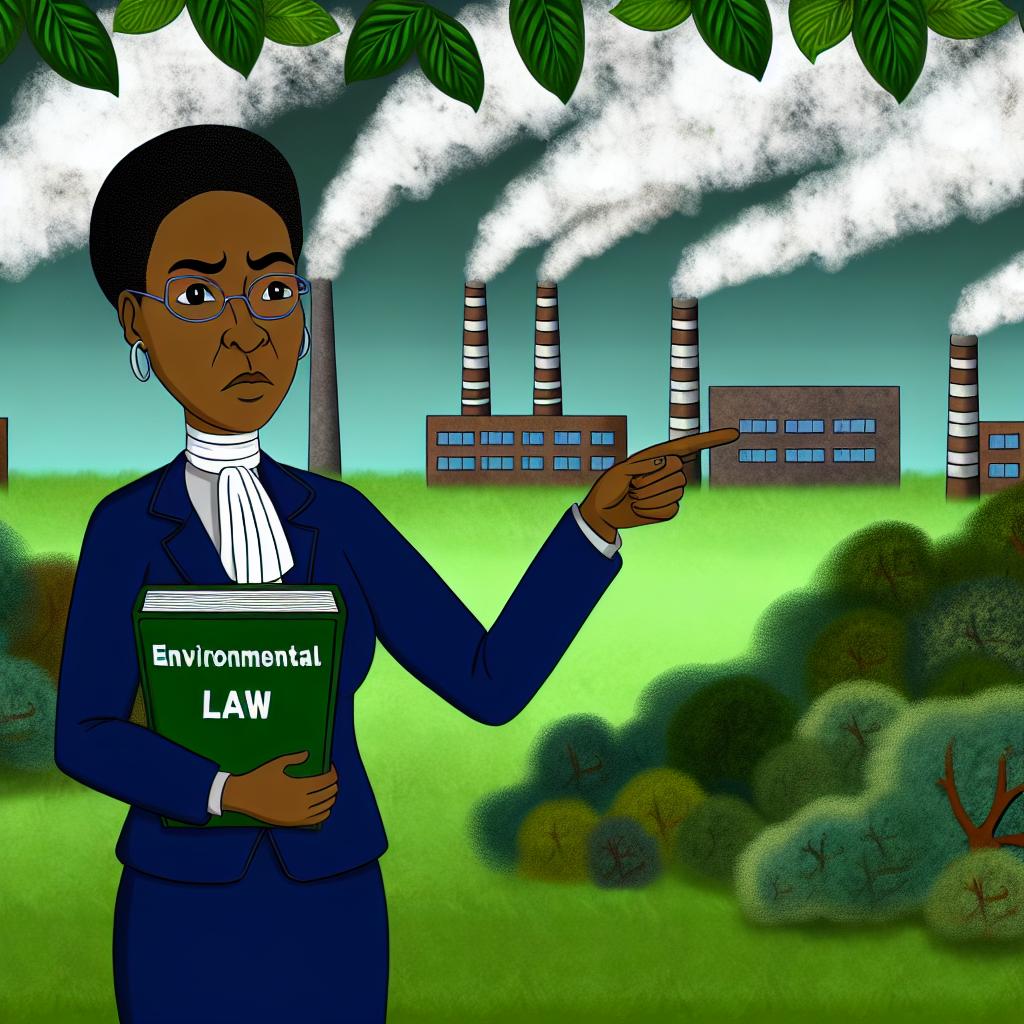
Challenges Faced by Environmental Lawyers in Defending Nature
Balancing Legal and Client Interests
Environmental lawyers often face conflicts between legal obligations and client goals.
Corporations frequently seek profit over environmental preservation.
This creates a challenging environment for lawyers advocating for sustainability.
Navigating Complex Regulations
The regulatory landscape concerning environmental law is intricate and ever-changing.
Lawyers must stay informed about numerous laws and regulations.
Compliance requires constant updates on local, national, and international policies.
Securing Adequate Resources
Many environmental lawyers operate with limited funding and resources.
This lack of financial support can hinder effective legal representation.
Moreover, pro bono work often stretches lawyers thin.
Opposition from Powerful Industries
Industries often possess significant financial and political power.
They can challenge legal actions through well-funded litigation strategies.
Environmental lawyers must develop strong arguments to counteract this influence.
Public Awareness and Engagement
Gaining public support is essential for environmental advocacy.
However, many communities remain unaware of environmental issues.
Lawyers must educate the public to build support for their cases.
Maintaining Resilience Through Setbacks
Environmental law cases frequently experience setbacks.
Lawyers must be resilient amidst disappointments and challenges.
Maintaining motivation is critical to continue the fight for nature.
Delve into the Subject: How Criminal Defense Lawyers Protect Rights and Freedoms
Impact of Industry on UK Environment: A Legal Perspective
Introduction to Industry’s Environmental Impact
Industries can significantly affect the environment.
These impacts often manifest as pollution and habitat destruction.
Legal frameworks exist to address these concerns.
Moreover, environmental lawyers play a crucial role in this process.
Key Areas of Environmental Concern
Air quality is a major concern in industrial areas.
Industries often emit pollutants that compromise public health.
Water contamination poses another serious threat.
Waste disposal practices can lead to severe ecological damage.
Additionally, land use by industries can disrupt local ecosystems.
Legal Framework Protecting the Environment
The UK has several laws aimed at protecting the environment.
The Environmental Protection Act is a cornerstone of UK environmental law.
This act mandates specific standards for industrial emissions.
Moreover, the Climate Change Act sets targets for reducing greenhouse gas emissions.
Regulatory agencies enforce these laws to mitigate industrial impacts.
The Role of UK Environmental Lawyers
Environmental lawyers advocate for compliance with laws.
They represent communities affected by industrial activities.
Moreover, they challenge companies that violate environmental regulations.
Legal action can lead to significant penalties for non-compliance.
Community Engagement and Advocacy
Communities have a voice in environmental protection.
Grassroots organizations often seek legal support to address issues.
Collaboration between lawyers and activists enhances advocacy efforts.
Public awareness campaigns play a vital role in these initiatives.
Emerging Trends in Environmental Law in England
New challenges continue to emerge in environmental law.
Climate change demands more comprehensive regulations.
Shifts in public opinion can influence legal approaches.
Furthermore, international treaties impact domestic laws.
Ongoing education for lawyers is essential to adapt to these changes.
Future Trends in Environmental Law and Advocacy in the UK
The Rise of Climate Litigation
Climate litigation is gaining significant momentum in the UK.
Individuals and organizations increasingly hold industries accountable.
Legal cases focus on breaches of climate-related obligations.
Government policies face scrutiny for insufficient climate action.
Judicial support for such claims is becoming more pronounced.
Future cases may set important precedents for environmental accountability.
Increased Focus on Sustainability Regulations
Sustainability regulations are on the rise across various sectors.
Businesses must align practices with environmental standards.
New regulations may focus on waste reduction and resource conservation.
Compliance will become critical for acquiring permits and licenses.
Environmental lawyers will guide organizations through regulatory changes.
Advancements in Environmental Technology
Technology plays a pivotal role in environmental advocacy.
Innovative solutions help assess environmental impacts more accurately.
Data-driven approaches improve transparency and accountability.
Remote sensing and AI enhance monitoring efforts and compliance.
These advancements will shape legal strategies in environmental cases.
Collaboration Between Stakeholders
Collaboration among various stakeholders is essential for effective advocacy.
Environmental lawyers will work closely with NGOs, government, and industry.
This synergy can lead to more robust environmental policies.
Partnerships will foster knowledge sharing and resource pooling.
A collective approach amplifies the impact of advocacy efforts.
Public Awareness and Engagement
Public awareness of environmental issues is steadily increasing.
Engaged citizens push for stricter environmental laws.
Social media serves as a powerful tool for advocacy campaigns.
As a result, lawmakers are more responsive to public concerns.
Grassroots movements are becoming more influential in policy-making.
Additional Resources
The UK Environment Act – what’s happening now? | ClientEarth