




Connect to Work support in England and Wales is voluntary, but the right next step depends on your local service. Early national results cannot tell you whether a place is available near you or what support would suit your circumstances. This guide separates those questions and provides five checked local routes.
The government response published on 23 October 2026 reports 25,000 programme starts through June. Its job-start result concerns a smaller follow-up cohort. Meanwhile, local pages still describe phased access and waiting lists. You can use our dated register and private conversation planner to prepare a useful first enquiry.
Checked: 27 October 2026. This is a service-navigation resource. It does not assess anyone’s health, ability to work, benefit entitlement or individual eligibility.
Who Connect to Work support in England and Wales is for
DWP’s programme information describes locally commissioned supported employment for disabled people, people with long-term health conditions and people facing specified complex barriers. It can help people seeking work and some people at risk of losing an existing job. Participants do not need to receive benefits.
However, the responsible service must check eligibility and suitability. A general description is not an admission decision. If you already receive employment support, ask how the programmes fit together before changing arrangements. Similarly, newcomers should ask the local service which residence, right-to-work and other conditions apply to their circumstances.
DWP identifies Greater Manchester’s Prevention Demonstrator as a different arrangement funded through its Integrated Settlement. Do not assume that a Connect to Work referral process from another area applies there. Start with the official area directory or responsible local authority.
Separate the publication date from the measurement period
The Work and Pensions Committee published the government response on 23 October. It had received it on 11 September. The reported programme starts run through June 2026; they are not an October outcome count.
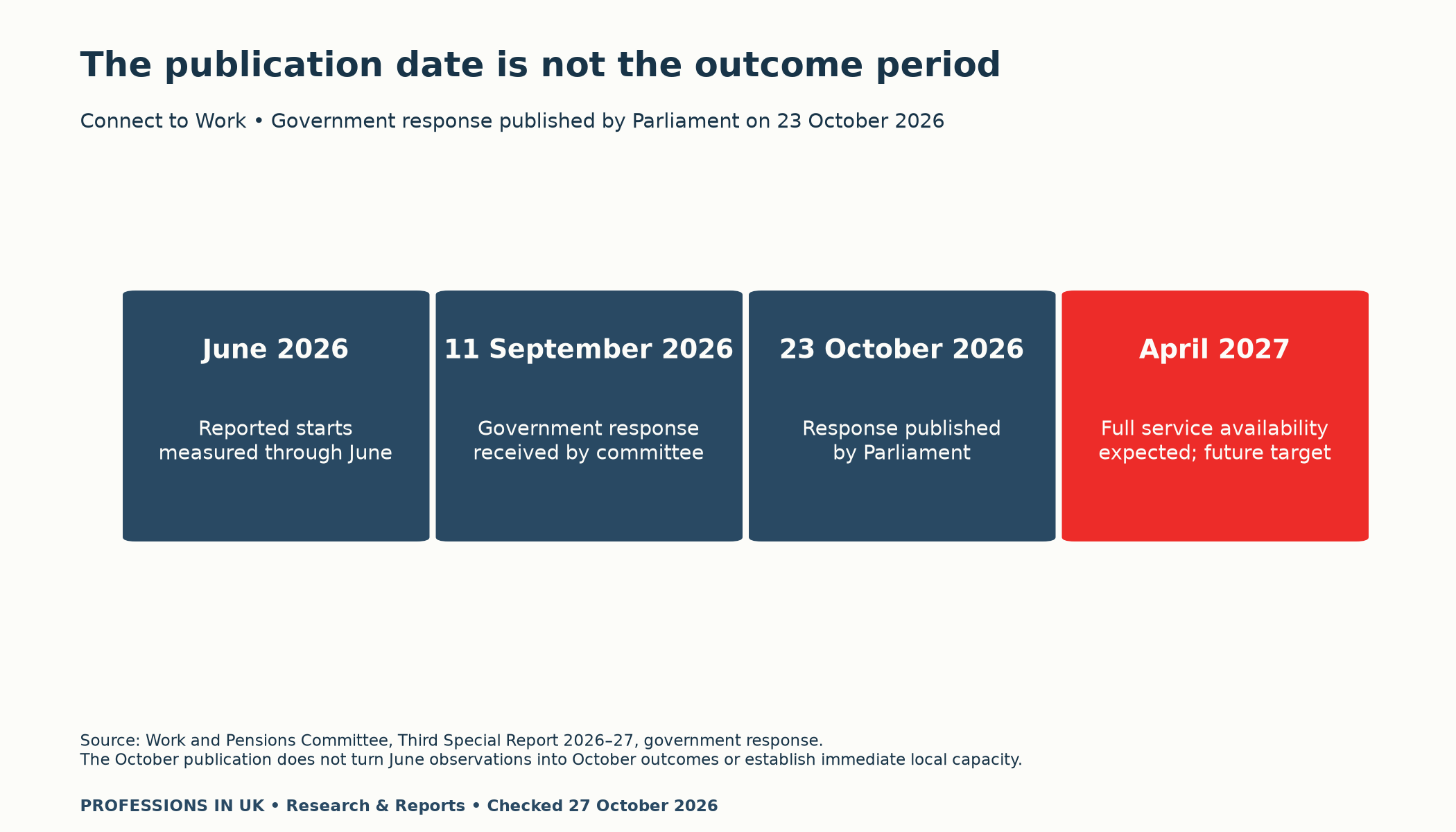
The response says the programme is open in all delivery areas, with full service availability expected by April 2027. These are different statements. An area can accept interest or begin phased delivery before its full service is available. Therefore, national coverage does not establish an immediate appointment or place for a particular resident.
Understand which people the results describe
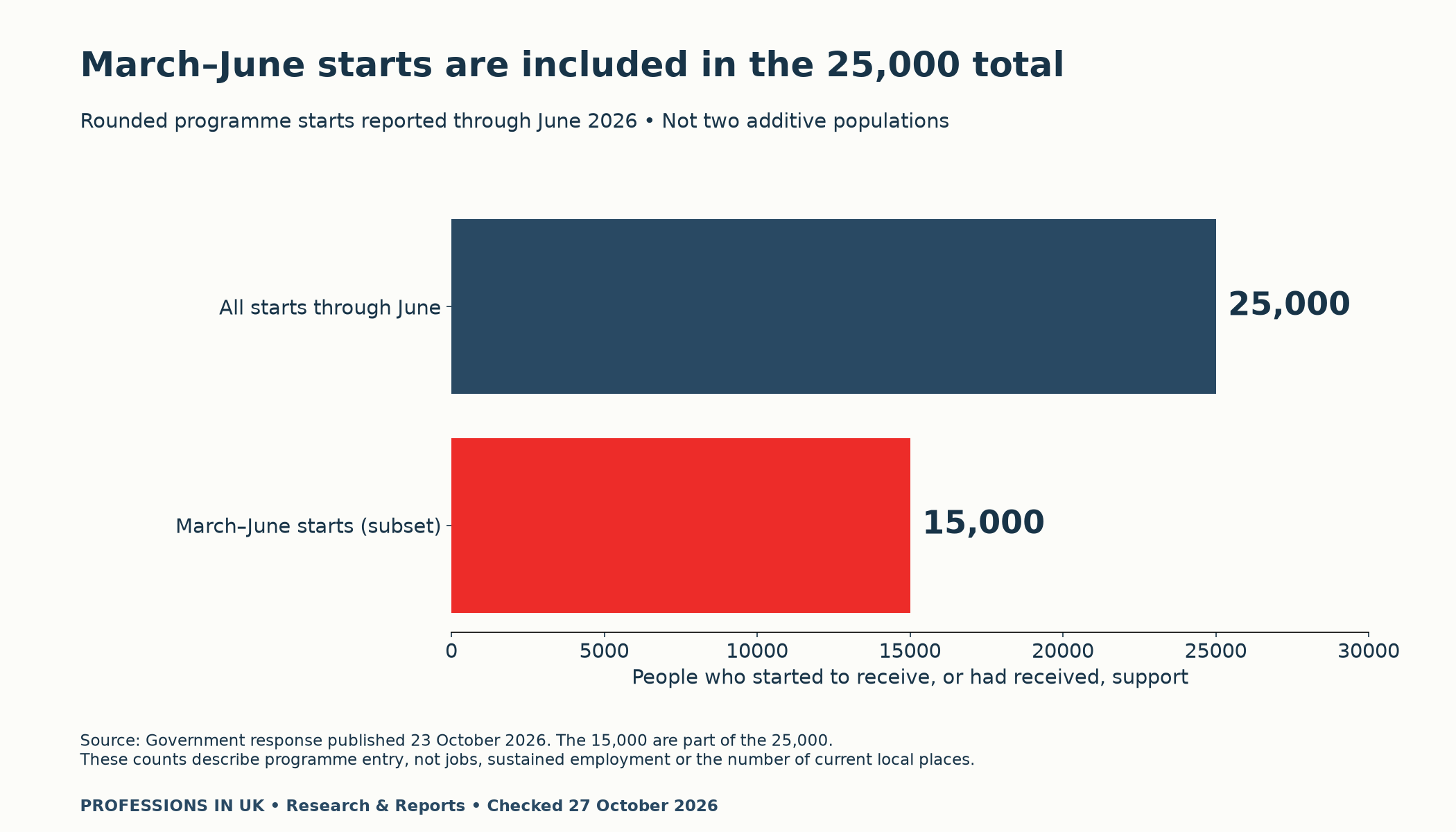
The response reports 25,000 starts, including 15,000 between March and June. Do not add them to make 40,000. Programme entry also differs from employment: someone beginning support has not necessarily started a job.
Next, consider the narrower group: 6,100 people who were out of work on joining and had received at least six months of support. Around 1,700 had started work. The response reports 27%; we retain that percentage because dividing rounded counts can produce a different result.
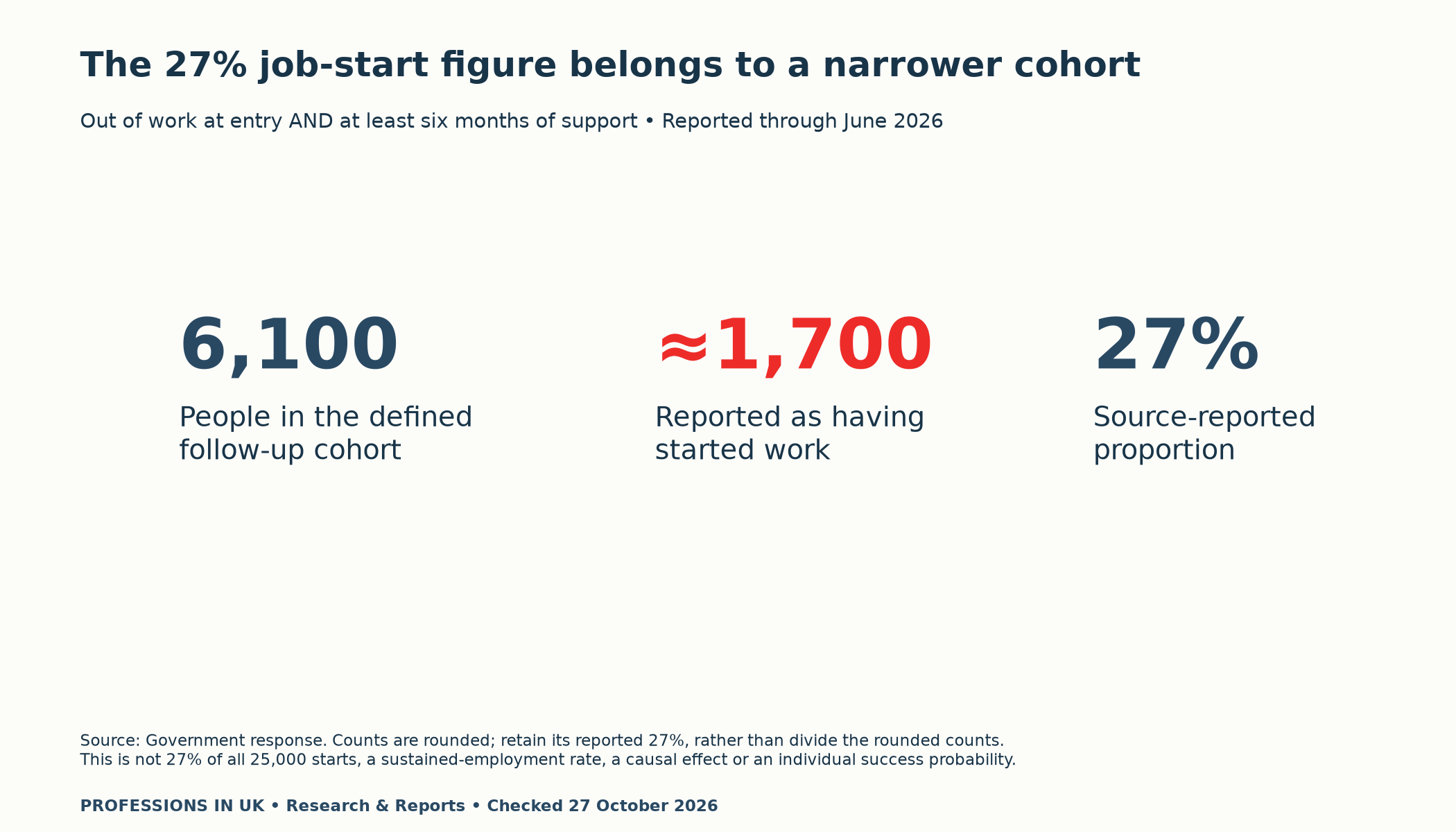
This is not a 27% success probability for a new applicant. It also does not establish how long those jobs lasted or what would have happened without support. Our interpretation keeps entry, follow-up and employment outcomes distinct. That makes the result useful without asking it to answer questions the evidence cannot settle.
Find local Connect to Work support in England and Wales
We selected four English routes and one Welsh local entry to illustrate different access arrangements. This is not a complete directory or a provider ranking. Lead authorities were checked against DWP’s downloadable directory, whose retained edition is dated 15 May 2026. Referral information and caveats come from the current local pages.
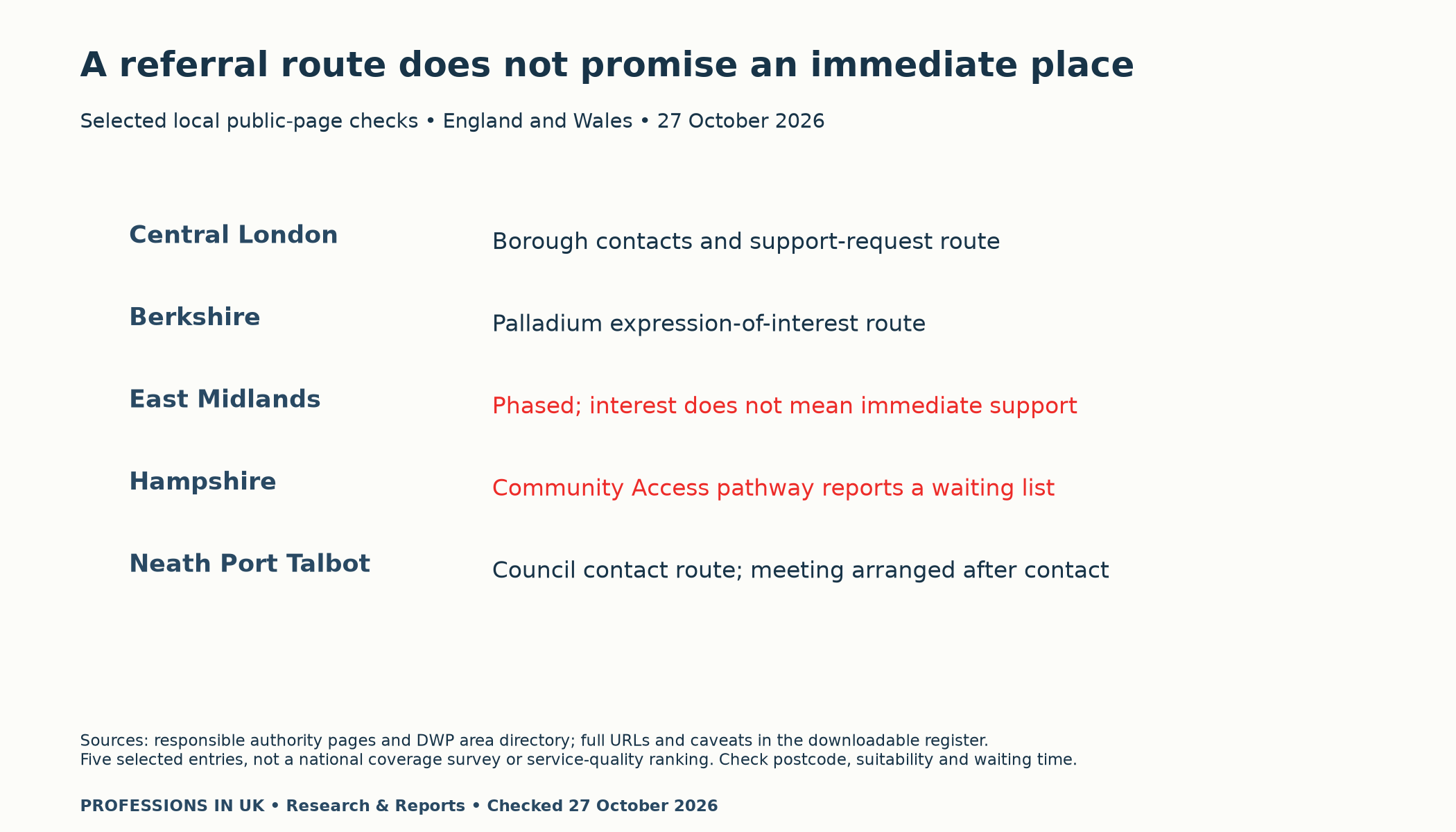
- Central London Forward: the authority page lists a support-request route and borough contacts. Check your borough; this partnership does not cover all of London. The accountable authority is the City of London Corporation.
- Berkshire: Wokingham’s page covers the six Berkshire council areas. It lists Palladium and an expression-of-interest route, with telephone and email alternatives. Immediate capacity is not independently confirmed.
- East Midlands: the authority gateway covers Derby, Derbyshire, Nottingham and Nottinghamshire. Its page says access is phased and expressing interest does not mean immediate support. The delivery partner depends on the area.
- Hampshire: the public provider page separates several pathways. Seetec’s Community Access pathway reports a waiting list. That warning should not be extended to every Hampshire pathway.
- Neath Port Talbot: the council provides a contact route and says it will contact applicants within three working days to arrange a meeting. That is a contact commitment, not a guaranteed support-start date. Swansea Council leads the wider South West Wales delivery area.
For another location, use the “Find your Connect to Work Service” file on the official DWP programme page. Then check the lead authority’s current information. We have not tested a referral or submitted information on anyone’s behalf.

Prepare a first conversation around your goals
Start with the work you would like to explore, the hours you can consider and the support questions that matter to you. You do not need to turn a first enquiry into a complete personal history. Instead, ask which information the provider needs, how it will use it and which private channel is appropriate.
- Does this service cover my address and current circumstances?
- Can I contact you directly, or do I need a referral?
- What is the current waiting time, and what happens after expressing interest?
- Can meetings use the format, location or accessibility arrangements I need?
- What support continues if I start work or need help keeping my current job?
- Who should answer questions about benefits or changes in circumstances?
Keep the answers and an agreed next step in your own private copy. For benefit questions, seek current guidance from the appropriate service; this report cannot determine entitlement. Do not post health histories, identification documents or other private information in public comments or social replies.
Personalized UK Career Consulting
Receive tailored career guidance designed just for you. Get actionable steps and expert support to boost your career in 1-3 days. Take control of your career now.
Get StartedAsk what a programme outcome actually measures
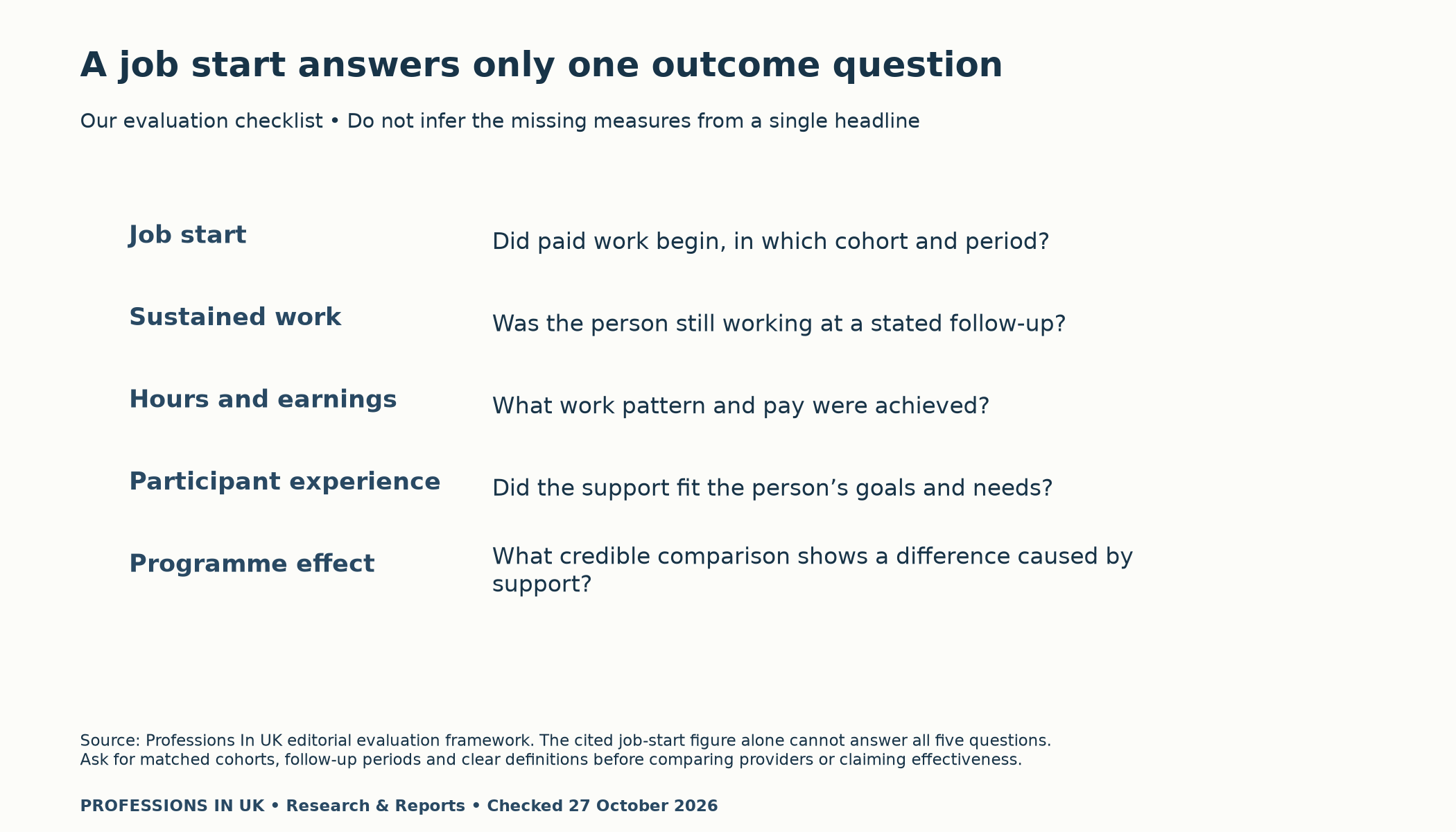
A job start answers whether work began in a defined group and period. Sustained employment, hours, earnings and participant experience require further evidence. A credible claim about programme effect also needs an appropriate comparison. Consequently, avoid comparing two providers using percentages from different populations or follow-up periods.
If you later investigate specific vacancies, our construction requirements audit shows how to separate advertised essentials from missing information. Our entry-route verification guide explains how to distinguish announcements, training and open applications.
Connect to Work support in England and Wales: downloads and limits
- Five-area local-route register with sources and caveats (CSV)
- Blank private Connect to Work conversation planner (CSV)
The register records the authority, scope, public route, delivery information, availability wording and checking date. We retain the source directory’s older edition date rather than calling it an October update. Local pages can change, and a published route does not verify current capacity, individual admission or service quality.
The national counts remain tied to their reported cohort and period. Our local checks and evaluation framework add navigation help; they do not establish medical, legal or causal conclusions. Before acting, confirm your local route and agree a next step with the responsible service.


