




If you’re looking for local job opportunities in Wales, start by deciding which roles you could actually reach and work. Set a travel limit, check the route at the advertised shift times, and ask about any requirement the employer leaves unclear. A seven-day log gives you something concrete to review on your own or with an adviser.
In Carnegie UK’s 2026 survey, 17% of respondents in Wales said they were satisfied with local job opportunities, down from 30% in 2023. That helps explain how people feel about their options. To find out which roles you can apply for, you need current adverts and a check of your own constraints.
What the Wales jobs figures measure
Carnegie UK published Life in the UK 2026 Wales on 2 November 2026. Ipsos collected the 2026 responses between 21 and 27 May through its random-probability KnowledgePanel. The UK sample included 6,731 people, of whom 519 were in Wales. The 2023 Wales sample included 531 people.
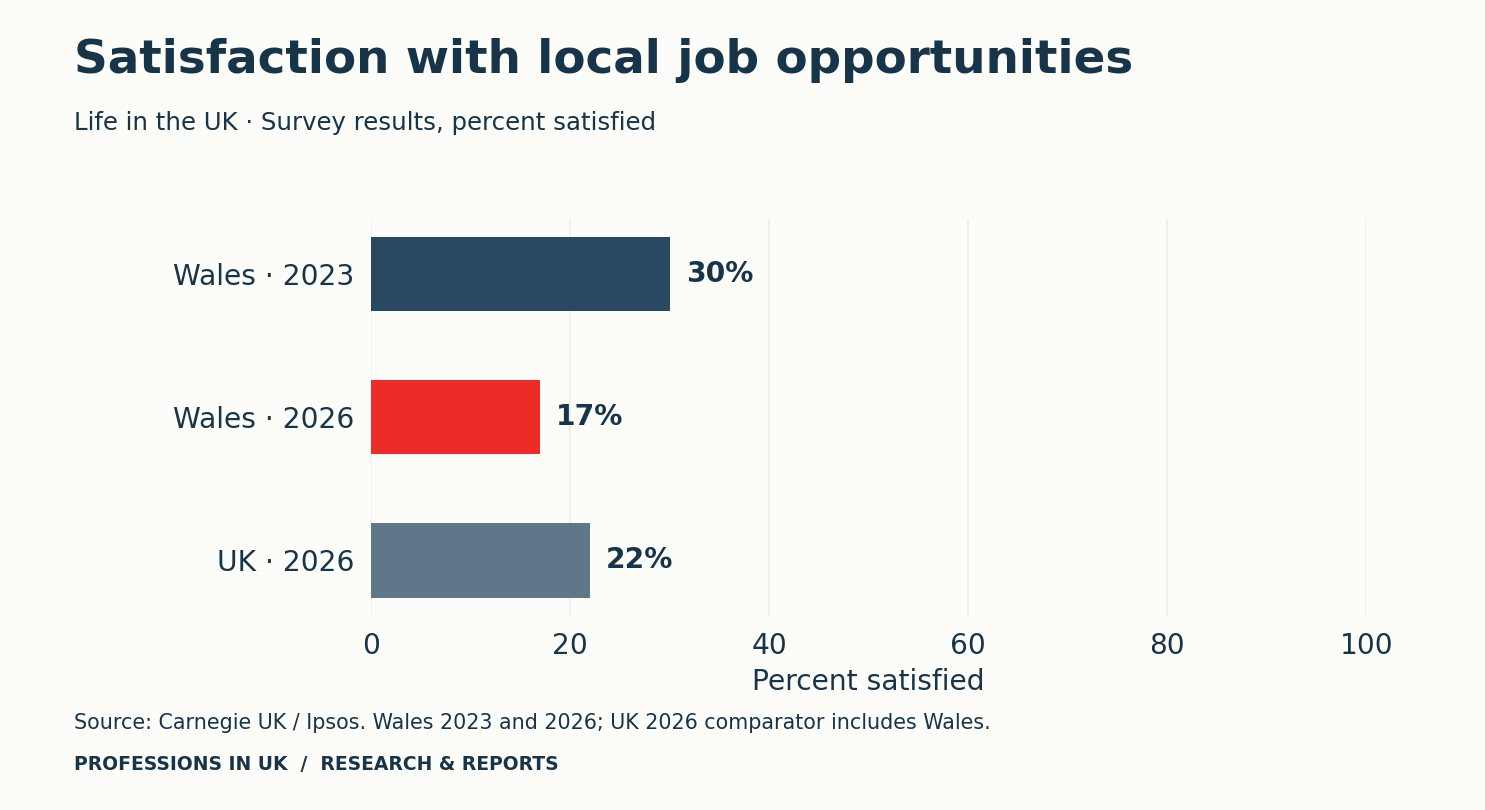
The Wales figure fell 13 percentage points between 2023 and 2026. It was also five points lower than the UK figure of 22% in 2026. These differences describe survey responses. The report provides no count of vacancies lost, local hiring odds or current November listings.
Separate perceptions, adverts and your options
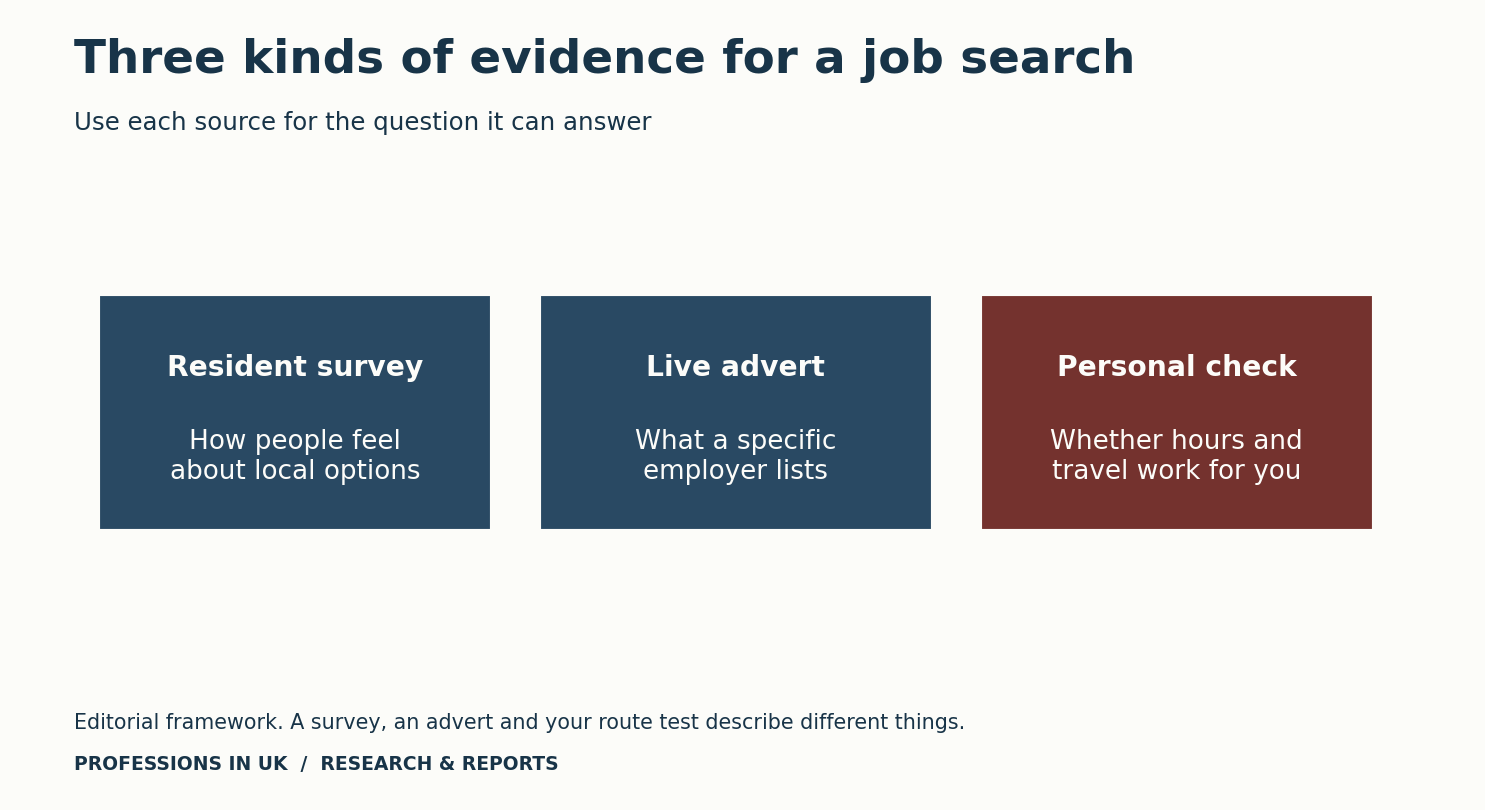
A resident survey helps you understand how people view the job market. A live advert tells you what one employer says about a particular vacancy. A personal check tells you whether the hours, location and entry requirements fit your circumstances. You need the last two to decide where to spend application time.
For example, a council-wide perception score cannot tell you if a 06:30 shift fits the first bus from your neighbourhood. Equally, a promising advert may leave the hours or required qualification unclear. Write down the specific question and seek an answer from the employer.
Set a travel limit and check the actual shift
Choose a starting point and a maximum one-way travel time. Keep your precise address in your private copy. Use a town or broad area if you share the worksheet. Also write down the earliest start and latest finish you can reliably manage.
Then check the trip at the advertised start and finish times. Include walking, transfers and the return journey. For instance, a bus that runs frequently at midday may start too late for an early shift. Our flexible-working offer guide has related questions about start times, office days and schedule changes.

Work through four fictional adverts
Assume a jobseeker sets a 45-minute one-way limit. The examples below are invented. They show how the same limit can produce different next steps.
| Role | Travel estimate | Next step |
|---|---|---|
| A · Workshop coordinator | 32 minutes | Ask if equivalent experience meets the requirement |
| B · Stockroom coordinator | 38 minutes | Hold while checking whether a 06:30 start can work |
| C · Operations assistant | 27 minutes | Consider applying if the requirements match |
| D · Logistics coordinator | 55 minutes | Hold because it exceeds the chosen limit |
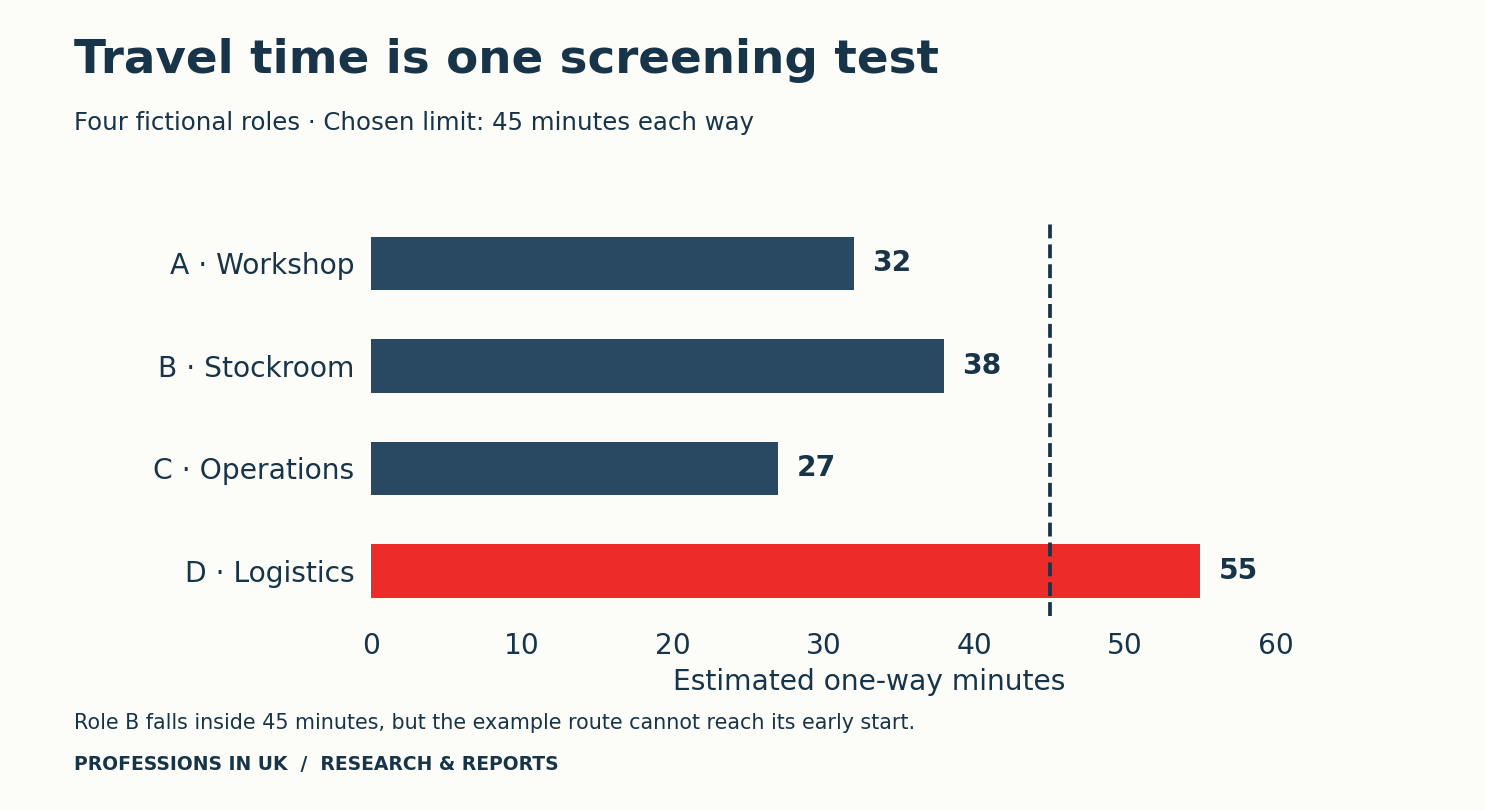
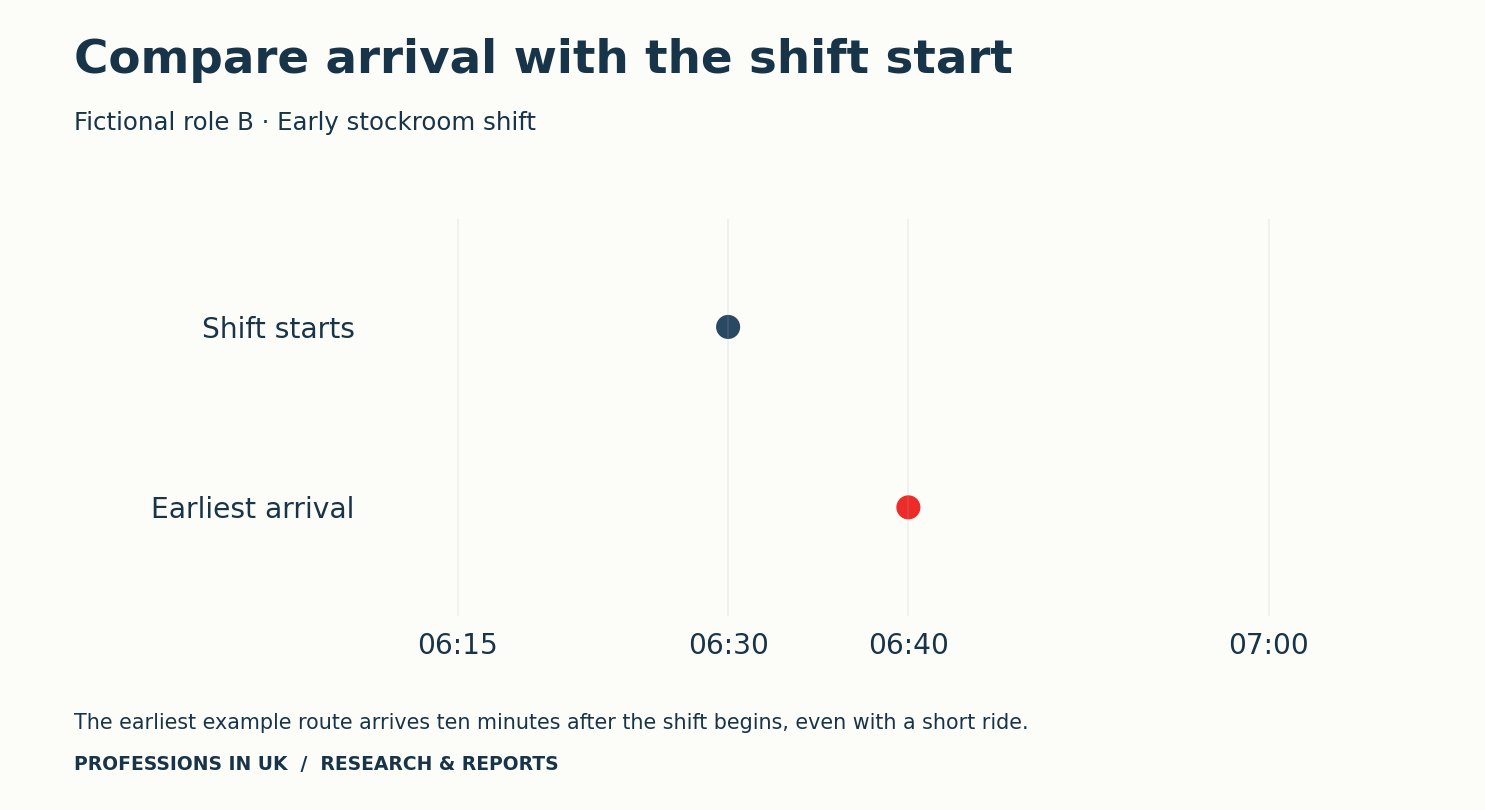
In Role B, the earliest route arrives at 06:40. The shift starts at 06:30, so the applicant would arrive ten minutes late even though the route takes only 38 minutes. They can check another feasible route or ask whether the start is fixed. Until then, they can record the role as unresolved.
Keep a seven-day search log
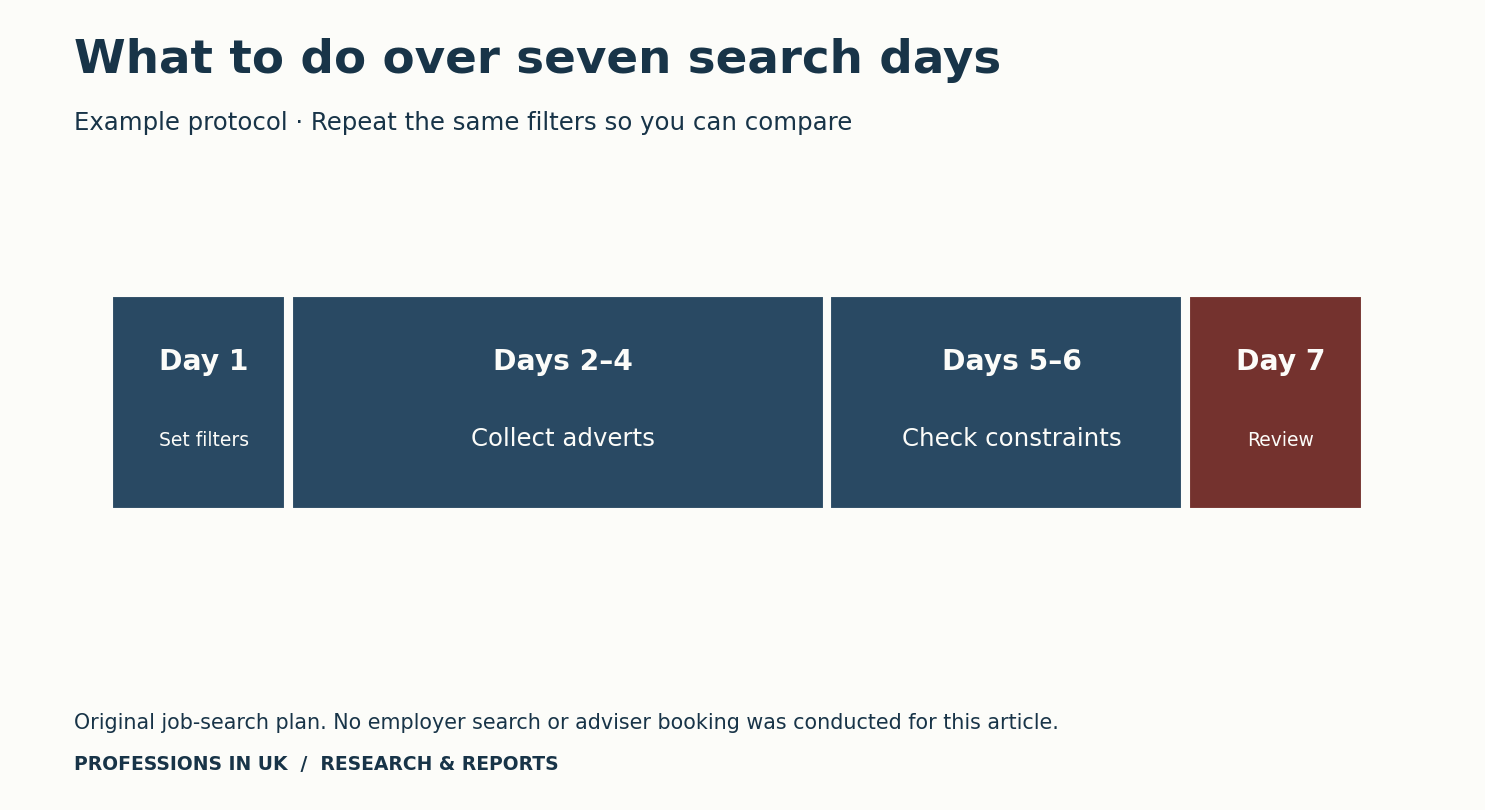
On day one, choose two or three related job titles, a starting point and the hours you can work. Write down the sources you plan to check. For days two to four, run the same searches and log new adverts. Save the employer’s link, deadline and reference where you can find them.
Next, check the strongest options against your route, hours and entry requirements. Keep unknown details as open questions. On day seven, review your shortlist, note any repeated obstacle and decide which question an adviser or employer could help you answer.
If two sites list the same employer, title and location, compare the job references before counting them. Combine duplicate adverts for the same vacancy. Keep roles separate when the employer identifies them as different openings. A count of adverts describes what you found through those searches. It does not count hires or roles advertised elsewhere.
Bring specific questions to a careers adviser
Working Wales, delivered by Careers Wales and funded by the Welsh Government, provides careers advice and support. You can bring your log and ask a concrete question. For example, are there nearby employers that use a different title for the same work? Or is there a short course that employers recognise for a qualification that keeps appearing?
For each candidate role, record the source URL, stated pay, closing date, required qualifications and whether the journey works at both ends of the shift. If an advert leaves a point unclear, write “not stated” and make a note to check it. Our Connect to Work study explains how to check another employment-support route separately.
Personalized UK Career Consulting
Receive tailored career guidance designed just for you. Get actionable steps and expert support to boost your career in 1-3 days. Take control of your career now.
Get StartedMethod and downloadable worksheets
The perception figures come from Carnegie UK’s published Wales report and its methods section. The 13-point change subtracts 17 from 30. The five-point comparison subtracts 17 from 22. These published geographic results cannot support a town-by-town ranking or predict an individual outcome.
The four roles, travel times and shifts are fictional. We did not collect local adverts. If you repeat the search, retain the same occupations, area, search terms and deduplication rules before comparing counts across dates.


