





When assessing a UK obstetrics training environment, ask how senior support works in practice. A named supervisor matters. So do access, confidence in asking for help and feedback after a concern. The latest survey gives a reason to ask those questions carefully.
The RCOG’s 13 November 2026 response to new GMC analysis reports that 31% of O&G trainees had felt hesitant or apprehensive about escalating a patient, against 21% across all specialties. The difference is 10 percentage points. It describes reported training experience, not a patient-harm rate.
What the UK obstetrics training environment data show
The GMC research summary brings together the 2023–2026 national training surveys. Its latest-year O&G sample contains 2,737 respondents. Importantly, “all specialties” includes O&G. It is not a separate group of every other specialty.
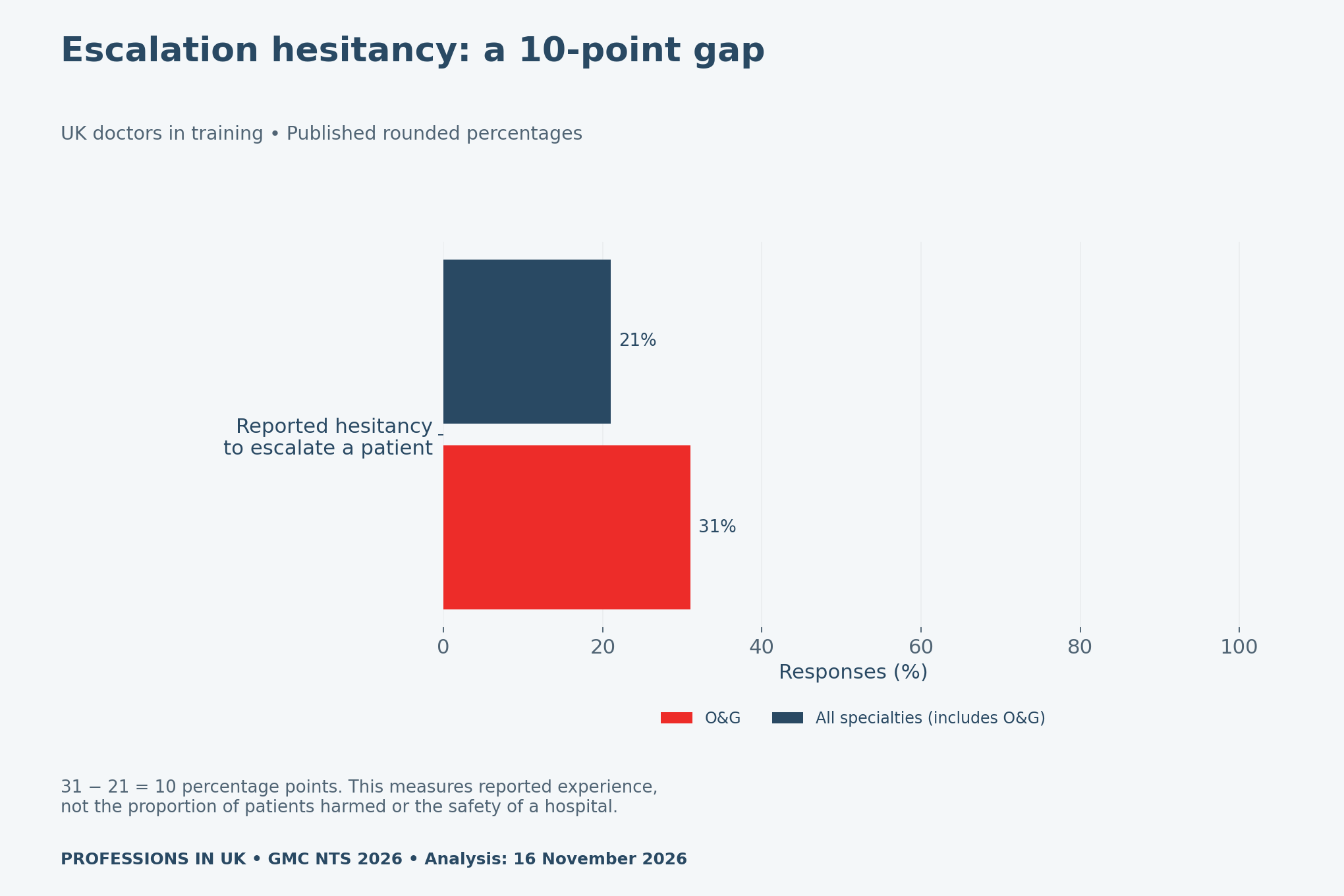
Percentage points compare two percentage levels: 31 minus 21 equals 10. Calling this “10% higher” would change the meaning. We also avoid converting rounded percentages into exact respondent counts. The report’s overall sample is not necessarily the denominator for each question.
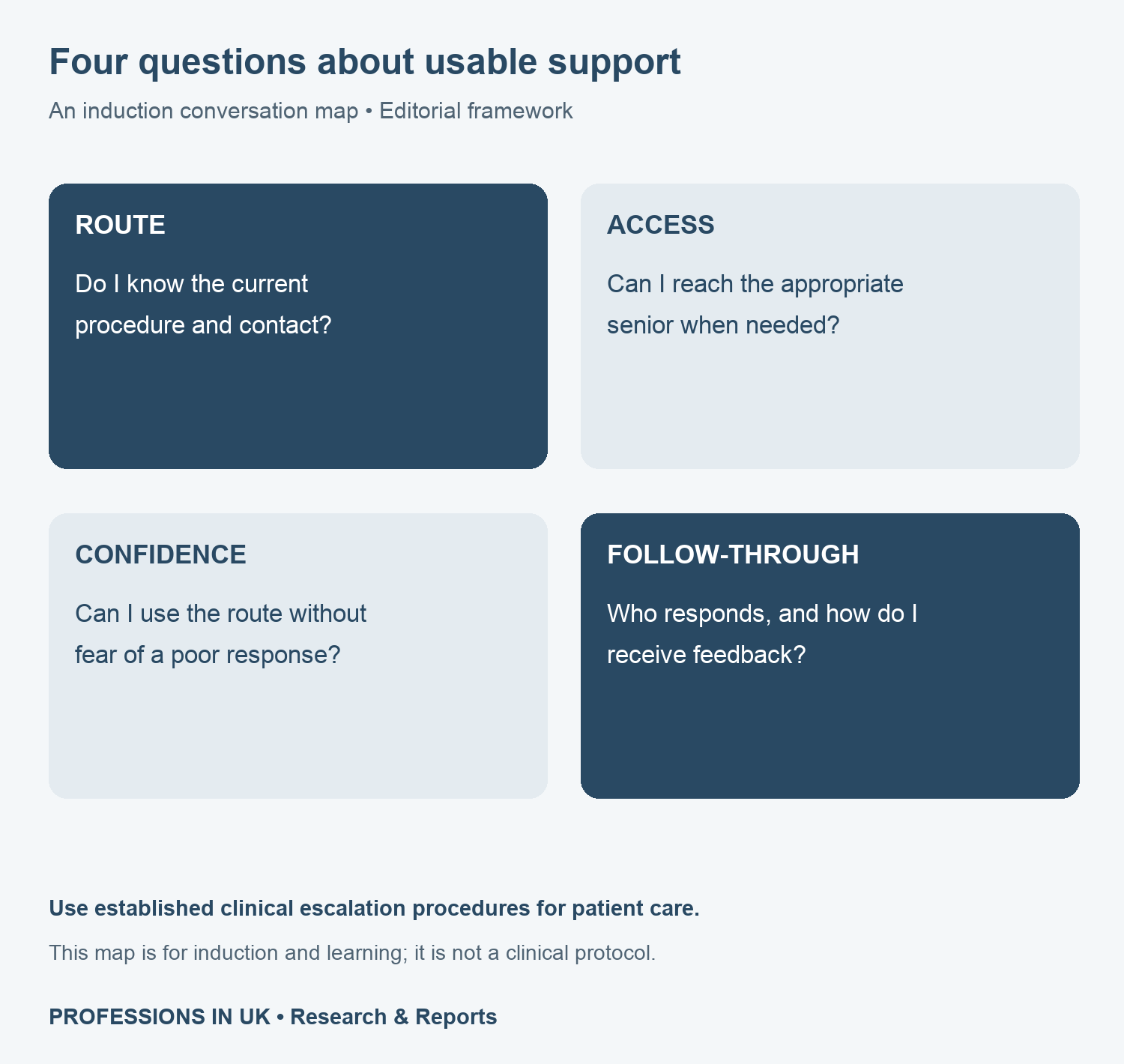
Ask about the route, access, confidence and response
Start with a practical conversation before a placement or during induction. Ask where the current escalation procedure sits and which role provides cover. Then check how the arrangement works when the usual supervisor is absent. A clear answer should help you find the right person without depending on memory or an informal contact list.
Next, separate immediate clinical supervision from a scheduled educational discussion. They serve related but different purposes. A routine portfolio meeting cannot answer who is available during an out-of-hours shift. Equally, knowing the on-call contact does not show when you can review training access or an unresolved learning issue.
| Area | Question to take to induction | Useful local evidence |
|---|---|---|
| Senior cover | Who is available for immediate senior support on each shift? | Current policy and responsible role |
| Out of hours | Which current rota and backup route should I use? | Current rota and named backup role |
| Educational supervision | When can we discuss training access and review progress? | Meeting plan and agreed learning goals |
| Unresolved training concern | What is the next confidential route if the first discussion does not resolve it? | Current education/training concern procedure |
| Feedback | How will I hear what happened after raising a concern? | Response owner and review arrangement |
| Inclusion | How are access needs and disrespectful behaviour handled? | Relevant support and reporting route |
Knowing a reporting route does not answer every question
Consider a fictional induction conversation. A trainee receives a policy link but cannot identify who covers a particular shift. The next useful question is about cover, not whether the document exists. In another case, the contact is clear but no one has explained how a training concern receives a response. That requires a separate discussion.
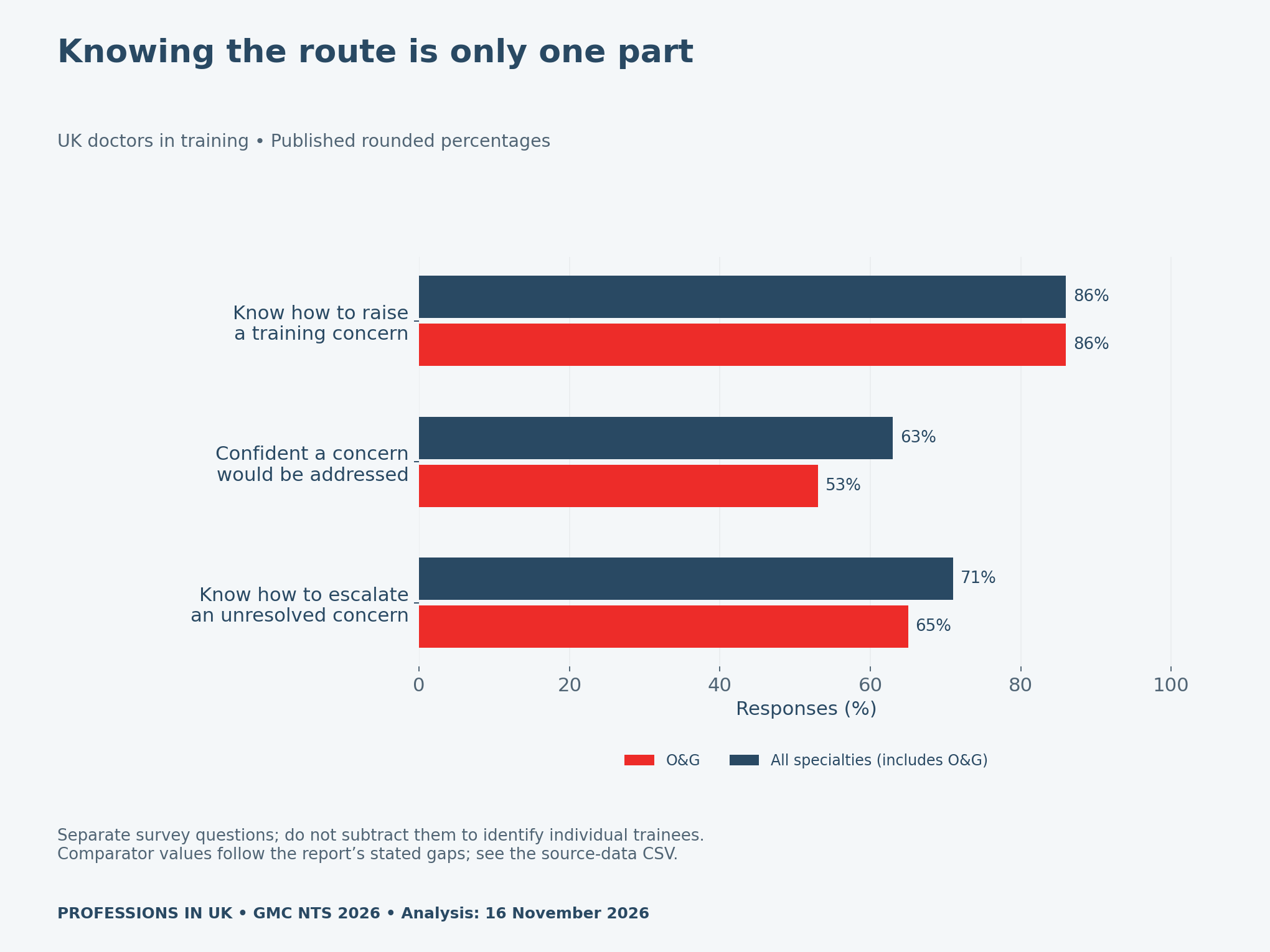
Avoid turning this comparison into a funnel. Respondents who know a route are not tracked here through a later complaint and outcome. A difference between two survey items therefore does not establish how many people tried to escalate and received no response. For induction, the value is in the questions each item suggests.
Make confidence and inclusion part of the conversation
A useful question is how the team handles uncertainty and responds when someone asks for help. Ask for the relevant support options and how they are explained to new starters. An example can clarify the process, but it should not require anyone to disclose a colleague’s case or personal information.
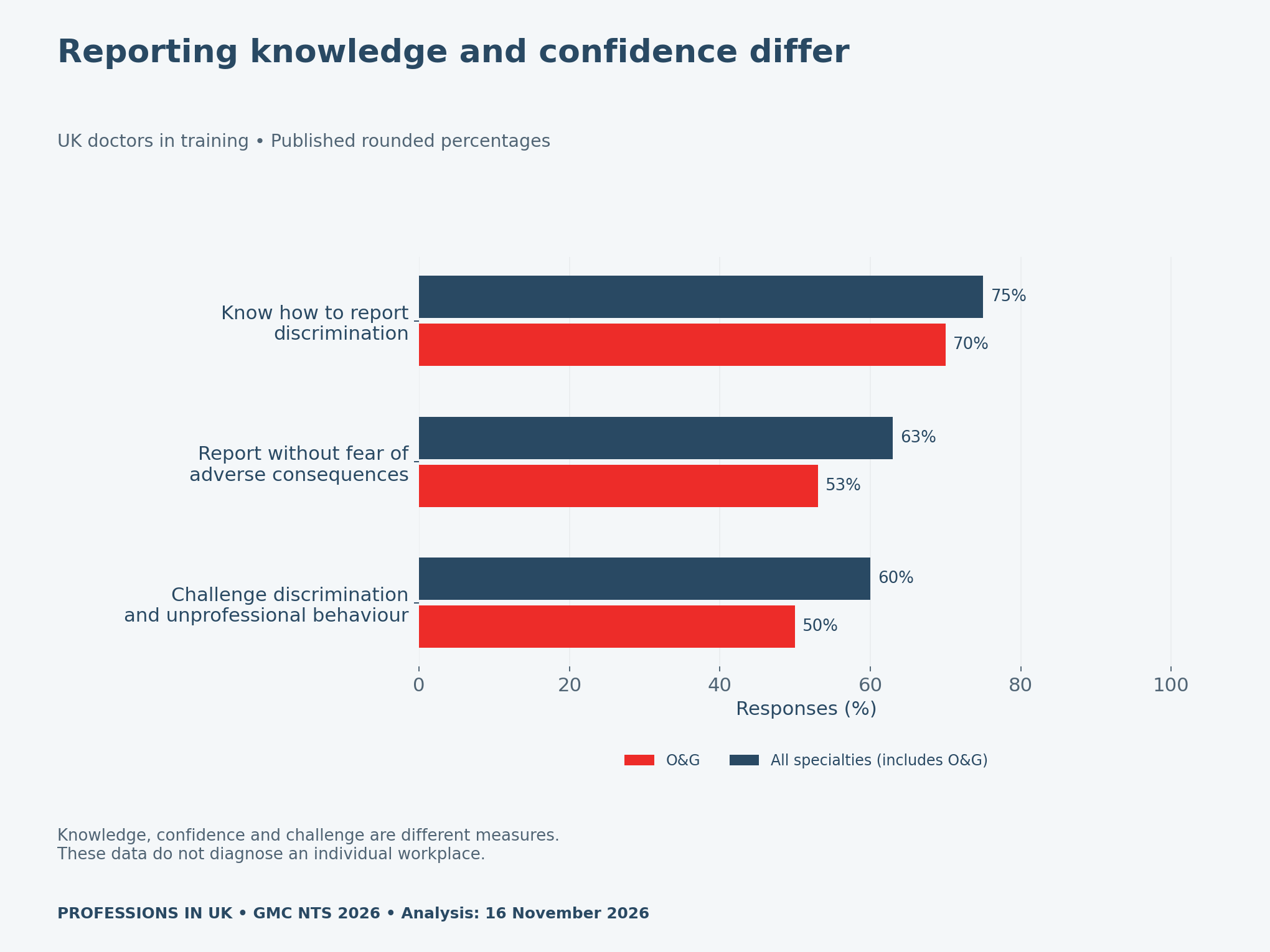
Use factual, proportionate notes for your own learning plan. For example, “confirm where the training concern procedure is held” records an actionable gap. A public list of named colleagues or unverified allegations would serve a very different purpose. The downloadable planning sheet deliberately asks for learning goals and agreed actions, not case details.
Keep positive findings in view
A fair reading also recognises strengths. The GMC identifies positive supervision and multidisciplinary working experiences. Our paired teamwork chart preserves the equal all-specialty comparisons rather than selecting only the largest adverse gaps. These findings can coexist because the questions measure different parts of working life.
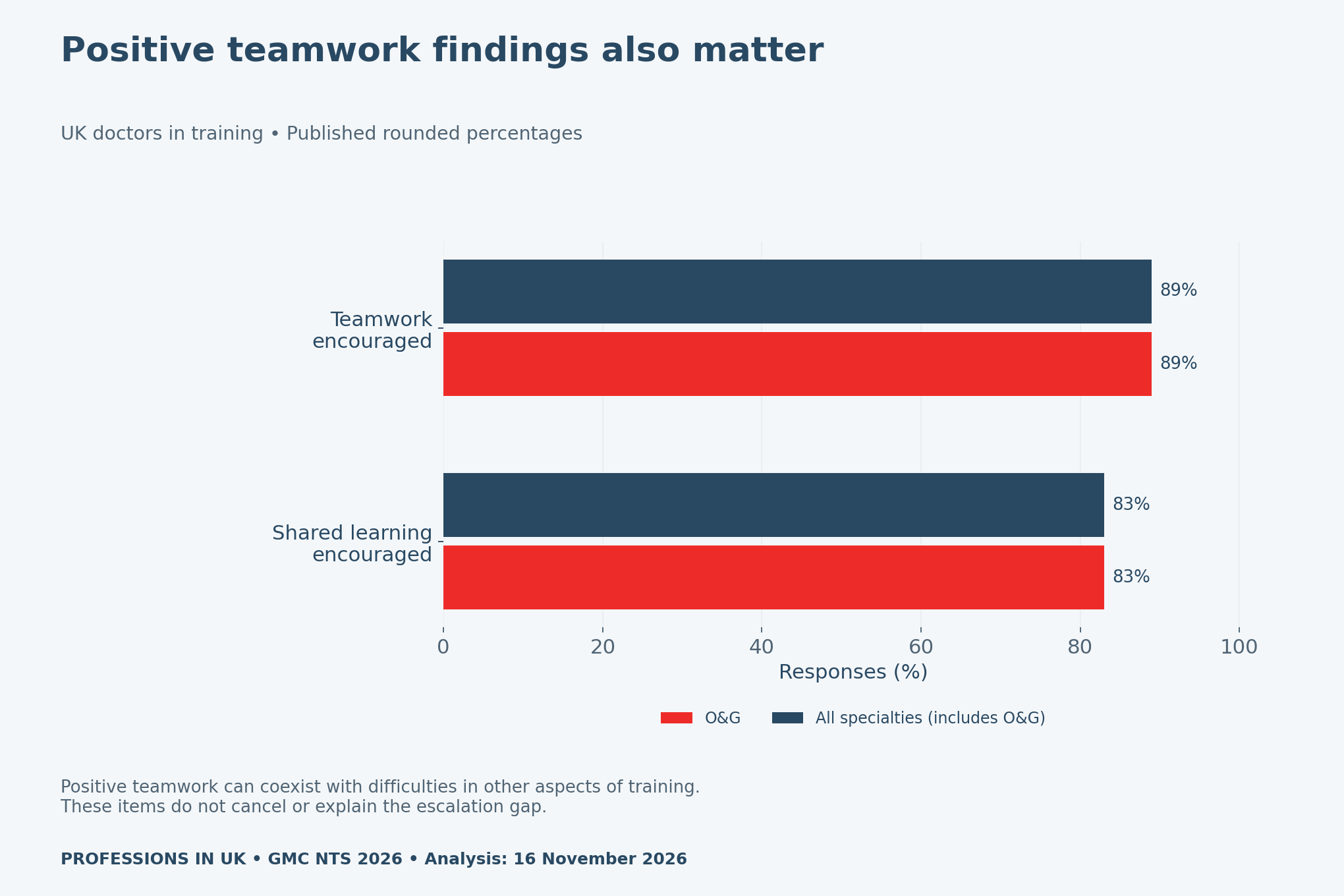
When discussing a potential placement, ask what good teamwork looks like locally. How do new starters join learning discussions? When do different professions review an experience together? Those questions invite concrete explanations. A national percentage cannot supply those local answers for you.
Use the right route for a current concern
This article and its templates do not replace established clinical procedures. The GMC’s professional guidance on raising a concern says to follow workplace reporting procedures. It also says concerns about a risk of death or serious harm should be reported to the appropriate person or organisation immediately. Do not wait to complete an induction worksheet.
For education and training issues, consult the GMC’s education concerns guidance. It describes local resolution through the relevant education or postgraduate body before approaching the GMC, while patient-safety concerns have their own guidance and circumstances. Keep these purposes distinct and seek appropriate confidential advice when needed.
Method, coverage and interpretation limits
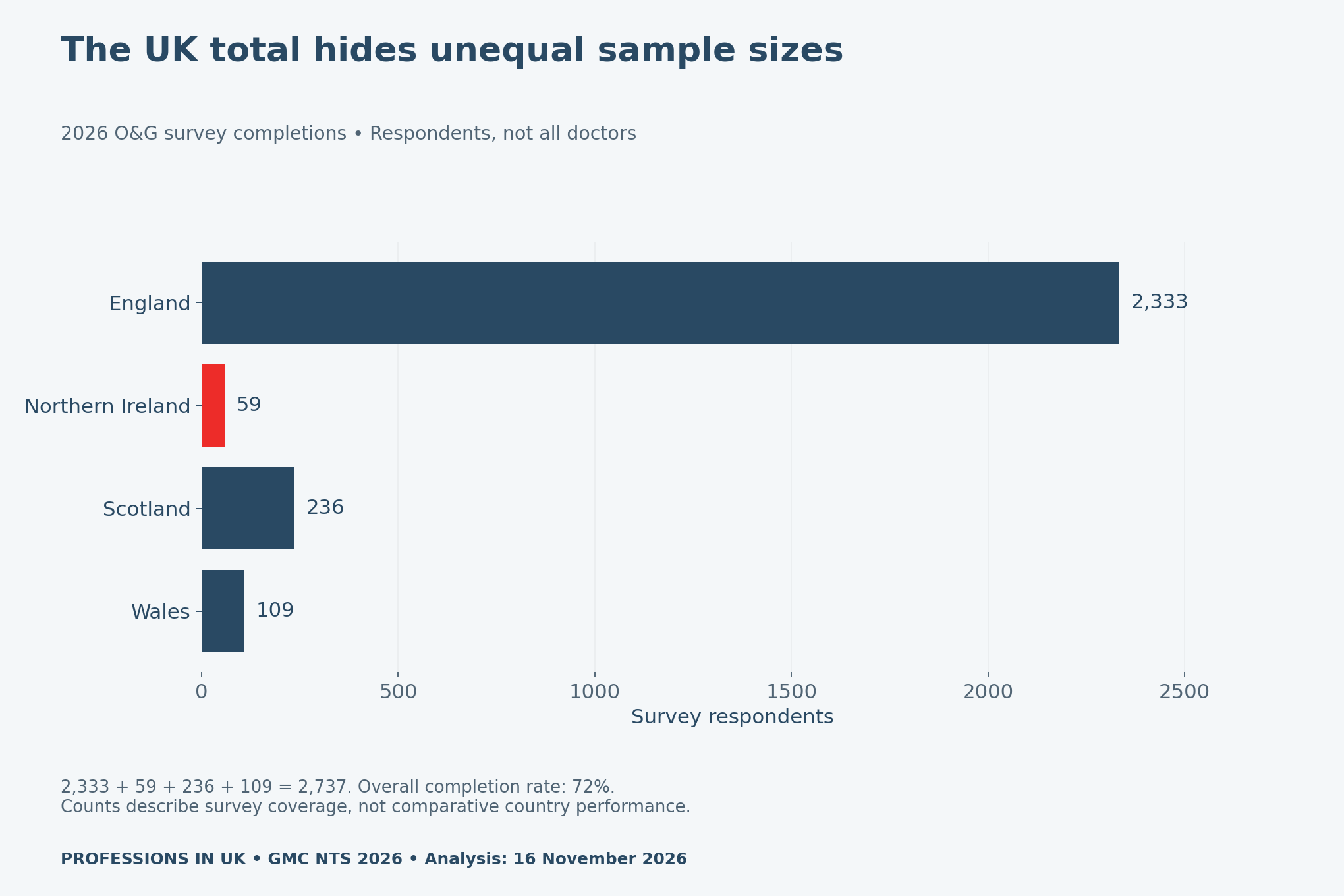
Figures reproduce rounded 2026 values in the full GMC insight report and the RCOG release. The source-data download identifies locations and derived comparators. Where the report gives an O&G value and a stated percentage-point difference, we show that arithmetic explicitly. No new survey, causal analysis or statistical-significance test was performed.
Personalized UK Career Consulting
Receive tailored career guidance designed just for you. Get actionable steps and expert support to boost your career in 1-3 days. Take control of your career now.
Get StartedQuestion denominators and response patterns matter. Survey non-response, variation between organisations and different experiences within a specialty limit broad conclusions. The report does not measure patient outcomes. We have not assessed a hospital, a supervisor or a candidate’s competence. Nor does the checklist establish that a placement satisfies every professional standard.
For a wider view of working settings, read our NHS and private-practice career comparison. The present article answers a narrower question: what to clarify about support before and during a training placement.
Download the evidence and private planning tools
The evidence CSV retains source locations and units. The other files are editable planning aids, not official GMC forms. Keep them private and leave out patient identifiers, identifiable colleague details and confidential clinical records. Store professional records only through your organisation’s approved systems.
- Survey comparison data and source locations (CSV)
- Induction question sheet (CSV)
- Private supervision and feedback plan (CSV)
- Measure dictionary and limitations (CSV)
Suggested citation: Professions In UK, “UK Obstetrics Training Environment: Questions About Support”, 16 November 2026. Data source: GMC national training survey insight report, published 13 November 2026. Recheck current guidance and local procedures when using the questions.


