





Moving from maintenance mechanic to automation technician in the UK starts with a specific question: which parts of your experience match the role you want, and which still need learning or assessment? A broad skills-shortage headline cannot answer that for you. A documented comparison can make the next conversation more useful.
This report separates European research from a practical UK planning method. It includes three charts, an evidence-bridge infographic and four free CSV tools. No local advert audit, course assessment or competency test has been performed. The weekly time example is fictional. Research checked on 12 November 2026.
What the new research can tell a UK applicant
A SEGRO announcement published on 9 November describes Randstad research using more than 400,000 adverts from about 13,000 companies across eight European markets. It names maintenance mechanic to mechatronics/automation technician as a possible pathway. That is a research-identified transition, not an automatic qualification equivalence or job offer.
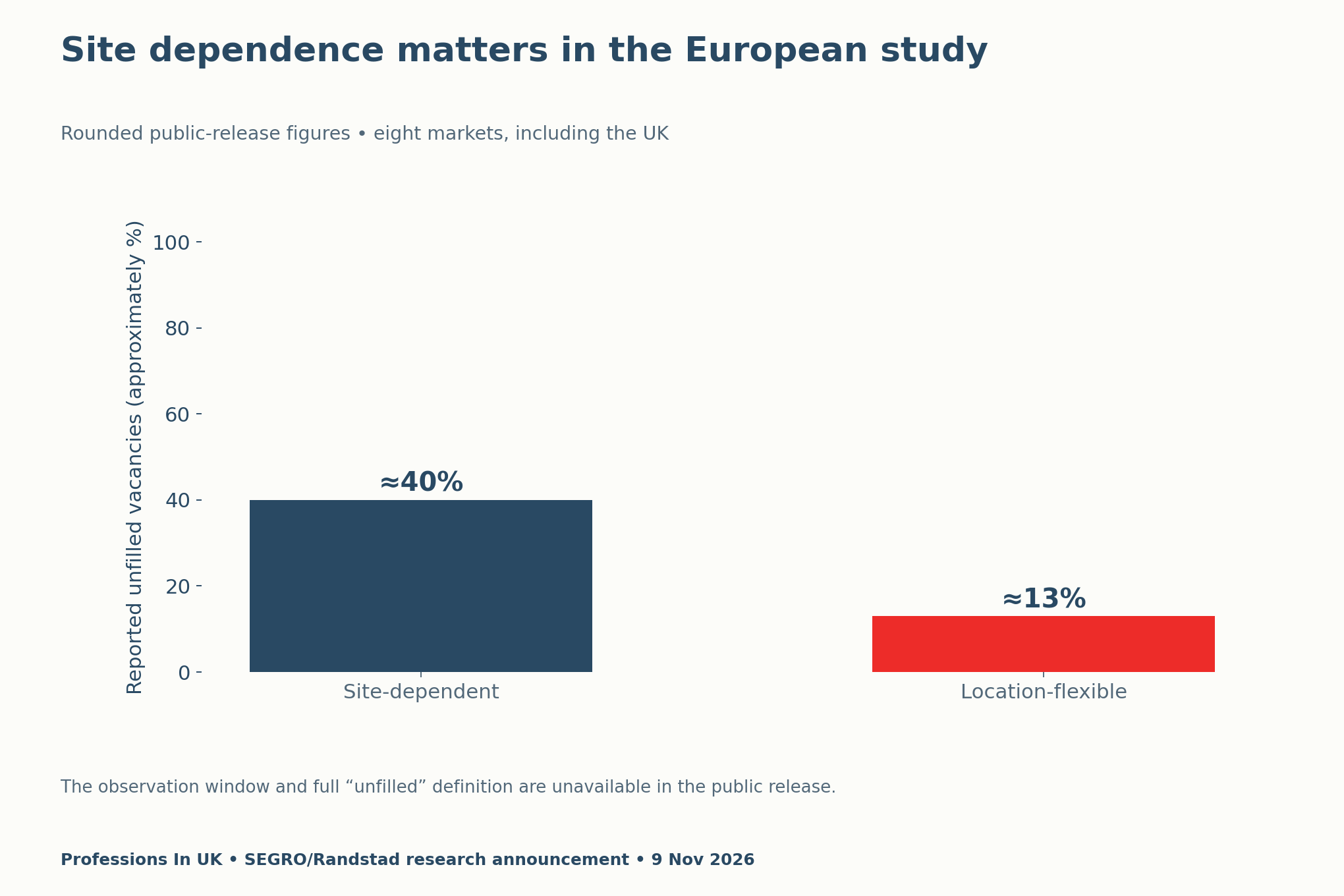
The public release does not state the advert-observation window or provide the full definition of “unfilled”. We have not obtained the complete underlying methodology. Therefore, we do not convert its comparison into a UK vacancy total, a regional ranking or an applicant’s chance of being hired.
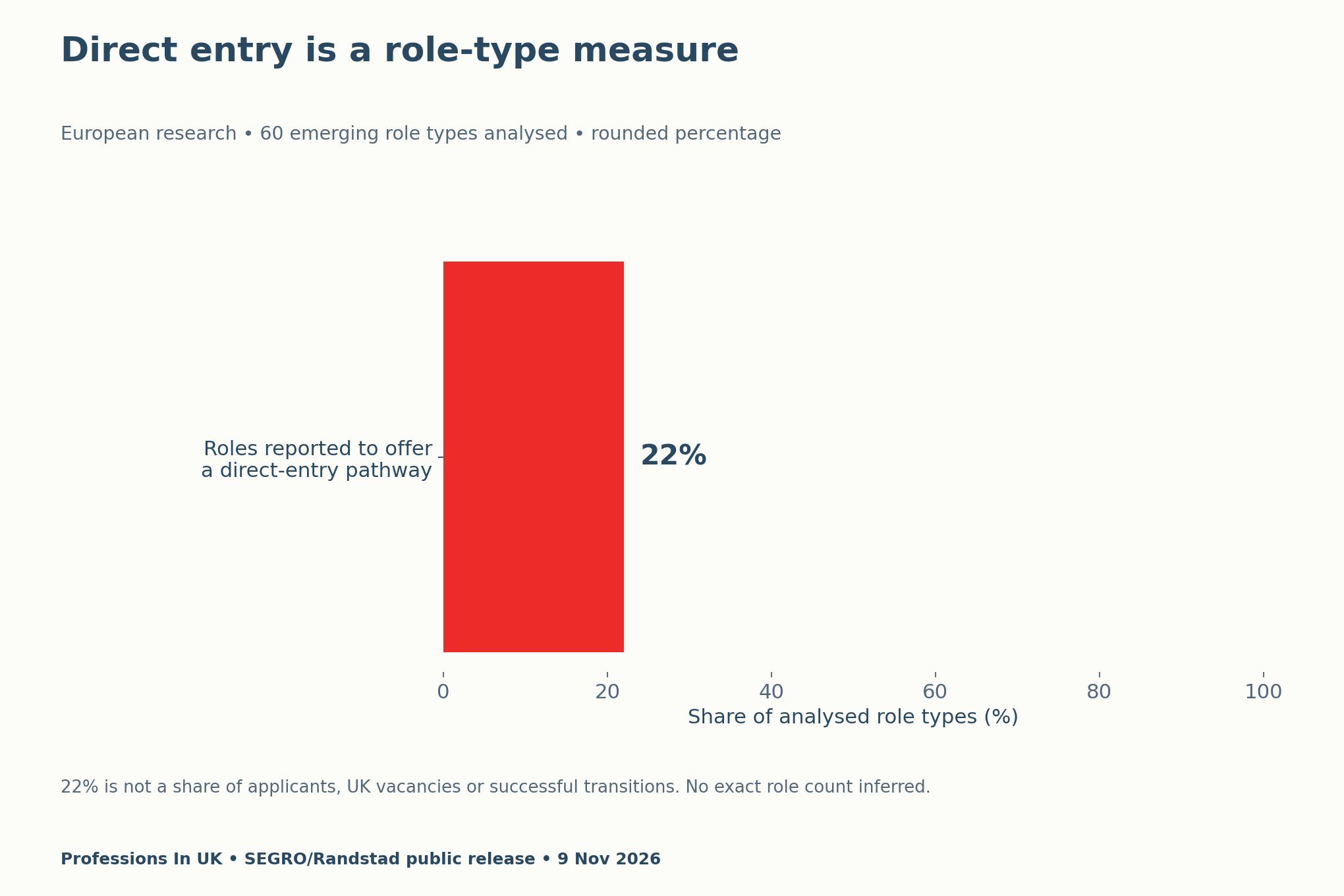
For your own decision, the relevant evidence is closer to the role: what a current employer requires, what supervised learning is available and what you can substantiate. A possible pathway should prompt those checks, rather than make a course purchase feel inevitable.
Map maintenance experience to a stated requirement
Start with tasks you have actually carried out. Record the setting, your responsibilities and the evidence you are authorised to retain. A clear description can distinguish observation, assisted work and responsibility held independently. Do not turn familiarity with equipment into a claim of competence you have not demonstrated.
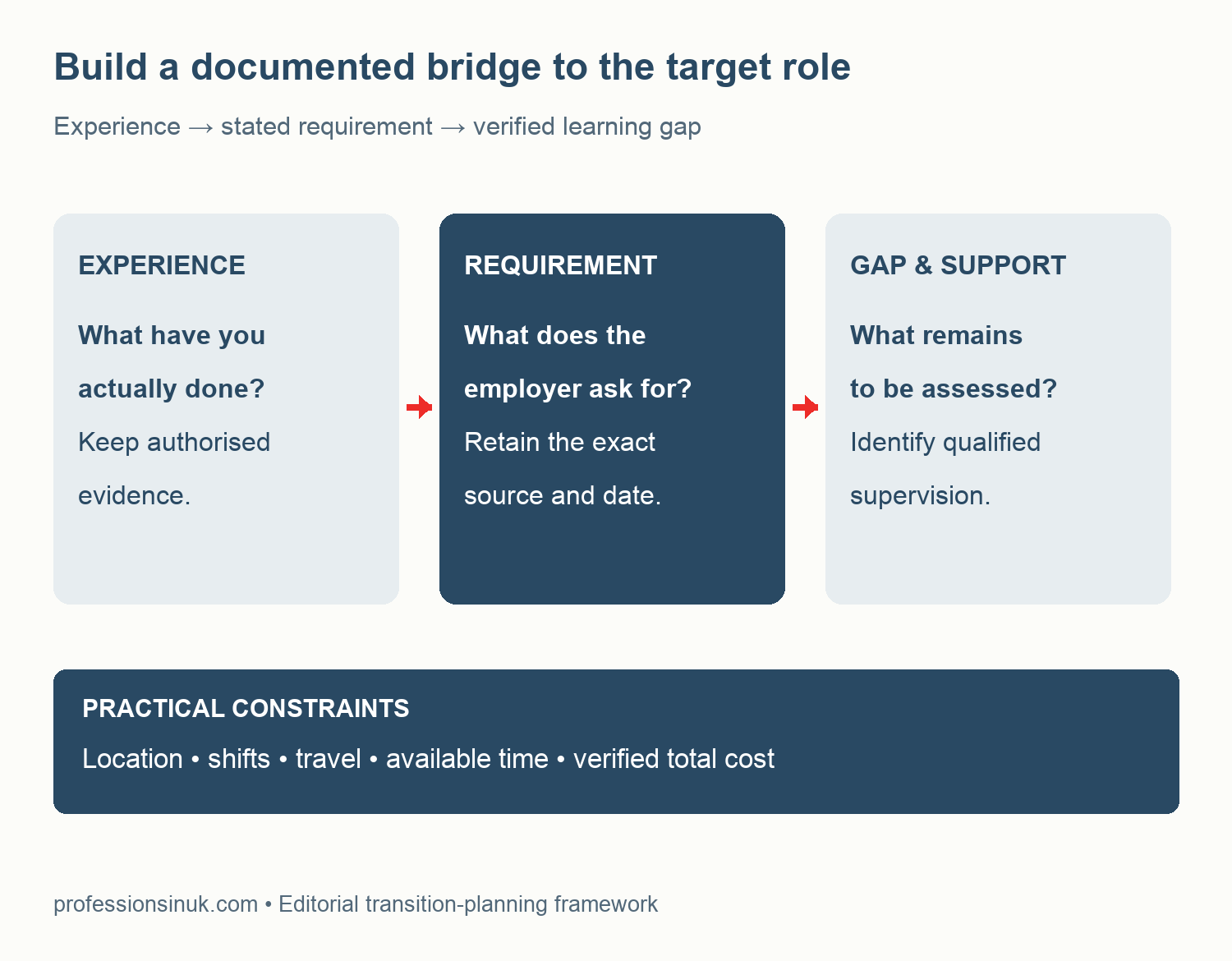
Next, read the target advert closely. Keep required qualifications and experience separate from preferred attributes. Preserve the exact wording and date. If a term is broad, ask what tasks the employer expects on entry and how readiness is assessed. Do not assume that two similarly named certificates or jobs are interchangeable.
| Planning prompt | Evidence to look for | What remains open |
|---|---|---|
| Fault diagnosis | Authorised account of your own contribution | Which target systems and responsibilities apply? |
| Controls or digital records | Documented task or safe learning output | What training and assessment are expected? |
| Maintenance documentation | A permitted example of clear recorded work | Which standards and approval process apply? |
| Safe working | Relevant verified training and defined responsibilities | Who supervises and authorises the target work? |
The table supplies prompts, not a universal curriculum. A particular employer or approved training specification may require something different. Keep a gap unresolved until you can trace the requirement and the proposed way to address it.
Investigate supervision before choosing training
Ask who would supervise practical learning, what equipment access is permitted and how assessment is carried out. A short description on a course page does not establish workplace authorisation. Work involving hazardous machinery or electrical systems needs the appropriate qualified oversight and site procedures.
Then compare a possible learning route with the documented gap. Record entry requirements, delivery format, assessment, supervised practice, total cost and travel. Confirm what the quoted price includes. If you cannot identify which required capability the course addresses, that uncertainty is worth resolving before committing money.
An employer-funded route may change the practical comparison, but it must be confirmed rather than assumed. Ask whether learning time is paid, which costs are covered and what written conditions apply. Do not infer a funding entitlement, recognised equivalence or guaranteed progression from this worksheet.
Plan the time for a move into automation
Site attendance and shifts can constrain a transition even when the subject interests you. Consider the work location, realistic travel, study schedule and personal commitments together. A national shortage story cannot tell you whether those arrangements are workable for your household.
Our fictional example assumes five eight-hour site days, five one-hour return commutes and four learning hours. That produces 40 + 5 + 4 = 49 hours of weekly commitments. It does not establish a normal working week, a recommended schedule or any employment entitlement.
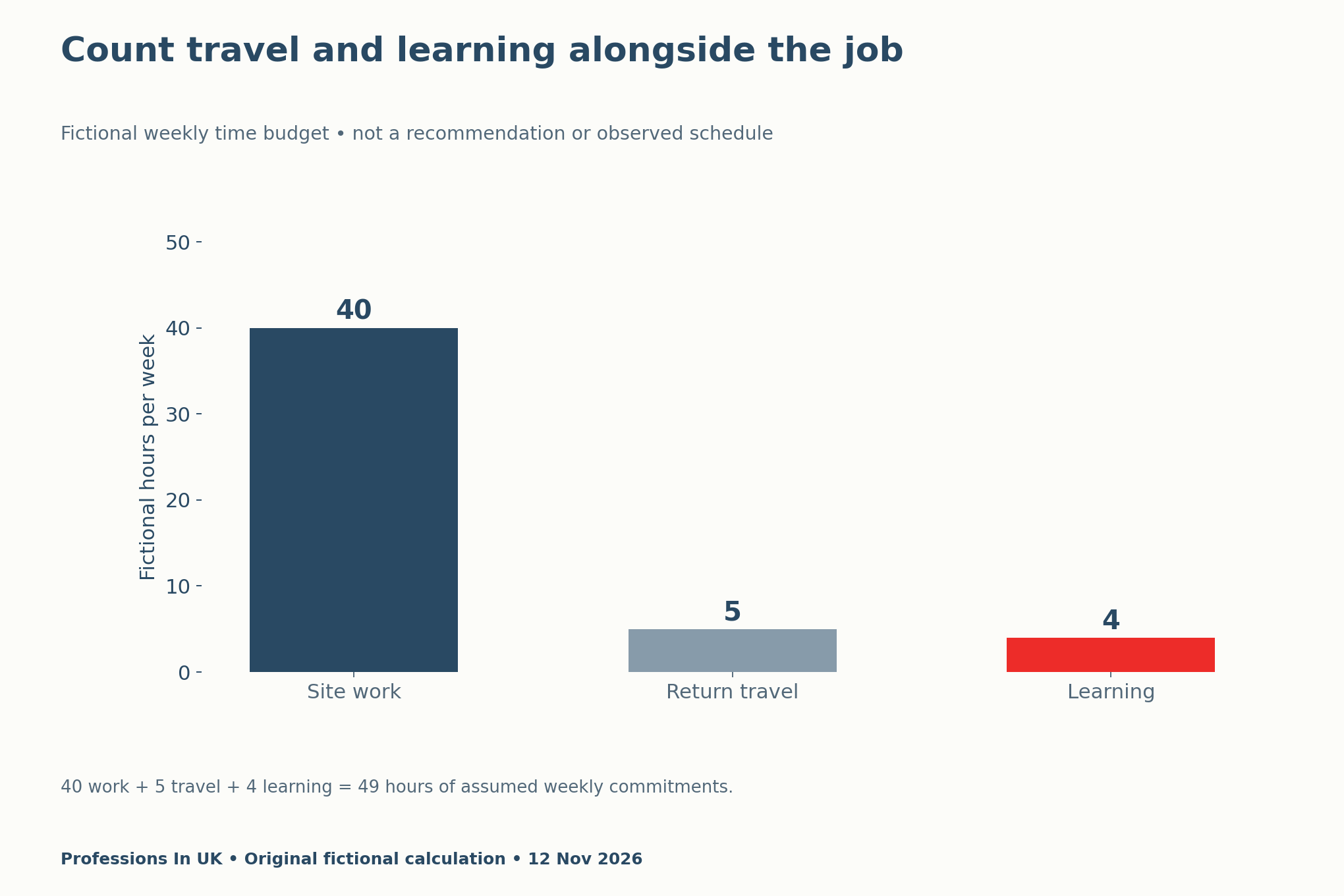
Keep caring, rest, leave and other obligations visible in a private plan. Do not assume that they can be absorbed by working longer. Where a shift pattern is unknown, write down the question rather than assigning convenient hours. A tidy total cannot repair an unsupported input.
Use a transparent local advert method
The blank audit targets 20 unique employer adverts only as a proposed study design. Before collection, choose the geography, retrieval date and title variants. Record employer/requisition pairs to remove duplicates, and retain missing information instead of replacing inconvenient adverts. Report the actual sample, including closed or inaccessible listings.
Personalized UK Career Consulting
Receive tailored career guidance designed just for you. Get actionable steps and expert support to boost your career in 1-3 days. Take control of your career now.
Get StartedCompare requirement wording before summarising it. For instance, employer-funded training that is not mentioned should remain “not stated”, rather than “not available”. A local convenience sample would describe those collected adverts; it could not establish a national hiring rate or prove that a training method works.
Our related IT shortage explainer separates broad labels from specific work, while the salary-range guide explains pay and hours comparisons. Read these alongside the actual employer’s terms.
Download the source measures and transition tools
- European research measures and denominator notes (CSV)
- Fictional weekly time-budget calculation (CSV)
- Blank experience-to-requirement ledger (CSV)
- Blank 20-advert local audit ledger (CSV)
Methodology and limitations
We used the freely readable commissioned research announcement, not the underlying advert dataset. Its European scope and missing methodological detail limit further inference. We did not obtain a UK-only rate, salary uplift, individual eligibility assessment or provider endorsement.
The time-budget arithmetic is original and fictional. The blank ledgers contain no observed adverts, personal records or practical test results. They support a documented discussion with employers and appropriate qualified providers; they do not authorise technical work.
Suggested citation: Professions In UK (12 November 2026), “Maintenance Mechanic to Automation Technician: UK Gap Check”, original transition tools with SEGRO’s 9 November 2026 research announcement. Cite the source when reusing its reported figures.


