




Role and Core Responsibilities in UK Homes
Technicians perform tasks that keep indoor environments comfortable and functional.
Additionally, they balance technical work with customer communication and documentation.
Moreover, they adapt responsibilities to installation, commissioning, maintenance, and repairs.
Overview of Core Duties
Core duties ensure systems sustain comfort and function in homes.
Technicians combine technical tasks with customer communication and accurate documentation.
They adapt roles across installation, commissioning, scheduled maintenance, and repairs.
Installation
Installation involves placing and connecting heating, ventilation, and air conditioning systems.
Technicians follow manufacturer guidance and homeowner requirements during each installation.
They ensure components fit, align, and integrate as intended.
- Verify electrical and mechanical connections are secure and appropriate.
- Confirm airflow and placement meet the system design intentions.
- Configure basic controls to enable initial operation.
Commissioning
Commissioning tests systems to confirm correct and safe operation.
Technicians adjust controls to match expected performance.
They document initial settings and observed performance during commissioning.
Finally, they provide the homeowner with basic operational guidance.
Planned Maintenance
Scheduled maintenance keeps systems operating efficiently over time.
Technicians perform routine inspections to identify wear or emerging issues.
Personalized UK Career Consulting
Receive tailored career guidance designed just for you. Get actionable steps and expert support to boost your career in 1-3 days. Take control of your career now.
Get StartedThey clean accessible components and restore optimal conditions when needed.
- Inspect mechanical and electrical systems for signs of deterioration.
- Test controls and sensors to confirm proper responses.
- Advise homeowners on recommended follow-up care.
Repairs and Fault Finding
Repairs restore system function when faults occur.
Technicians diagnose problems using systematic checks and tests.
They replace or repair faulty parts to resolve issues.
Consequently, they verify repairs through follow-up testing and observation.
Communication and Record Keeping
Technicians explain work and next steps clearly to householders.
They keep records of work, settings, and recommendations.
Documentation supports future maintenance and any further interventions.
Safety and Compliance
Technicians work to maintain safe conditions during all activities.
They follow applicable safety practices and site requirements.
They ensure completed work meets expected functional and safety standards.
Seasonal Maintenance Routines
Technicians perform targeted seasonal routines to maintain system reliability.
This section outlines winter, summer, and transitional servicing approaches.
Regular seasonal routines help systems remain reliable year-round.
Your Dream Job Starts with a Perfect CV
Get a tailored CV and cover letter that captures your unique strengths and stands out in your industry. Let us help you make an unforgettable first impression.
Get StartedWinter Heating Checks
Initially inspect heat delivery components for wear or obstruction.
Also check thermostat response and control signals.
Clean or replace air filters to preserve airflow.
Then test full system operation under typical winter settings.
Winter Checklist
- Inspect heat source and distribution pathways.
- Verify controls and safety interlocks function correctly.
- Replace or clean filters as needed.
- Assess airflow and vents for blockages.
Summer Cooling Preparations
Next prepare cooling systems for higher demand periods.
Then inspect cooling components and airflow paths.
Also clean coils and service filters to ensure efficiency.
Finally check coolant levels if applicable to the system.
Summer Checklist
- Ensure vents and returns remain unobstructed.
- Test cooling operation under simulated high load.
- Verify thermostat settings match occupant comfort preferences.
Transitional Servicing
Meanwhile address systems that switch between heating and cooling.
Adjust controls and programming for shoulder season needs.
Combine inspections to cover both heating and cooling components.
Transitional Checklist
- Balance airflow and inspect duct seals.
- Update system schedules and sensor calibrations.
- Plan timing for next seasonal tune-up.
System Selection, Sizing and Retrofit Advice
Technicians assess a home’s layout and thermal characteristics.
Additionally, they consider occupancy patterns and daily usage.
They also evaluate insulation and window performance at a high level.
Optimize Your LinkedIn for Success
Boost your LinkedIn profile with a professional bio, keyword-rich headline, and strategic recommendations that attract recruiters. Stand out from the crowd and get noticed.
Optimize NowAssessing Home Needs
Assessments document room layout and thermal behavior for accurate planning.
For example, technicians review occupancy patterns and daily usage schedules.
They also note existing ductwork and system compatibility constraints.
Sizing Considerations
Technicians calculate heating and cooling loads to match system capacity.
They avoid oversizing because it reduces efficiency and comfort.
Similarly they avoid undersizing to prevent frequent cycling and poor performance.
Sizing decisions consider insulation orientation occupancy and appliance heat gains.
- Location and room sizes affect required capacity.
- Window area and shading influence cooling requirements.
- Insulation quality alters heating and cooling loads.
Choosing Appropriate System Types
Technicians present system options that suit the home’s constraints.
They explain trade-offs between efficiency cost and installation footprint.
Additionally they discuss controls and zoning possibilities for improved comfort.
- Energy efficiency and expected operating costs.
- Physical space and installation impact.
- Noise levels and user interface simplicity.
- Compatibility with existing ventilation and controls.
Retrofit Planning and Preparation
Retrofits require an initial survey of existing systems and structure.
Technicians identify potential obstacles before work begins.
They recommend sequencing to minimize disruptions during installation.
Additionally they advise on necessary repairs or upgrades to support new equipment.
- Inspect existing ductwork and ventilation paths.
- Evaluate electrical capacity and connection points.
- Confirm structural access for new equipment placement.
- Plan for phased work and temporary comfort solutions.
Ventilation and Indoor Air Quality Integration
Technicians integrate ventilation considerations into system selection.
They balance airflow to maintain comfort and air quality.
Additionally they discuss filtration and heat recovery options where relevant.
Budgeting and Future-Proofing
Technicians outline upfront costs and likely operating expenses.
They recommend solutions that allow future upgrades and expansions.
Therefore homeowners can plan for long term comfort and efficiency improvements.
Working with Professionals
Technicians provide clear scopes and written estimates for homeowner decisions.
They suggest timelines and coordination needs for retrofit projects.
Finally they recommend documented warranties and maintenance plans when available.
You Might Also Like: How Electricians Power Homes and Businesses
Diagnostics and Repair Workflow
Technicians follow a structured diagnostic workflow to restore comfort quickly.
Technicians use a mix of observation, simple tests and systematic elimination techniques.
Technicians prioritise repairs that immediately restore safe and basic heating or cooling.
Overview of the Diagnostic Approach
First, they clarify the homeowner’s complaint and observable symptoms.
Then, they record system status and any warning indicators for reference.
Next, they prioritise safety checks before testing system operation further.
Common Faults Affecting Comfort
Common faults often reduce heating or cooling effectiveness in homes.
Additionally, airflow problems can produce uneven temperatures across rooms.
Furthermore, control or thermostat errors can prevent systems from responding correctly.
Moreover, electrical or mechanical failures can stop equipment from operating entirely.
Fault-Finding Methods
First, they interview occupants to confirm patterns and timing of symptoms.
Then, they inspect visible components and connections for obvious faults or damage.
Next, they measure basic system parameters to identify deviations from expected behaviour.
Also, they isolate subsystems to narrow down the faulty area efficiently.
Finally, they verify the fault by repeating tests after corrective action or repair.
Prioritising Repairs to Restore Comfort Quickly
First, they address safety hazards and faults that risk further system damage.
Then, they implement quick fixes to regain comfort while planning permanent repairs.
Additionally, they balance parts availability, time and impact when scheduling comprehensive repairs.
Moreover, they communicate options and expected timelines clearly to homeowners before proceeding.
Workflow Example for Rapid Restoration
Upon arrival, technicians confirm the reported problem and check obvious indicators.
Then, they perform safety checks and basic operational tests to assess priority.
Next, they apply temporary measures if needed to restore immediate comfort quickly.
Finally, they plan follow-up repairs and arrange for required parts or specialist support.
See Related Content: The Modern Blacksmith in the UK: Craftsmanship in a Digital Age
Energy Efficiency and Cost-Saving Measures
Technicians tune systems and optimise controls to reduce energy use.
This work lowers homeowner costs through these adjustments.
Technicians also recommend targeted upgrades when necessary.
System Tuning and Balancing
Tuning improves operational efficiency by reducing wasted energy.
Technicians adjust setpoints to match household occupancy and comfort patterns.
They balance airflow and water flow to ensure even distribution across spaces.
Furthermore, they eliminate short cycling and reduce equipment wear through fine adjustments.
- Adjust thermostat differentials and deadbands for stable operation.
- Optimize fan speeds and pump controls for efficient flow.
- Balance dampers and valves to prevent overconditioning of rooms.
Controls Optimisation
Optimised controls match system output with actual demand.
Technicians program schedules to reflect daily and weekly occupancy patterns.
They integrate sensors to improve temperature and humidity responses.
Consequently, smarter control reduces runtime and lowers utility bills.
- Implement setback strategies for unoccupied periods.
- Set up zoning to treat different areas independently.
- Use adaptive scheduling to respond to seasonal changes.
Recommending Efficiency Upgrades
Technicians assess current system performance before suggesting upgrades.
Then they prioritise measures with the best efficiency gains and cost savings.
They recommend upgrades that align with homeowner budgets and comfort goals.
- Upgrade to higher-efficiency system components when appropriate.
- Retrofit advanced controls to optimise ongoing performance.
- Recommend building envelope improvements to reduce load.
Monitoring and Follow-Up
Technicians establish follow-up plans to verify savings after tuning or upgrades.
They monitor performance and adjust settings as conditions change.
Additionally, they advise homeowners on simple habits that sustain efficiency gains.
Gain More Insights: Exploring Careers in Plumbing: Ensuring Clean Water for All
Indoor Air Quality and Ventilation Management
Indoor air quality affects comfort and system performance.
This section covers filter care, humidity control, and airflow balance.
Technicians evaluate components and advise homeowners on basic upkeep.
Filter Maintenance
Filters trap particles and support healthy indoor air.
Therefore technicians inspect filters during maintenance checks.
Additionally they assess filter condition and airflow impact.
Then they recommend cleaning or replacement based on condition.
Furthermore they ensure filters fit properly to prevent air bypass.
Moreover they advise homeowners on filter handling and basic upkeep.
Humidity Control
Balanced humidity enhances comfort and limits moisture problems.
Therefore technicians monitor indoor humidity levels with appropriate tools.
Next they adjust system settings or recommend humidification strategies.
Additionally they address condensation and damp areas to reduce risk.
They may suggest ventilation or localized devices when needed.
Furthermore they explain how humidity affects comfort and equipment performance.
Ensuring Adequate Airflow
Adequate airflow distributes conditioned air throughout living spaces.
Technicians inspect ducts, vents, and fan operation to verify flow.
Moreover they clear blockages and adjust registers for balance.
Additionally they check that return pathways remain unobstructed.
They also evaluate mechanical ventilation components for consistent circulation.
Finally they measure system response and fine tune airflow where necessary.
Maintenance Checklist for Homeowners
Homeowners can follow simple checks to maintain ventilation performance.
Regular basic upkeep helps systems operate efficiently and reliably.
Report persistent issues to a qualified technician for further inspection.
- Inspect filters and replace or clean when dirty.
- Keep vents and grills free from furniture and debris.
- Monitor indoor humidity and report persistent issues to technicians.
- Ensure return vents remain unobstructed for proper airflow.
- Consider scheduled professional checks for ventilation performance.
Communication and Advice
Technicians educate homeowners on simple ventilation best practices.
Additionally they explain when professional intervention becomes necessary.
They document findings and recommend targeted actions for air quality.
Delve into the Subject: The Role of Machine Operators in Modern Manufacturing
Safety, Compliance and Professional Standards
This section outlines safety, compliance and professional standards.
Additionally, it introduces on-site risk management and regulatory procedures.
Finally, it covers qualifications, training and customer safety practices.
Safety Practices and On-Site Risk Management
Technicians assess risks before starting any on-site work.
They record identified hazards and control steps for future reference.
Additionally, technicians isolate energy sources before making interventions.
Technicians verify system shutdowns to prevent accidental operation.
Moreover, they use suitable personal protective equipment for tasks.
- Conduct a site-specific risk assessment and record findings.
- Use tools and equipment inspected and fit for purpose.
- Maintain neat work areas to reduce trip and fall risks.
Regulatory Considerations and Compliance Procedures
Technicians follow applicable UK regulations and industry requirements.
They ensure that all work meets legal standards and codes.
Furthermore, technicians complete and retain required documentation for each job.
Also, they obtain permits or notifications when rules require them.
- Keep accurate service records and hand them to customers.
- Report incidents or unsafe conditions through required channels.
- Adhere to environmental rules when handling system fluids or waste.
Required Qualifications, Training and Continuing Professional Development
Technicians hold recognised qualifications relevant to their duties.
They complete theoretical and practical training before independent work.
Moreover, they undergo assessments to confirm competence for specific tasks.
They engage in ongoing professional development to maintain current skills.
- Formal classroom learning and practical workshops for technical knowledge.
- Structured on-the-job mentoring and supervised experience with senior staff.
- Periodic refresher courses to address new techniques and updates.
Professional Conduct and Customer Safety
Technicians communicate safety information clearly to homeowners.
They obtain customer consent for work and explain risks and safeguards.
Additionally, they leave premises safe and tidy after completing work.
Customer Service and Communication
Technicians confirm appointments promptly after scheduling.
They provide expected arrival windows and status updates.
Providers invite homeowner feedback after service visits.
Clear Scheduling and Updates
Companies offer digital reminders and electronic service records for convenience.
Professional On-Site Communication
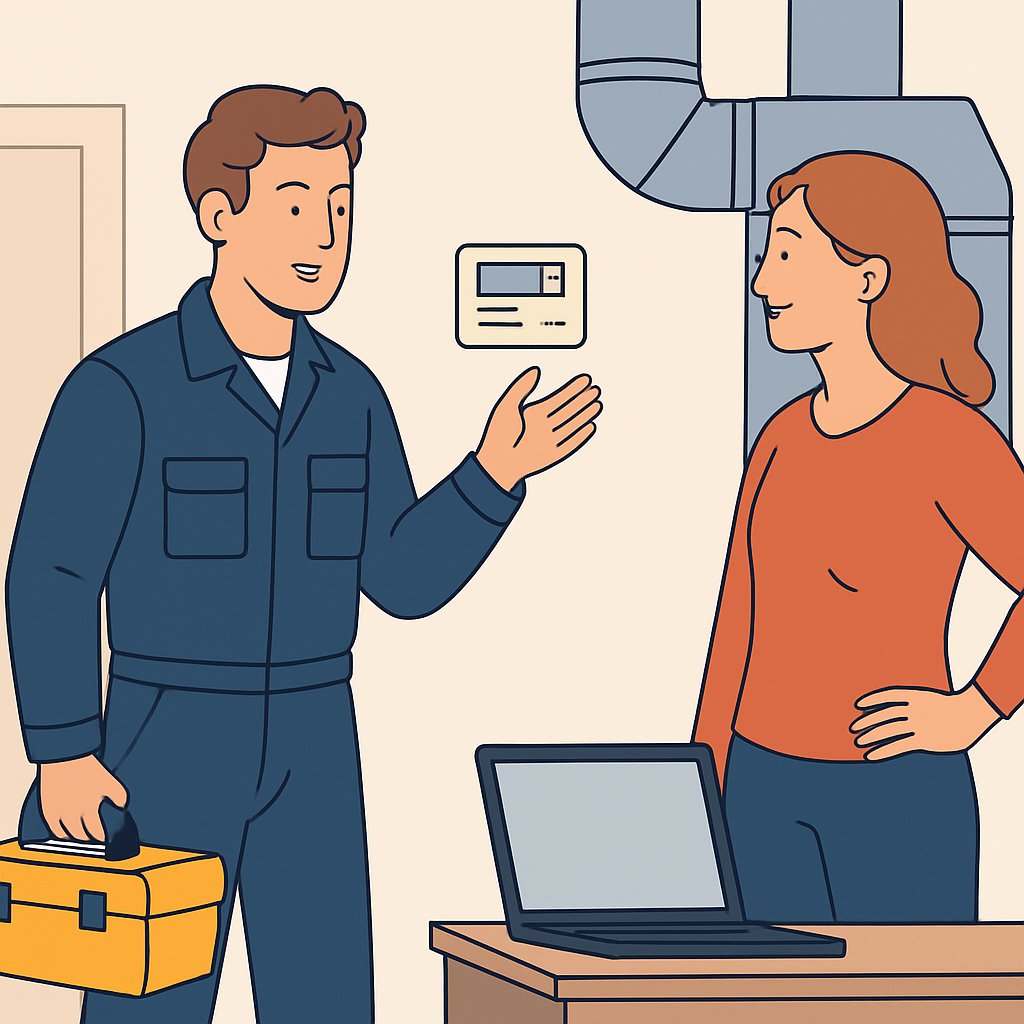
Technicians greet homeowners and explain planned work clearly.
They outline anticipated steps and obtain consent before starting.
They present transparent estimates and answer homeowner questions.
Feedback and Follow-Up
They follow up to confirm satisfaction and clarify concerns.
They use feedback to improve communication and delivery.
Emergency Response and Call-Outs
Teams maintain procedures for emergency call-outs and urgent issues.
They prioritise safety issues and severe service interruptions.
Call handlers collect essential information to triage each call effectively.
Availability and Prioritisation
Contracts can include priority call-outs and scheduled inspections.
On-Call Procedures
Technicians perform safety checks on arrival and secure the area.
They implement temporary measures to maintain safe conditions.
Service Contracts and Maintenance Planning
Service agreements support planned upkeep and predictable home comfort.
Clear contracts outline what the agreement covers and excludes.
Benefits of Regular Service Agreements
Record keeping documents all visits and performed work for transparency.
Contract Elements and Transparency
The scope describes included equipment and defined service tasks.
Visit frequency states inspection and maintenance intervals.
- Scope describes included equipment and defined service tasks.
- Visit frequency states inspection and maintenance intervals.
- Response terms explain emergency and standard call handling procedures.
- Cost details specify fees, payment terms, and any additional charges.
- Record keeping documents all visits and performed work for transparency.
Homeowner Education and Communication Tools
Technicians teach simple operational tips to homeowners during visits.
They explain warning signs that merit professional attention.
They advise on record keeping for service history and warranties.
Practical Guidance for Homeowners
Use of Digital Tools
Homeowners can access manuals and maintenance schedules online.
Clear digital communication enhances timely action and reduces misunderstandings.


