




Understanding the Role of Vocational Trainers in Job Preparation
The Importance of Vocational Training
Vocational training equips students with essential skills for various careers.
It focuses on hands-on experience and practical knowledge.
This type of training addresses specific job requirements.
Additionally, it enhances employability in competitive job markets.
Trainers as Industry Experts
Vocational trainers often have extensive experience in their fields.
They bring valuable insights from real-world scenarios.
As mentors, they guide students through professional challenges.
This access to expert knowledge is crucial for effective learning.
Customized Learning Experiences
Trainers develop tailored programs based on industry demands.
They assess students’ strengths and weaknesses regularly.
Customized training ensures all students receive appropriate support.
This approach promotes student engagement and success.
Collaboration with Employers
Vocational trainers often collaborate with local businesses.
This partnership creates internship and job placement opportunities.
Employers provide valuable feedback to shape training programs.
Personalized UK Career Consulting
Receive tailored career guidance designed just for you. Get actionable steps and expert support to boost your career in 1-3 days. Take control of your career now.
Get StartedSuch connections enhance students’ job readiness upon graduation.
Continuous Skill Development
Vocational trainers advocate for lifelong learning.
They encourage students to pursue further certifications.
This mindset prepares students for evolving job markets.
Consequently, they stay competitive in their respective fields.
Key Skills Vocational Trainers Focus On
Technical Skills
Vocational trainers emphasize technical skills crucial for specific industries.
These skills vary depending on the trade or profession.
For instance, electricians master wiring, circuits, and safety protocols.
Similarly, culinary students learn food preparation and safety techniques.
Technical skills are often assessed through hands-on training and tests.
Moreover, trainers use simulations and real-world scenarios for practice.
These methods help students gain confidence in their abilities.
Soft Skills
In addition to technical skills, vocational trainers focus on soft skills.
These skills include communication, teamwork, and problem-solving abilities.
Effective communication is essential in any job setting.
Trainers encourage group projects to enhance teamwork skills.
Problem-solving exercises help students think critically under pressure.
Furthermore, time management is another vital soft skill taught in training.
Mastering these skills prepares students for future workplaces.
Developing Industry Partnerships for Real-World Experience
The Importance of Collaboration
Collaboration between vocational trainers and industry partners is vital.
These partnerships create opportunities for students to gain hands-on experience.
Furthermore, they allow trainers to stay updated on industry trends.
This relationship enhances the quality of education provided to students.
Identifying Key Industry Partners
Vocational trainers actively seek out local businesses and organizations.
Targeting industries relevant to their programs ensures maximum impact.
They focus on companies with a strong reputation for mentorship.
Moreover, these partnerships can open pathways for internships and job placements.
Creating Meaningful Learning Opportunities
Real-world projects allow students to apply skills in practical settings.
Industry partners provide actual problems for students to solve.
This hands-on approach enhances critical thinking and adaptability.
Students benefit from exposure to workplace expectations and standards.
Fostering Long-Term Relationships
Once established, these partnerships require regular nurturing.
Vocational trainers maintain ongoing communication with industry leaders.
These connections foster a continuous feedback loop about educational needs.
Ultimately, they help align training programs with evolving industry demands.
Success Stories from the Field
Many students have successfully transitioned to the workforce through partnerships.
For instance, the partnership between GreenTech Solutions and Riverdale Community College has yielded excellent results.
Students have secured internships that led to permanent positions.
This success illustrates the value of practical training backed by industry support.
Explore Further: The Role of Curriculum Developers in Modern Education
Integrating Work Placement Programs into Curriculum
Importance of Practical Experience
Practical experience enriches vocational training programs.
Students gain hands-on skills through real-world applications.
This experience often boosts confidence and competence.
Furthermore, it helps bridge the gap between theory and practice.
Developing Partnerships with Local Businesses
Establishing partnerships is crucial for effective work placements.
Vocational trainers collaborate with local industries.
These partnerships provide students with relevant opportunities.
In addition, they ensure training aligns with industry needs.
Creating Structured Placement Programs
Structured placement programs offer clear guidelines for students.
These programs typically outline expectations and objectives.
Students receive support throughout their placement journey.
This support includes mentorship and regular feedback.
Assessing Student Progress and Performance
Continuous assessment is vital during work placements.
Vocational trainers monitor students’ progress regularly.
This assessment ensures that learning outcomes are met.
Additionally, it helps identify areas for improvement.
Gathering Feedback for Program Improvement
Feedback from students and employers informs program adjustments.
Vocational trainers collect insights post-placement.
This feedback enhances future curriculum development.
Moreover, it helps tailor training to better meet industry demands.
Explore Further: Exploring Careers in Adult Education: Teaching Beyond Classrooms
Use of Simulated Learning Environments to Mimic Real-World Job Scenarios
Creating Realistic Learning Experiences
Vocational trainers design simulated learning environments to replicate actual workplaces.
These environments engage students in hands-on activities relevant to their future careers.
Moreover, trainers customize scenarios based on industry standards and job requirements.
This customization enhances the relevance of the training experience.
Utilizing Technology in Simulations
Technology plays a vital role in developing immersive training environments.
For instance, virtual reality tools enable students to experience job scenarios firsthand.
Additionally, simulation software mirrors the tools used in professional settings.
This approach prepares students for the realities of the workplace.
Developing Soft Skills Through Simulations
Simulated environments also focus on essential soft skills.
Students practice communication, teamwork, and problem-solving in realistic contexts.
These interactions foster collaboration and conflict resolution skills.
Furthermore, trainers provide feedback to enhance these skills during simulations.
Assessment and Feedback Mechanisms
Trainers utilize assessments to gauge student performance in simulations.
These evaluations help students understand their strengths and areas for improvement.
Continuous feedback ensures they adapt and learn effectively throughout the training.
This process builds their confidence before entering the job market.
Find Out More: Why Hybrid Classrooms are Creating New Teaching Opportunities in the UK
Assessment Methods Used by Vocational Trainers to Gauge Readiness
Hands-On Assessments
Vocational trainers often use hands-on assessments to evaluate practical skills.
These assessments provide students with real-world tasks.
For example, welding instructors may require students to complete specific welding projects.
This method allows trainers to observe students in action.
Consequently, it enables immediate feedback and adjustments in learning techniques.
Written Examinations
Trainers also use written examinations to assess theoretical knowledge.
These tests often cover key concepts and industry standards.
Students must demonstrate understanding through multiple-choice or essay questions.
By analyzing exam results, trainers identify areas needing improvement.
This information helps tailor future instruction to better meet student needs.
Peer Review Sessions
Peer review sessions are valuable for skill assessment.
In these sessions, students provide constructive feedback to their classmates.
This collaborative approach encourages team-building and critical thinking.
Moreover, students learn to critique their work effectively.
As a result, peer reviews cultivate a learning environment that fosters growth.
Workplace Simulations
Workplace simulations are another effective assessment method.
These simulations replicate real job environments and scenarios.
For instance, culinary students may run a simulated restaurant service.
Such experiences allow trainers to evaluate students under pressure.
Consequently, this method assesses both technical skills and soft skills.
Portfolio Development
Trainers often encourage students to create portfolios showcasing their work.
These portfolios highlight individual achievements and career readiness.
Students include completed projects, certifications, and other relevant materials.
Portfolios serve as comprehensive tools for self-assessment.
Furthermore, they provide potential employers with tangible evidence of skills.
Explore Further: Is Virtual Learning the Future? Emerging UK Teaching Careers in the Digital Age
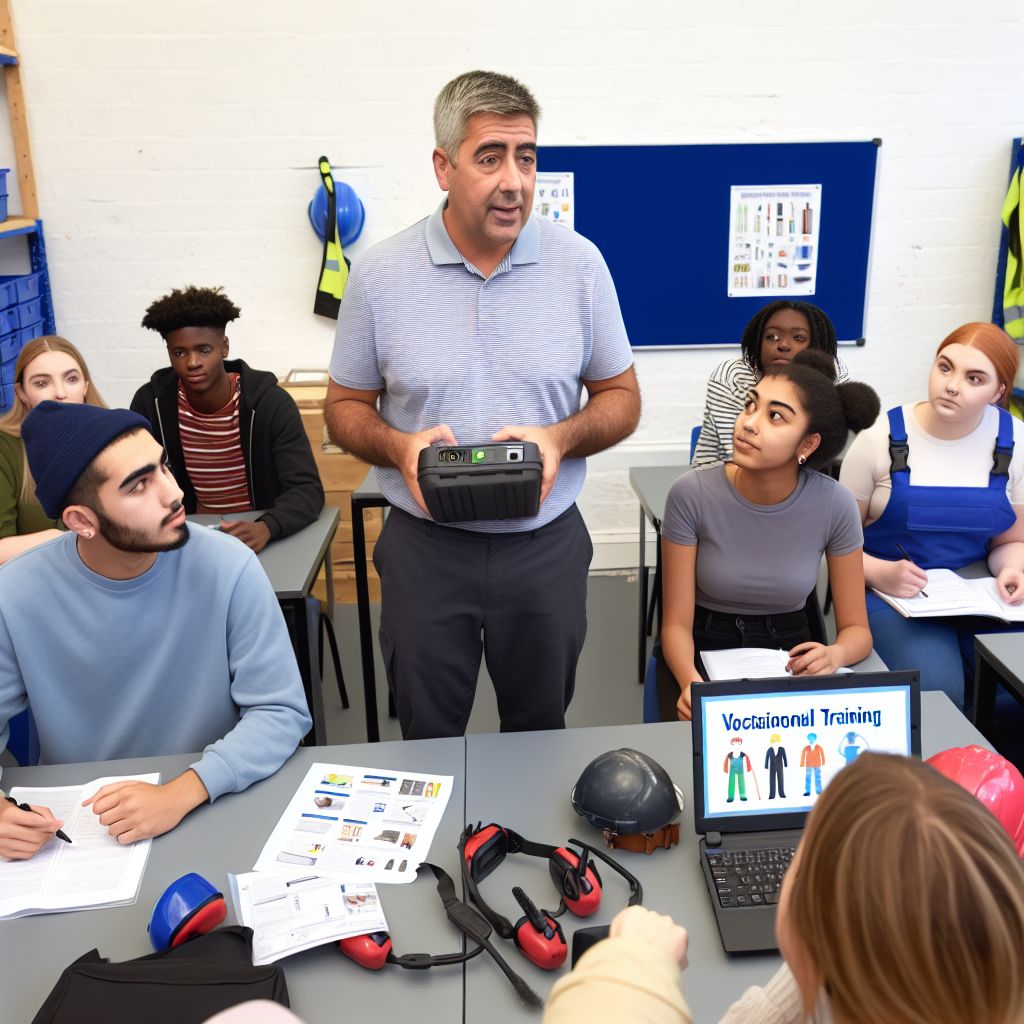
The Importance of Continuous Feedback and Mentorship in Vocational Training
The Role of Continuous Feedback
Continuous feedback is essential in vocational training programs.
It helps students understand their strengths and weaknesses.
Furthermore, it promotes skill development and confidence.
Regular feedback creates a safe learning environment.
Students feel encouraged to ask questions and seek clarification.
Effective trainers provide actionable feedback promptly.
This method allows students to improve their performance quickly.
In addition, feedback sessions encourage reflection on learning processes.
Benefits of Mentorship
Mentorship plays a critical role in vocational education.
It connects students with experienced professionals in their fields.
Mentors offer guidance and real-world insights.
Moreover, they help students set and achieve career goals.
Mentors also provide networking opportunities for students.
Building relationships within the industry enhances job prospects.
Furthermore, mentorship fosters personal and professional growth.
Students often gain valuable skills and knowledge from mentors.
Integrating Feedback and Mentorship
Integrating continuous feedback and mentorship yields significant results.
This combination enhances students’ learning experiences.
When students receive feedback from mentors, they benefit greatly.
Moreover, it promotes a culture of continuous improvement.
Students feel more engaged and invested in their education.
Ultimately, this approach prepares students for real-world challenges.
Challenges Faced by Vocational Trainers in Aligning Curriculum with Industry Needs
Evolving Industry Standards
Vocational trainers face challenges as industry standards evolve rapidly.
These changes can make existing curricula outdated.
Consequently, trainers must keep their programs relevant.
However, staying updated requires constant research and adaptation.
Resource Limitations
Many vocational training programs operate with limited resources.
Budget constraints can restrict access to current technologies.
This limitation hinders trainers from providing hands-on experience.
Moreover, a lack of funding may affect course offerings.
As a result, trainers struggle to meet industry expectations.
Industry Collaboration
Building partnerships with industry leaders can be challenging.
Many vocational trainers seek collaborations to enhance their programs.
However, establishing and maintaining these partnerships takes time.
Also, varying expectations can complicate collaboration efforts.
Consequently, effective communication remains vital for success.
Skill Gap Issues
Another major challenge is addressing skill gaps in students.
Employers often report that graduates lack essential skills.
As a result, trainers must assess and revise their teaching methods.
Implementing adaptive learning strategies can bridge these gaps.
Furthermore, offering tailored training can enhance student employability.
Adapting to Technological Trends
Technology is rapidly changing the landscape of vocational training.
Trainers must incorporate new tools and software into their programs.
This adaptation requires continuous training and professional development.
Thus, trainers must remain lifelong learners themselves.
Ultimately, embracing technology can improve educational outcomes.
Success Stories: Examples of Students Thriving in Their Careers After Vocational Training
Transformative Journeys
Many students experience significant transformations through vocational training.
For instance, Samantha Lee graduated from a culinary arts program last year.
She quickly landed a job at a renowned restaurant in downtown Austin.
Now, she leads the dessert section and creates unique pastry designs.
Her training equipped her with essential skills and confidence in her abilities.
Building Technical Skills
Vocational training often focuses on building technical skills in various fields.
Take the case of Marcus Chen, a recent HVAC program graduate.
Within just months, he secured a position with a local service company.
He quickly became an indispensable team member due to his expertise.
His employers praise his work ethic and commitment to excellence.
Career Changes and Advancement
Many vocational students take the opportunity to change their careers.
Rebecca Martinez was a preschool teacher before pursuing a nursing program.
Now, she works as a licensed practical nurse, making a positive impact daily.
She attributes her success to hands-on training in clinical settings.
This practical experience prepared her for the challenges in healthcare.
Entrepreneurial Success
Vocational training also inspires students to start their own businesses.
Jason Patel completed a plumbing program and started his own service company.
With hard work, he has built a loyal customer base in his community.
His story showcases the entrepreneurial spirit fostered in vocational training.
Furthermore, he now mentors current students, sharing his insights.
Community Impact
Vocational graduates often contribute significantly to their communities.
Catherine Wong, a cosmetology graduate, opened a salon that supports local artists.
Her business provides a platform for showcasing their work.
Moreover, she actively involves her team in community service initiatives.
Through her efforts, she has built a supportive network of professionals.
Additional Resources
What Is Career & Technical Education (CTE)?
Career Education Strategies – Nebraska Department of Education